What It Is And How To Fix It
A rich-running engine – too much fuel or too little air in the air-fuel mixture – can cause several issues with your vehicle, including increased vehicle emissions and reduced fuel economy. Your engine will likely experience premature wear, too. When there is too much fuel left over from combustion, the fuel enters the engine oil, reducing its ability to effectively lubricate engine components. If you smell a strong fuel odor, notice poor engine performance or reduced fuel economy, and have an illuminated Check Engine Light (CEL), your vehicle may have set the P0175 error code. The P0175 code is a generic code that can affect almost any vehicle. So it doesn’t matter whether your vehicle is a Chevy, Ford, BMW, Honda, or Dodge – they’re all capable of experiencing this fault code.
|
Code Number |
Code Description |
Related Codes |
|---|---|---|
|
P0175 |
System Too Rich (Bank 2) |
P0171 – System Too Lean (Bank 1) |
|
– |
– |
P0172 – System Too Rich (Bank 1) |
|
– |
– |
P0174 – System Too Lean (Bank 2) |
What Does The P0175 Error Code Mean?
The Powertrain Control Module (PCM) constantly monitors the amount of air entering the engine and calculates the required amount of fuel needed for optimal combustion efficiency. If the engine receives too much air, it’s said to be running lean. If the engine gets too much fuel, it’s running rich. The P0175 error code indicates that the PCM detected excessive fuel entering the engine, and the Bank 2 cylinders are running too rich. The excess fuel can even be caused by a lack of air.
If the PCM cannot adjust the fuel trims to reach the desired stoichiometric air-fuel ratio (around 14.7:1), the P0175 error code is set.
What Causes The P0175 Error Code?
Because a rich engine can be caused by both a lack of air or an excess of fuel, there are multiple potential causes of this error code:
- Leaking fuel injector(s)
- Defective Mass Airflow Sensor (MAF)
- Dirty MAF
- Defective Engine Coolant Temp. Sensor (ECT)
- Malfunctioning ignition system
- Excessive fuel pressure (defective pump or regulator)
- Exhaust system leak (distorting o2 sensor readings)
- Stuck air-fuel sensor
- Defective air-fuel sensor heater
- Faulty PCM
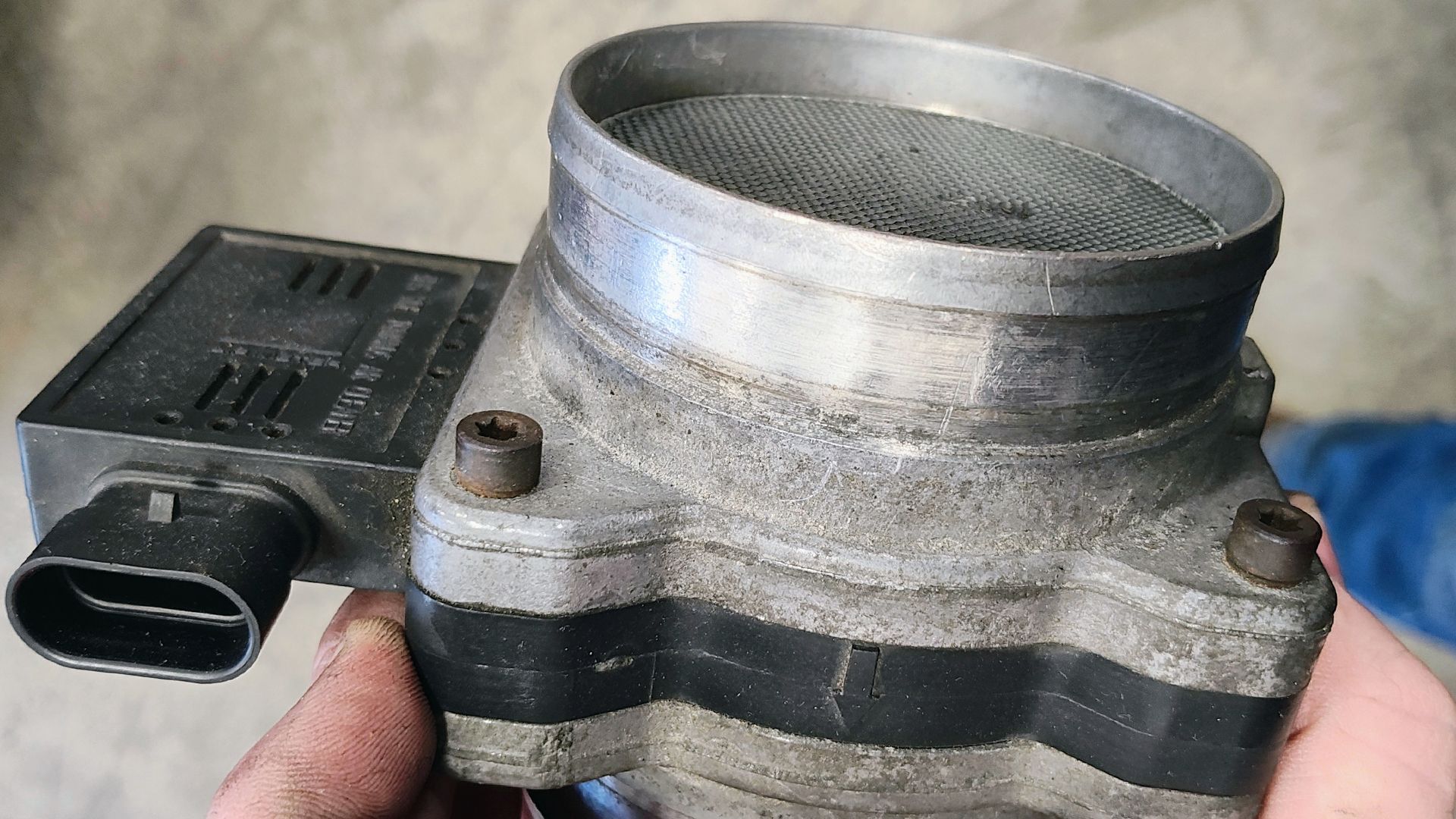
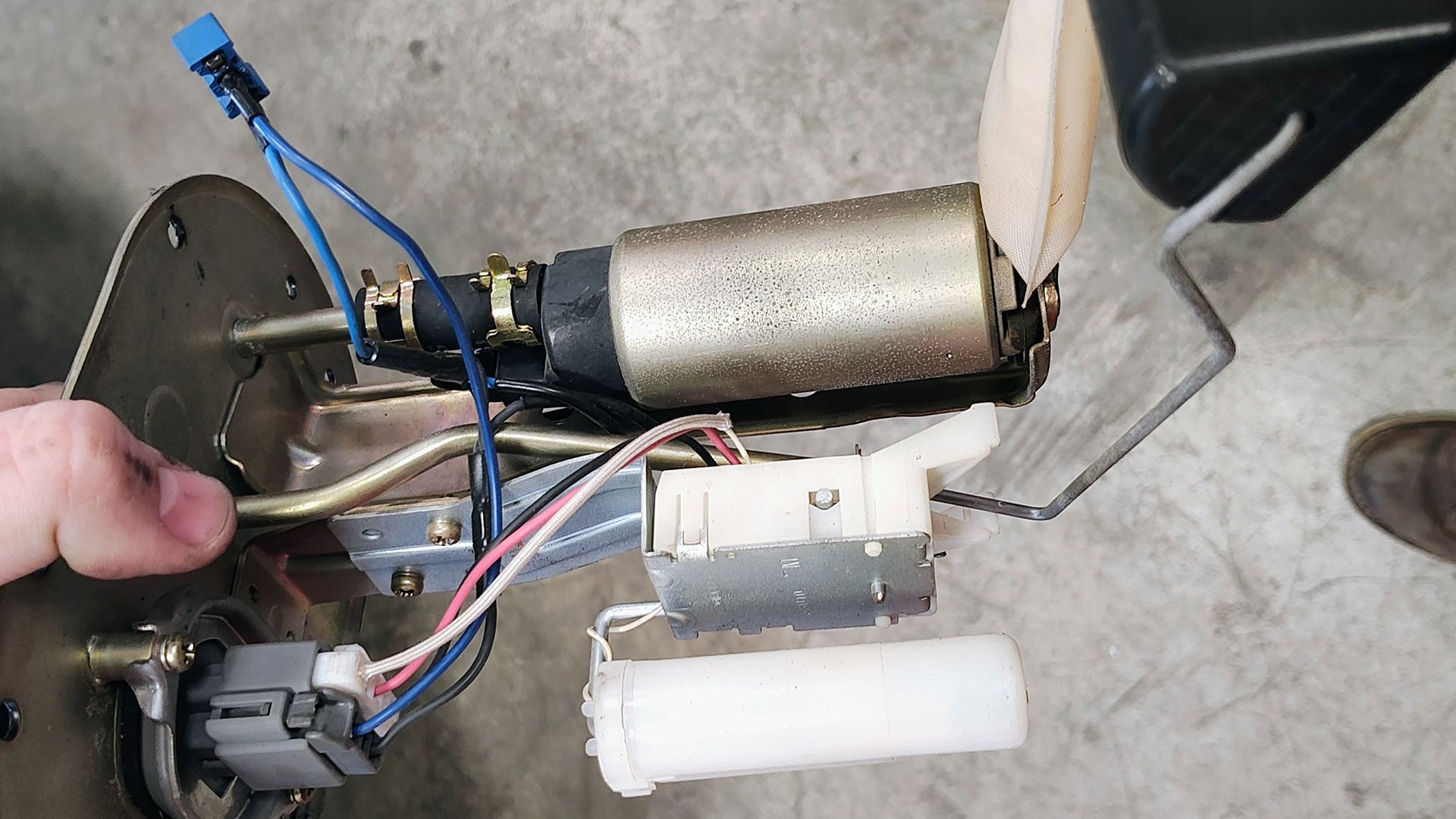
Below, we can see a MAF sensor from a General Motors vehicle, followed by a fuel pump assembly without an internal regulator. Both parts could cause the P0175 error code.
Symptoms Of The P0175 Error Code
The most commonly reported symptoms for the P0175 error code are:
- Fuel odor
- Reduced fuel efficiency
- Failed emissions test
- Cylinder misfires
- Fuel in engine oil
- Black exhaust smoke
- Increased tail-pipe emissions
- Fouled spark plugs
- Rough idle
- Premature catalytic converter wear
Can I Drive My Car With This Issue?
In most cases, you may continue operating your vehicle with the P0175 error code present. However, your vehicle may suffer from reduced fuel efficiency, reduced power, increased catalytic converter wear, and increased emissions. Depending on the severity of the issue, severe misfires may occur, resulting in a noticeable decrease in power.
Raw or unburned fuel entering the catalytic converter breaks down the precious metals inside it. When these metals break down, they can melt, leading to a clogged converter.
If your vehicle feels mostly normal, you may have some time before more noticeable symptoms appear. Like most error codes, we still recommend getting the P0175 code resolved, whatever the cause may be.
How To Fix A P0175 Error Code On Your Vehicle
As you can tell by the list of possible causes, there are many potential fixes for the P0175 error code.
The first order of business is to verify that the P0175 error code is active and your engine is currently running rich. To verify this, you’ll need to have your vehicle’s computer scanned for fault codes. Many local parts stores can do this scan for free. Additionally, the scan can be performed by emissions testing facilities and automotive repair shops.
The most common repairs for a P0175 code include a mass airflow sensor replacement or cleaning, along with an air filter replacement. We’ll cover how to perform both of these.
Below is a MAF sensor with a dirty intake air temperature thermistor, often mistaken for an airflow sensing element.

Engine Air Filter Inspection And Replacement
The engine air filter is often overlooked as a cause for a rich-running engine because it’s so simple. Many vehicle owners and technicians forget to check simple things that have a big impact on how our engines run. Checking and replacing your engine air filter is a simple service that your engine and wallet will thank you for.
You’ll need the following tools to service your air filter:
- A basic set of hand tools with assorted sockets
- A basic pliers set
- A basic screwdriver set
Some of the steps required to replace your air filter are:
- Locate the engine air filter
- Remove air box lid fasteners or clips
-
Remove the air filter
Note: Modern sensors have a sensing element to monitor the amount of incoming air as well as a temperature sensor. The sensing element that measures the air is placed further into the sensor.Spray the MAF cleaner on the sensing element and let it dry before reinstalling
Mass Airflow Sensor Cleaning And Replacement
Cleaning and/or replacing a MAF sensor is straightforward on most vehicles, requiring only basic hand tools and a can of MAF sensor cleaner.
Before cleaning the MAF sensor, it’s important to know that cleaning is a method to diagnose a defective sensor, not a long-term repair. These sensors have a special coating on the sensor element that prevents dirt from sticking to it. The sensor will still work if the coating wears off, provided it is kept clean, so this is something to keep an eye on if you don’t replace the sensor completely.
Follow these steps to disconnect and clean the MAF sensor:
- Disconnect the MAF sensor electrical connector
- Remove the fasteners securing the sensor
- Remove the sensor from the housing
Modern sensors have a sensing element to monitor the amount of incoming air as well as a temperature sensor. The sensing element that measures the air is placed further into the sensor.
4. Spray the MAF cleaner on the sensing element and let it dry before reinstalling

Above, we can see an example of a MAF sensor cleaning product.
How Much Does It Cost To Fix?
Once you know the cause, you can work out how much it will cost to fix a P0175 code-related fault.
The cost will vary significantly between vehicle make and model. We’ll break down the cost of the most common repairs reported to remedy the P0175 fault code on AllData’s Find-A-Fix so you can know what to expect.
Air filters are usually affordable, especially if you perform the service yourself. We used the AllData estimator software to price out what it would cost to replace the air filter on a Jeep Grand Cherokee, and here’s what we found. A factory air filter will cost you between $50 and $80; the aftermarket equivalent will be about $40. Labor costs can range between $18 and $36, depending on the shop and location.
Using the best-selling Ford F-150 as an example, RepairPal reports the average cost of the mass air flow sensor replacement coming in around $200 to $400. The factory Ford replacement part comes in fairly priced at $200. Being a job that most people can tackle themselves, you can save here. If you have the popular Honda Pilot, a factory replacement part will cost you around the same price as the Ford’s.
The part links provided are for specific makes and models. Always verify the correct part for your vehicle before purchasing.
Fuel injectors can be expensive, whereas cleaning them is a cheaper alternative that yields positive results. An injector cleaning service can cost between $100 and $200.
Faulty air-fuel or oxygen sensors have a replacement cost average between $350 and $420.
Other repairs, such as a defective fuel pump or fuel pressure regulator, can cost you between $300 for a regulator and over $1,200 for a fuel pump.
In closing, continued operation with the P0175 error code is possible, and depending on your situation, it may be necessary. We recommend you repair the issue sooner than later, especially with the cost of replacing catalytic converters in a worst-case scenario.
Component Cost Estimates
| Component | Cost Estimate |
|---|---|
| Air filter | $20 – $120 |
| Mass airflow sensor | $150 – $400 |
| MAF sensor cleaner | $10 – $20 |
| Fuel injector | $150 – $400 (each) |
| Fuel pressure regulator | $150 – $200 |
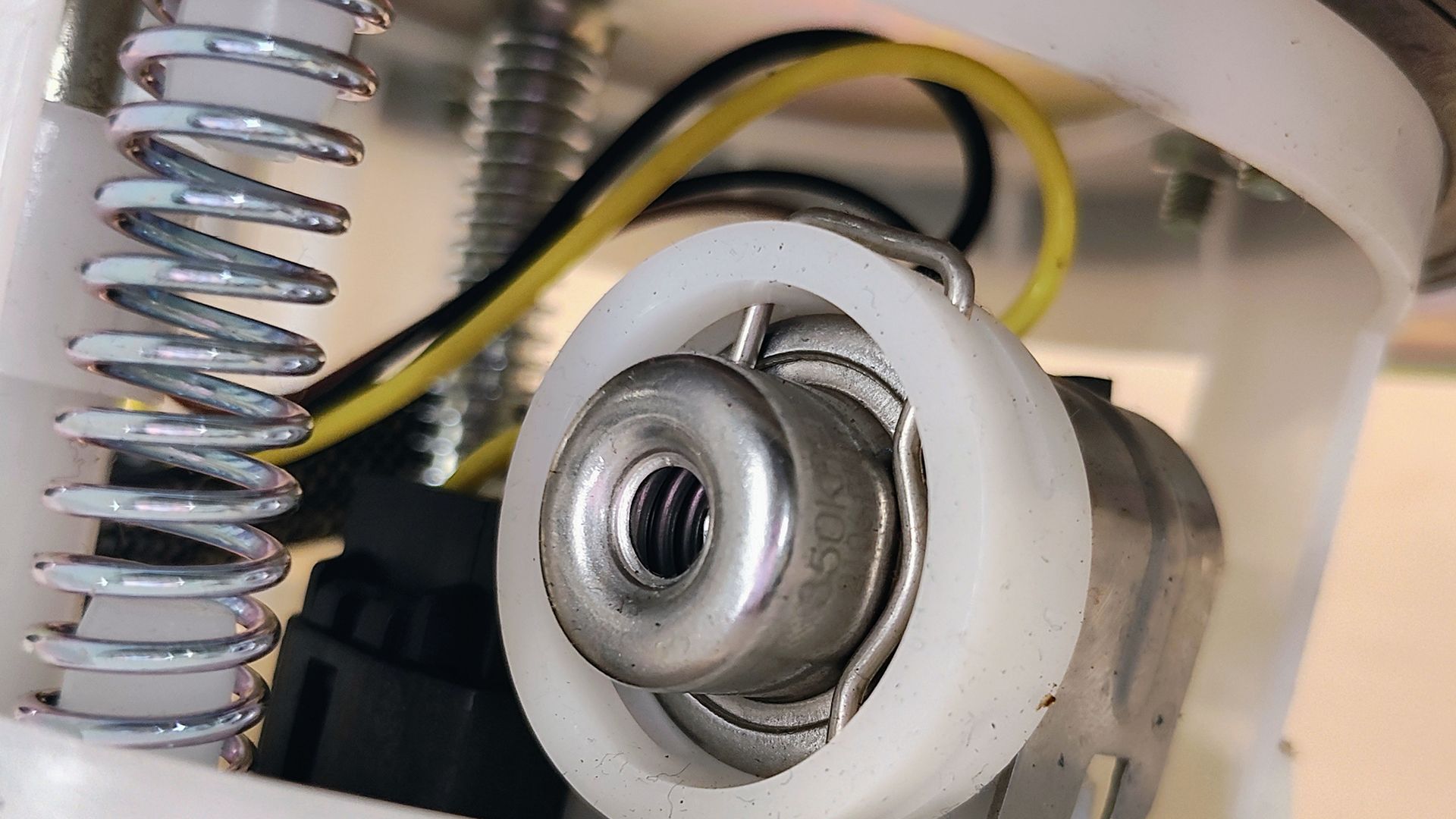
Above, we can see an internal fuel pressure regulator.