Volkswagen And Uber Join Forces To Fight Tesla’s Cybercab
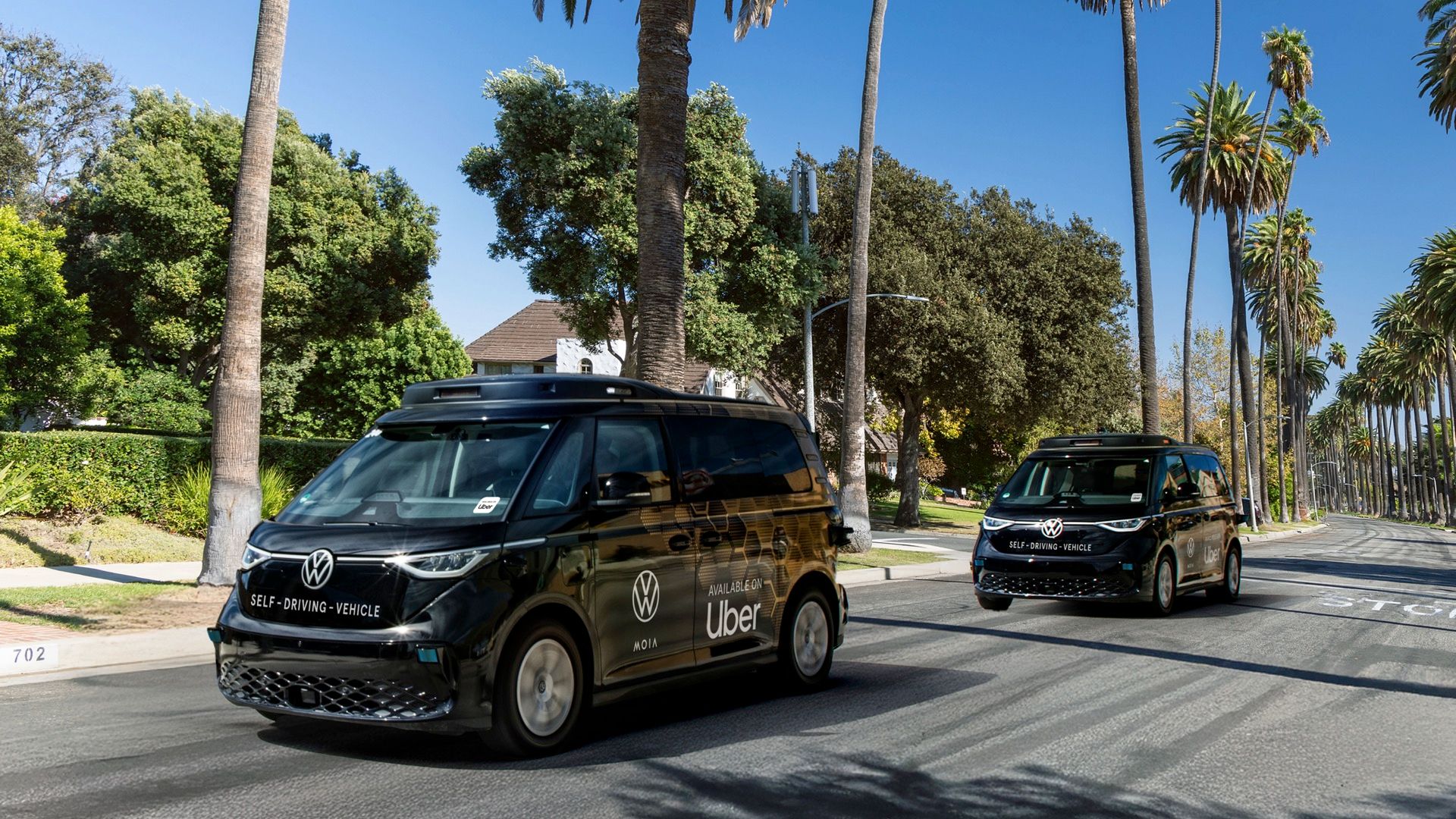
Uber and Volkswagen have announced a long-term partnership that will allow Uber customers to use autonomous ID. Buzz vans on the ride-hailing platform. The results of the partnership will be available in multiple U.S. markets, starting in Los Angeles. This won’t be happening in the next few months, though. Testing of the ID. Buzz AD vans is scheduled to start later this year with rides expected to be offered in 2026, initially with people sitting in the driver’s seat to “help refine the technology and ensure safety.”
Volkswagen
Volkswagen is a mainstream automaker founded by the German Labour Front in 1937 as the “people’s car” company. Famous for the Volkswagen Beetle, Type 2 Bus, and modern classics like the Golf and Jetta, Volkswagen has emerged as one of the world’s largest automakers and a subsection of the larger Volkswagen Group, which either directly or indirectly owns controlling stakes in Porsche, Audi, Bentley, Skoda, Lamborghini, Bugatti, Rimac, Seat, and more.
- Founded
-
28 May 1937
- Founder
-
German Labour Front
- Headquarters
-
Wolfsburg, Germany
- Owned By
-
Volkswagen Group
- Current CEO
-
Thomas Schaefer
A Long-Term Plan
In 2021, Volkswagen showed a prototype autonomous ID. Buzz with 14 cameras, 11 radar sensors, and five LiDAR sensors. The rollout of the Uber-enabled final product will consist of thousands of vehicles over the next ten years. Assuming, we should point out, that legislation goes Uber and Volkswagen’s way and they work together perfectly.

Related
Nissan Is Getting A Jump On The Robotaxis Tesla Desperately Wants To Build
Testing has already begun, and the business model will start operating in 2027.
You may remember, Uber’s first attempts at moving toward an autonomous ride-sharing service resulted in the death of a cyclist when an autonomous-equipped Volvo XC90 (with a safety driver) killed Elaine Herzberg in 2018. The matter was resolved by a settlement, but it ended Uber’s self-driving program and got a lot of scrutiny from the public and the National Transportation Safety Board.

A Strategy That Will Hurt Tesla
During a recent earnings call, CEO Elon Musk said of the Cybercab, “I predict there will be millions of Teslas operating autonomously – fully autonomously – in the second half of next year.” According to Tesla, it will start with a “pilot” rollout in Austin, Texas in June. However, there are two parts to an autonomous taxi business. The autonomous cars, and the way that customers order them.

Related
Waymo Is Getting The World’s First Mass-Produced Purpose-Built Robotaxi This Year
China’s Zeekr revealed the new self-driving vehicle at CES in Las Vegas.
While Tesla is rolling out a test version of its robotaxi app to Autopilot engineers, Uber has been perfecting how to run a service and already has an immense customer base. All it needs is autonomous cars to use, and Volkswagen is now at the point of development where it’s ready to start real-world testing.
“This collaboration marks a significant milestone in the advancement of autonomous mobility, and highlights both Volkswagen’s and Uber’s shared dedication to building the future of transportation. We can’t wait to launch in Los Angeles late next year.”
– Dara Khosrowshahi, CEO of Uber
How It Boils Down
While Uber isn’t exactly beloved for its business practices and Volkswagen has a rocky history in places, Tesla has never been far from controversy. While Volkswagen and Uber have been slowly but surely working up to this point, Tesla is now rushing to the new June 1 deadline for its “pilot” scheme. And, let’s not forget Waymo is also still in the mix.

Related
NHTSA Cuts Crash Reporting, Giving Tesla A Boost In The Self-Driving Race
The U.S. is loosening rules for operating self-driving cars on public roads in an effort to foster development and innovation.
Whoever makes a real commercial breakthrough first, the path to autonomous taxis is littered with corpses, both literally and metaphorically, and we wouldn’t bet a lot of money that robotaxis will be a common thing in the U.S. over the coming years. All it will take is another death with an autonomous vehicle at fault, and it’s both public opinion and legislation that autonomous vehicles will be up against again.