Toyota’s Newest Crossover Is Just As Quick As The GR Corolla
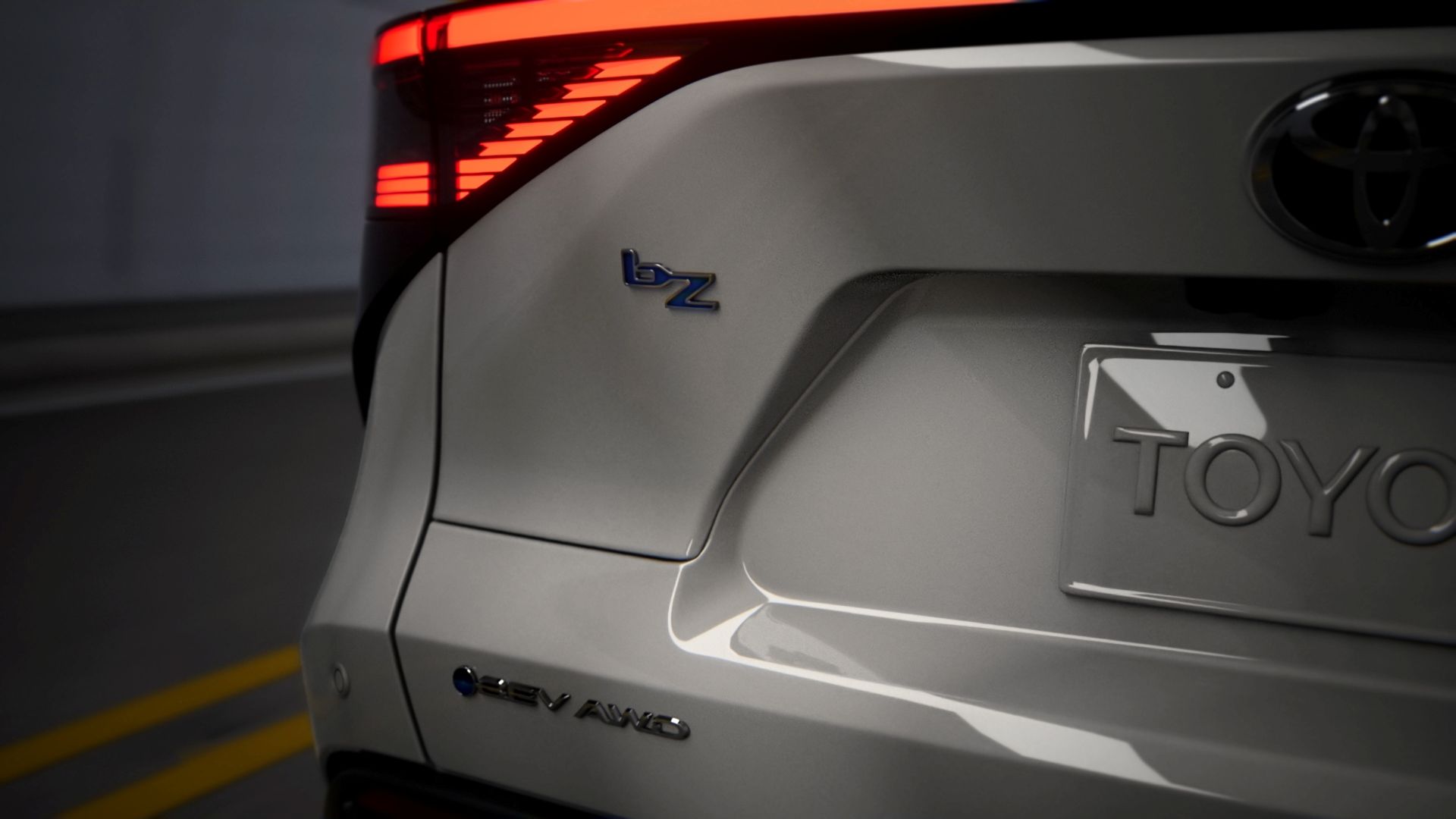
Toyota’s latest electric crossover has landed: the bZ, an updated version of the bZ4X and the newest member of the “beyond Zero” series. The bZ brings additional power and performance, as well as improving on other metrics such as range and charging speed.
In terms of performance, the bZ has found itself competing with another member of the Toyota family: the GR Corolla. Despite being different on paper – one an electric crossover, the other a performance hatchback – these two models share one important performance metric: they both get from 0 to 60 in around five seconds. Let’s take a closer look at the new arrival, and its unlikely rival.
- Base Trim Engine
-
Electric
- Base Trim Transmission
-
Single-speed Automatic
- Base Trim Drivetrain
-
Front-Wheel Drive
This feature focuses on the Toyota bZ, its Woodland variant, and its performance comparison with the GR Corolla, which has a similar 0-60 time.
Meet The Toyota bZ
|
Toyota bZ Specs |
|
|
Powertrain |
1 electric motor (FWD) / 2 electric motors (AWD) |
|
Power |
221 hp (FWD) / 338 hp (AWD) |
|
0-60 mph |
~5 seconds (AWD) |
|
Top Speed |
N/A |
The Toyota bZ was introduced last week, as the new version of the bZ4X. While its predecessor carried some additional meaning in its name (the “4” evoked the equivalent-sized Toyota RAV4, while the X confirmed the vehicle’s status as a crossover SUV), the new model simplifies its name to bZ, or “beyond Zero”, as a reminder of its all-electric, zero-emissions powertrain. This name change, however, only applies to the North American market; elsewhere in the world, the bZ4X nameplate remains in use. The arrival of the bZ comes only a month after the bZ4X’s rebadged sibling, the Subaru Solterra, received an upgraded 2025 version all of its own.
The bZ’s design is sleeker and more modern compared to last year’s model, with substantial styling upgrades especially in the front end. The daytime running lights now come in the form of a full-length bar that stretches across the car’s entire hood. The interior has been refreshed as well, with a 14-inch touchscreen controlling the infotainment system and two wireless charging pads to keep everyone’s devices charged while on the move.
Front-wheel-drive models are equipped with a single motor at the front, which produces 221 hp; all-wheel-drive models have one motor at the front and one at the rear, producing a total of 338 hp. The bZ’s 0-60 time (for the more powerful AWD versions) is around five seconds, comparable to the GR Corolla’s; top speed is unconfirmed as of yet, but there is a possibility it may be even a touch higher than the GR Corolla’s 143 mph.
Two battery options are available: a smaller (57.7 kWh) battery pack is only offered with the FWD version of the base-level XLE trim, while all other configurations get a larger 71.4 kWh battery. Estimated driving range varies from 236 miles to 314 miles, depending on battery pack and configuration. A NACS charger is now standard on all trim levels, allowing the bZ to be charged using most types of charging facilities (including the Tesla Supercharger); the maximum DC fast charge rate has gone up to 150 kilowatts, a considerable improvement on the bZ4X’s 100 kilowatts.
Electric But Rugged: The bZ Woodland
Only a few days after the bZ was revealed in all its glory, Toyota introduced a larger, slightly more rugged version of the model, called the bZ Woodland in North America and the bZ4X Touring elsewhere in the world. The Woodland is almost six inches longer than the standard bZ, and an extra inch higher at the rear; ground clearance is 8.3 inches. Several of the Woodland’s features help distinguish it from other trims, emphasizing its rugged character; roof rails are standard, as are 18.3-inch aluminum wheels with removable covers. All-terrain tires can be selected as an option.

Related
2026 Toyota bZ Woodland Arrives As A Longer, Lifestyle-Friendly SUV
Based on the newly refreshed bZ, this is a few inches longer and a little taller, with more ruggedness and plenty of space.
There are six color options available to choose from: Stepping Stone (a brand-new shade), Halo, Steel, Pavement, Raven Black, and Trueno Blue (whose name pays homage to the Sprinter Trueno, a historical Toyota model known for its AE86 variant of Initial D fame). The interior has a smaller color selection, with Stone Brown and Black options available. An optional “Premium Package” adds features such as a nine-speaker sound system, a glass panoramic roof, ventilated front seats, and a digital rearview mirror.
Only one powertrain configuration is available for the Woodland: a dual-motor AWD layout, producing a total of 375 hp. The 74.7 kWh battery pack gives the vehicle an estimated driving range of 260 miles; this places it on the lower end of the scale when compared to other bZ models, however its range should still be enough for a short trip in the great outdoors (without straying too far from the nearest charging facilities). The Woodland can be charged from 10–80% in around 30 minutes, via a NACS port with Plug&Charge function which enables compatibility with most charging stations.
The bZ Series And The bZ’s Predecessor: The bZ4X
Before there was the bZ, there was the bZ4X. This crossover was the very first model launched as part of the bZ (“beyond Zero”) series; it was introduced in concept form in 2021, as the bZ4X Concept. The bZ series was originally meant to include a total of 15 all-electric production models. The name of the series, “beyond Zero”, indicates Toyota’s goal to give customers more than simply a zero-emissions motoring experience: bZ vehicles are not just electric, they’re also high-tech, comfortable, and affordable.

Related
Driven: 2024 Toyota bZ4X Is An EV Just For Toyota Loyalists
Toyota’s only electric vehicle in the US offers great styling and a comfortable interior, but struggles to keep up with the competition.
The bZ4X/bZ is not the only vehicle in the series to be introduced so far; a second model, the bZ3, arrived in 2022 but is only sold on the Chinese market. Earlier this year, however, Toyota decided to move away from the bZ-based naming system; the bZ itself will likely be the only vehicle sold around the world to use this naming strategy. Other vehicles which were originally introduced as bZ models, but later adopted alternate names, include the Urban Cruiser and the C-HR+.
The bZ4X was less powerful and less equipped than the bZ; the front-wheel-drive versions produced 201 hp, while the dual-motor all-wheel-drive versions produced 215 hp in total. DC fast charging capabilities were not available, and battery packs were slightly smaller. The FWD bZ4X had a 71.4 kWh battery, while AWD variants had a 72.8 battery. In the new bZ all variants except the AWD entry-level version use a 74.7 kWh battery.
An Unlikely Rival: The GR Corolla
The bZ shares its 0-60 time with another model in the Toyota lineup, one that is not a crossover and is oriented towards performance above all else: the GR Corolla, a hot hatch introduced for the 2023 model year. The GR Corolla arrived a few years after the GR version of the Yaris, which was introduced in 2020 but never made it to the States as the standard Yaris is not sold in North American markets. As a result, Toyota decided to create a new hot hatch model its American and Canadian customers would be able to buy, and the GR Corolla was born.

Related
Toyota GR Corolla By The Numbers: 0-60, Horsepower, Lap Times, And More
Here’s every Toyota GR Corolla stat that matters.
The GR Corolla is powered by a 1.6-liter turbocharged three-cylinder engine; in the 2025 model, this produces 300 hp and 295 lb-ft of torque. It was only available with a six-speed manual transmission for the first two model years; However, the 2025 model now includes an eight-speed automatic as an available option. The GR-Four all-wheel-drive system is standard on all trim levels. The interior is similar to that found in the standard Corolla, with the exception of a few visual touches and strategically placed GR logos that help differentiate it from its more pedestrian sibling.
The GR Corolla may be quite a different beast from the bZ, with different goals (driver engagement and fun, rather than efficient zero-emission motoring), but the fact that its acceleration is comparable shows how far electric crossovers have come over the years. Far from being boring, utilitarian models, they can now hold their own against a true hot hatch.
Sources: Toyota