Toyota Wins Big In recent Brand Loyalty Study
Choice is one of the surest signs of a thriving economy, right? Only a healthy economy can support the risk-taking and niche segments that make a wide variety of buying options possible. And, when we’re not doing so hot, choice is one of the first things to go away. How many of your favorite cars and automakers went the way of the dodo during the 2000s recessions or the pandemic? When everyone’s broke, we generally take what we can get.
- Base Trim Engine
-
2.5L Dynamic Force I4 ICE
- Base Trim Transmission
-
8-speed automatic
- Base Trim Drivetrain
-
Front-Wheel Drive
So, a recent study published by LexisNexis, showing that brand loyalty has finally bounced back, almost to pre-pandemic levels, with the Toyota RAV4 being the biggest winner of the bunch, feels like a big deal. Of course, that begs a few questions, like how do you measure that sort of thing? And which brands stand to benefit the most from loyal customers? Let’s dig in and find out.
We decided to explore a study published by LexisNexis Risk Solutions on brand loyalty, with a focus on the biggest winners and losers. Any opinions offered thereupon are those of the author unless otherwise attributed.
We Can Afford To Pick And Choose Again?
There are a number of ways to measure customer loyalty, but the most reliable is by following “repurchase and retention behavior,” that is, if someone buys a Ford in 2010, and then they buy another Ford in 2016, that’s provable customer loyalty. If they switch to Nissan, whether because they were unimpressed with their Ford, or because Nissan is cheaper, then that buyer can’t be said to have any brand loyalty to Ford. Simple, right? So all you need to do is look at what people are buying vs. what they’re trading in, and brand loyalty is easy to measure.

Related
Ford Edge vs. Toyota RAV4: Which SUV Should You Spend Your Money On?
In the world of midsize SUVs, should you go for the tried and true RAV4, or spring for the Ford Edge?
As measured by the LexisNexis study, we’re looking at the likelihood of a customer to return to a brand, by percentage.
Brand Loyalty Has Been Steadily Trending Upwards For A Little While Now
To go over the key findings turned up by this study…
- Brand loyalty in 2019, pre-Covid, measured 54.3%.
- Brand loyalty on January 1st, 2025 measured 52.1%.
- Brand loyalty as of June 30th, 2025, measured 53.3%, up 1.2% from six months prior.
A rising tide lifts all ships, but it lifts some ships higher than others.
Toyota Is Sitting Pretty After A Bump In Brand Loyalty
Toyota has enjoyed a brand loyalty spike across the board. To lay out the numbers:
- Toyota sits at the top of the list, measured at a brand loyalty rate of 65.4% overall as of June 30th.
- The RAV4 was measured at a 69.4% brand loyalty rate.
- Toyota enjoys a brand loyalty rate more than twelve points higher than the industry average.

Related
Most Reliable Car Brands: The Top Trusted Names For Dependability
Based on the latest studies, these car brands are the least problematic.
What Makes The RAV4 Such A Game Changer?
The Toyota RAV4, year after year, remains America’s favorite SUV, and the most popular vehicle outside of the full-size pickup segment overall, selling more than 200,000 units in 2024 alone. To take a look at the performance specs for the RAV4, they’re not unimpressive or anything, but they don’t quite give you an idea of what makes the RAV4 such a winner.
|
2025 Toyota RAV4 Performance Specs |
|
|
Engine |
2.5-Liter NA 4-Cylinder |
|
Power |
203 hp |
|
Torque |
184 lb-ft |
|
Transmission |
8-Speed Automatic |
|
Drivetrain |
Front-Wheel Drive |
On the r/RAV4Club subreddit, drivers listed some of their favorite aspects of driving the SUV, including…
- Reliability. One driver reports having very few problems with the vehicle after twelve years and 150,000 miles.
- Fuel economy. The 2025 LE FWD edition averages 27/35/30 miles to the gallon.
- Looks. Admittedly subjective, but RAV4 drivers universally praise the truck’s ruggedly handsome profile and front-end. One driver makes special note of the cool-looking RAV4 emblem.
- Handling. Some drivers like that it doesn’t feel like a big, bulky SUV, but more like a Toyota sedan.

Related
The SUV Americans Fell In Love With In 2024
The SUV continues an eight-year reign as the top seller in its segment. Here’s how.
You ever read that book The Tipping Point? The author argues that you succeed in business not so much with big, innovative ideas, but by doing everything right. That’s the RAV4. The SUV is certainly reliable, with RepairPal estimating an annual maintenance cost of just $429, but it’s also versatile, it’s very capable off-road, it’s stylish, it’s fun to drive, and it’s a comfortable family vehicle. It does a lot of things right, and very little wrong, and that’s, clearly, a key driver in customer loyalty.
Tesla Seems To Have Lost Its Shine For Many Buyers
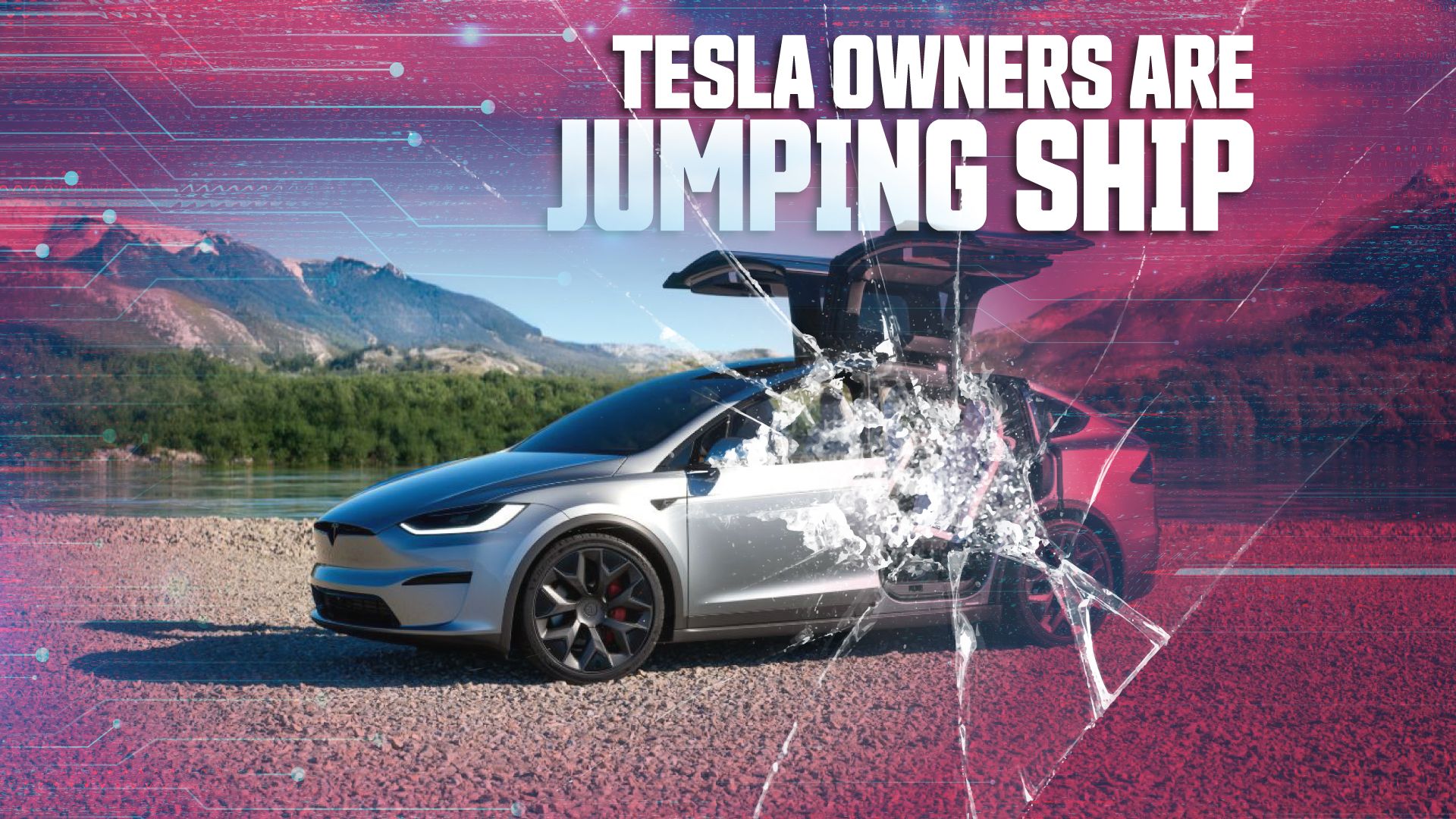
Before the pandemic, Tesla ranked first in customer loyalty, commanding a 60.9% retention rate. Today, that number is down to 54.2%. This still beats the industry average, but by a very narrow margin. We don’t have to go over all the fallout that’s been happening with Tesla this year. You read the news, you know what’s going on. But the LexisNexis study suggests that there may be more to it than just what the top headlines are saying.
Among key factors chipping away at Tesla loyalty, according to the study, include…
- Increased competition from other EV brands like Rivian, and brands like Volkswagen are getting into the electric segment.
- Uncertainty regarding EV tax credits.
- Higher prices across the industry have a tendency to affect premium brand sales, even when brand loyalty is bouncing back overall. You can buy used Teslas for less than you’d think, but the brand is still listed as a luxury automaker, and the brand charges luxury prices for new models.
It’s important to remember that automakers overestimated the short-term and long-term viability of an aggressively pro-EV market strategy specifically because of early adopter spikes. A lot of these buyers weren’t even that into cars until EVs became viable, and their loyalty to Tesla may have more to do with the product than the brand. That is, they didn’t have all that many options to pick from five, six years ago. Now they do.

Related
Here’s How Much You’ll Get If You Want To Trade Your Tesla Cybertruck
Tesla is finally making trade-in offers on the Cybertruck, and it’s not pretty.
There’s no nice way of putting it when it comes to the Cybertruck. It has its fans, but it’s been found to be an underperformer when it comes to long-haul towing, and there are some severe dependability issues that Tesla needs to address if they want Cybertruck buyers to ever buy a second one. Meanwhile, Elon Musk’s foray into politics has no doubt had an effect on how the brand is perceived, and frequent recall notices may have Tesla owners jumping ship.
There are plenty of factors at play when we’re looking at Tesla’s slipping market share over the last few years, and the last year especially. Just as Toyota’s leadership can’t be pinned on any one thing, neither can Tesla’s losses.
It’s Mostly Good News
Even as Tesla hasn’t exactly been enjoying the fruits of this recent bump in brand loyalty, the bottom line is that this is mostly good news. If buyers can afford to be picky, in spite of rising costs and uncertainty as to the value of a dollar, that means we could be doing a lot worse, both from an auto industry standpoint, and from a consumer standpoint.
Sources: LexisNexis, r/RAV4Club, RepairPal, Tesla, Toyota