Toyota Is Improving Its Liquid Hydrogen Fuel System Through Racing
Toyota has visions of going mainstream with liquid hydrogen propulsion. Those efforts took several significant steps forward during this year’s Fuji 24 Hours, according to a report in the official Toyota Times. The Japanese marque’s liquid-hydrogen Corolla took its best overall ranking and suffered far fewer reliability issues during the event.

- Base Trim Engine
-
1.6L Inline 3 Gas
- Base Trim Transmission
-
6-Speed Manual
- Base Trim Drivetrain
-
All-Wheel Drive
Having finished last in its two previous outings, the hydrogen-powered GR Corolla – entered for the event by Toyota’s factory Gazoo Racing team – finished 32nd overall at the Fuji 24 Hours in 2025 and completed a total of 468 laps, comfortably more than its previous best (358 laps), and despite a weather-related delay. According to Toyota Times, GR vehicle development chief engineer Ito claims this progress was down to three specific areas of improvement.

Related
Toyota Is All-In On Hydrogen – Are You?
Hydrogen remains a part of the plan despite limited vehicle availability.
The Notable Areas Of Development

The most significant improvement concerns the fuel tank and pump, the latter of which had to be replaced twice during last year’s 24-hour race, costing the team several hours on-track. Exhaustive bench tests meant the updated fuel pump ran without fault for the full 24 hours in 2025, while a newly designed oval fuel tank increased hydrogen capacity, allowing the drivers to go 1.5 times the distance per fill-up than they managed in 2024.
Additionally, a new technology was incorporated that allowed the fuel system to switch automatically to lean fuel mixes during safety car periods and/or long fuel runs, a development that would prove crucial for a liquid hydrogen Toyota road car and the high fuel economy figures expected of one. Similarly, another new system – stoichiometric technology – meant the hydrogen Corolla could achieve, according to Ito, “performance that rivals gasoline in races,” although Toyota did not officially state what kind of horsepower was being produced.

Related
Toyota Reveals The Key To Convenient Hydrogen Power
Swappable cartridges take away one of the biggest drawbacks of hydrogen power.
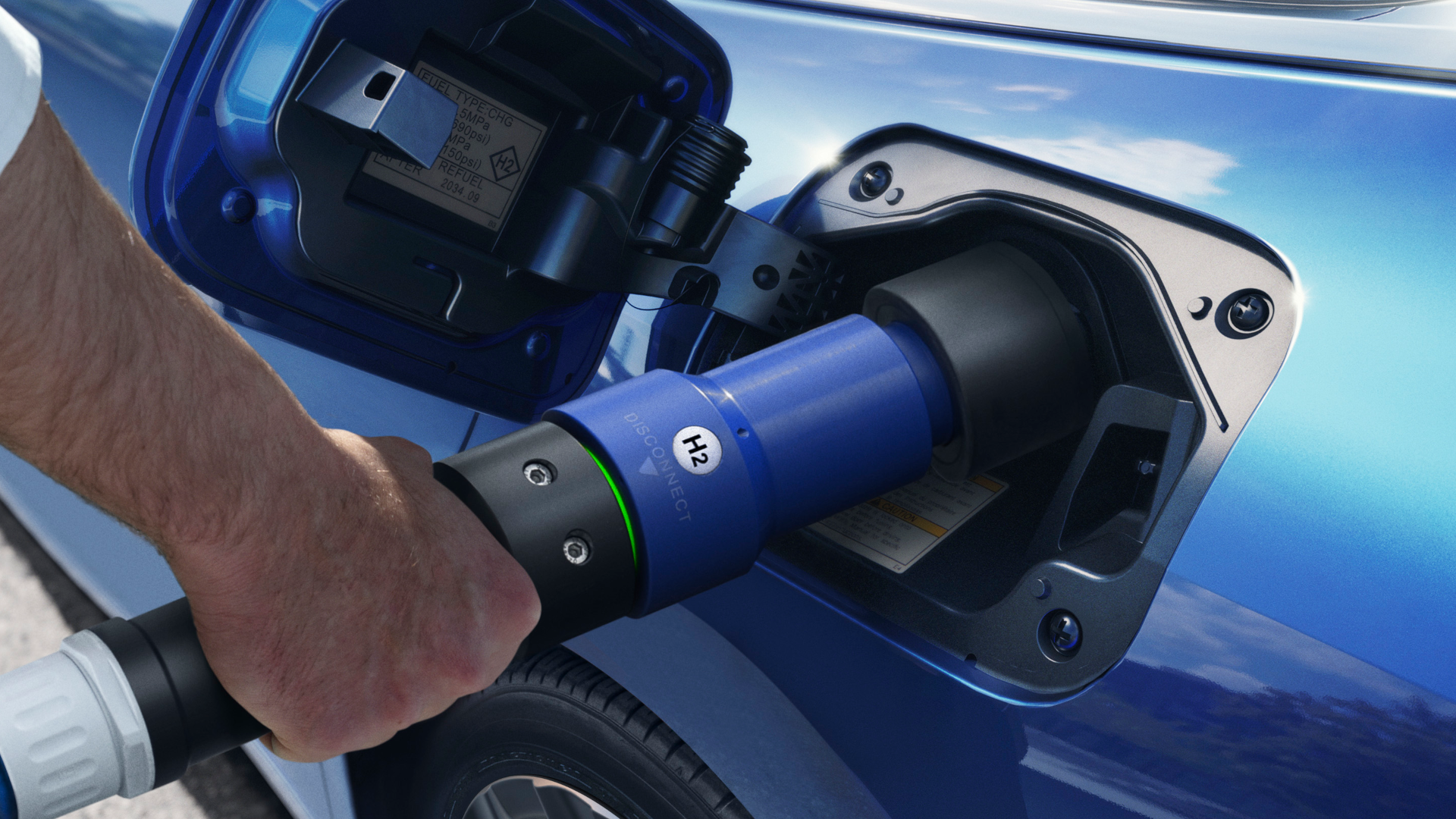
Similarly, a newly-developed valve for the refueling rig allowed faster and safer fueling speeds, the old system having depended on an external actuator that limited the flow speed into the car, and might even cause fuel leaks. The new internal valve not only improved fuel speeds by 30% but also helped reduce weight. Finally, a switch from copper wiring to aluminum cut the Corolla’s overall curb weight by 18%, another potentially significant weight and fuel saving when the system is transferred to a road car.
What This Means For A Liquid Hydrogen Toyota On The Road
Admittedly, despite the improvements over 2024, Gazoo president Tomoya Takahashi stated that there were still significant areas of development required before a liquid hydrogen Toyota could be mass-market produced, to say nothing of a general malaise towards hydrogen propulsion. Despite now being in its second generation and featuring a third-generation fuel cell, for example, Toyota’s hydrogen-powered Mirai is still only available in California. By rectifying these issues one by one, however, Takahashi claims Toyota’s goal of “commercializing” its liquid hydrogen engine is closer than ever before.

Related
Toyota Takes Hydrogen Combustion Somewhere We Never Expected: The Sauna
Guess who benefits the most? Toyota’s rally team.
“The hydrogen combustion has been the biggest challenge, but we have now reached the stage where we can complete a 24-hour race without any major issues, so I think we have pretty much internalized it…. After 10 years of working on this, I believe that the ultimate goal is commercialization, so I think the theme this time was how to improve the technology in order to commercialize and mass-produce it.”
– Tomoya Takahashi, Gazoo Racing president
Source: Toyota Times