The Swedish Turbocharged Five-Cylinder Sedan That Tried To Beat The BMW M3
Do good companies make occasional bad (or mad) hires? That’s the only thing that comes to mind when remembering that, at the beginning of the century, Volvo embarked on an uncharacteristic tangent. It was led by what must have certainly been a lone, rogue voice in their marketing department – declaring that the company should try broadening its appeal beyond its reputation as a maker of safe cars, and expand into the German-dominated shark-tank of performance and youthfulness.
But was such a direction change really that farfetched? Maybe not. For it only takes one look back to 1994 and recall Volvo going full madcap by racing a pair of 850 estates in the gladiatorial British Touring Car Championship, to see that scratching the itch that existed beyond acing crash test scores wasn’t perhaps as crazy as observers had initially thought.
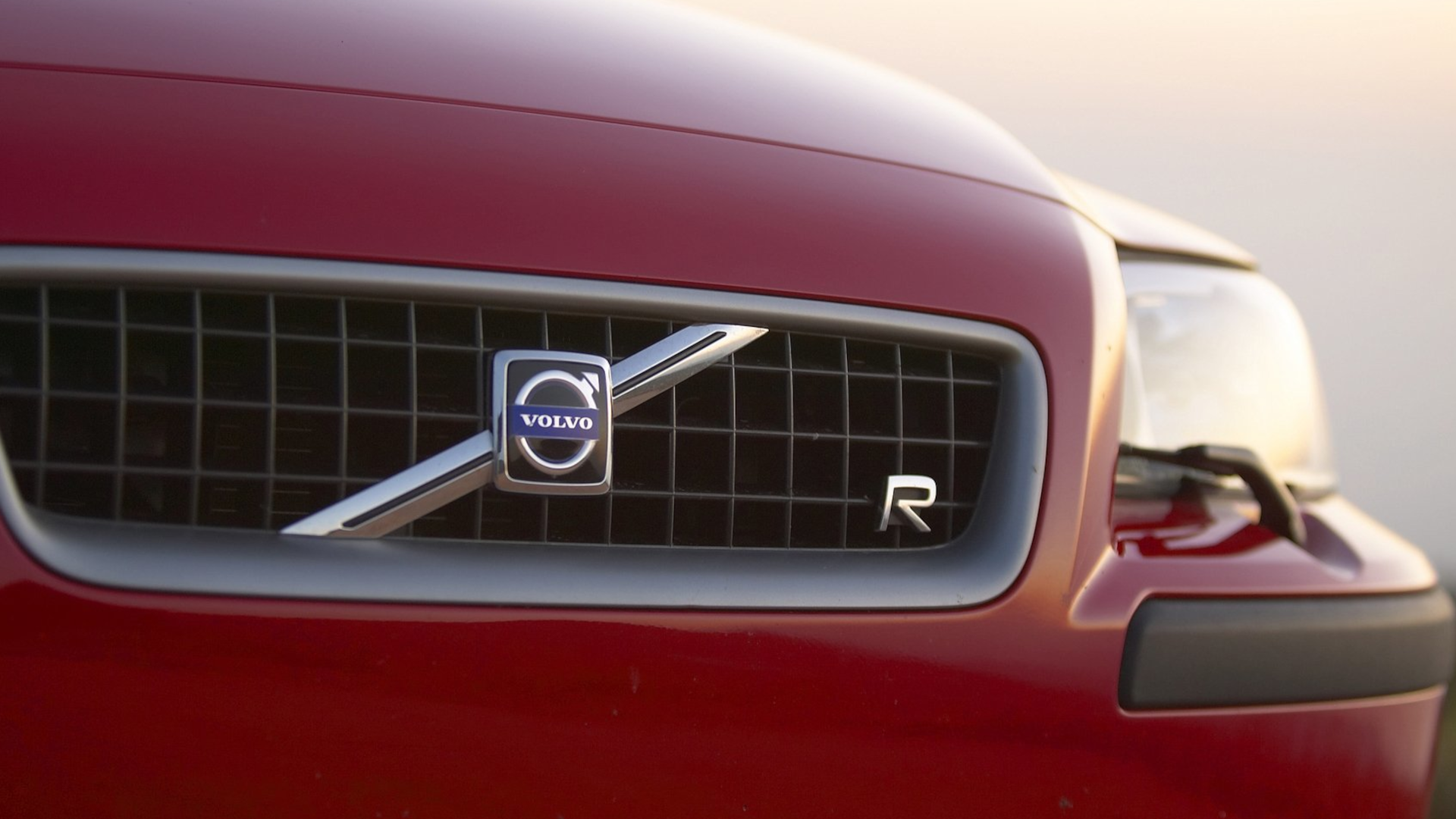
Cashing in on its newfound racing awareness, one year later, Volvo launched its R brand – effectively a me-too version of AMG and BMW M – and produced such-badged high-performance versions of the 850, S70 and V70. The best, though, was still to come. What followed was an aptly-timed precursor to the 16th round of the 2006 Football World Cup, where Sweden and Germany faced off against each other.
This article looks back at Volvo’s first attempt at building a high-performance sedan.
What Volvo Did
|
Engine |
2.5-liter turbocharged five-cylinder |
|---|---|
|
Power |
300 hp |
|
Torque |
295 lb-ft |
|
0-60 mph |
5.3 seconds |
|
Top Speed |
155 mph (limited) |
It was easy to see why Volvo wanted a slice of the performance sedan cake. And how they saw themselves getting it. After all, the company already had experience in AWD thanks to products like the XC90, as well as a history of turbocharged five-cylinder engines. So why not pair them together in some kind of one-off, mythical Thor-like do-or-die effort?
Fun fact: Ford owned Volvo, Jaguar, Aston Martin and Land Rover in a marriage of convenience called the Premier Automotive Group that existed from 1999 to 2008 – the second-gen Focus ST and RS launched in that period used the Swedish brand’s turbocharged 2.5-liter five-cylinder engine with its trademark rumble.
Thus, the S60R was born in 2003: a Haldex-equipped AWD sports sedan with an engine somewhat smaller than any of its German rivals (the E46 M3’s straight-six stretched to 3.2-liters; and the Audi S4 was fitted with a 4.2-liter V8); the former delivering 300 hp and 295 lb-ft (peaking from 1950-5250 rpm) from its raucous 2.5-liter honeypot, paired with either a 6-speed manual or initially a 5-speed auto, that received an extra cog in its final two production years until 2007.

Related
The Most Powerful 5-Cylinder Engines Ever Made
Sometimes an odd number of cylinders leads to great results.
Notwithstanding the fact that the S60R defaulted to FWD in default mode owing to its Haldex arrangement (similar to that found in fast VWs and Audis), its distributable tractive goodness still translated into a 0-60 mph sprint time of 5.3 seconds, which was bang-on in performance sedan territory.
Yet the S60 R was more than just a stealthy sprinter. Its chassis was controlled by a Volvo-first called Four-C, short for Continuously Controlled Chassis Concept. Conceivably ground-breaking for 2004, in essence, it meant the car interpreted data from wheel traction, speed and travel sensors, the steering wheel angle, yaw rate, throttle position, braking and stability control sensors – and adjusted the active suspension (developed by fellow Swedes Öhlins Racing and shock absorber manufacturer Monroe) accordingly 500 times every second. All to the end of minimizing lateral and longitudinal movement.
Beyond that, the active dampers could also be set manually into Comfort, Sport and Advanced (for racetracks): standard fare in modern terms but pretty cutting-edge 20 years ago.
Was It A Success?
The Volvo S60 R cost $37,510 at launch in August 2003, which was $4,675 dearer than a bog-standard S60 T5 AWD, and $14,610 cheaper than the 349-hp Mercedes C32 AMG.
In Car & Driver’s road test of August 2003, the S60 R outperformed its key rivals in lateral acceleration trials; pulling 0.88 against the Audi S4 (0.85g), C32 (0.81g) and M3 (0.87g). The Volvo’s 12.9-inch disc and Brembo caliper setup performed equally admirably in braking tests (70 mph to 0 mph), matching the S4 at 168 feet and out-stopping the Mercedes by six.
While keeping composed regardless of what was asked of it, the S60 R’s fundamental drawback, though, remained its FWD bias. Only under acceleration or when front wheel slip was detected, did the available front/rear torque ratio split to 50/50; beyond its 90/10 default. As a consequence, at-the-limit driving was ultimately soured by a stingy steering feel and trademark front-drive push; and counter-intuitively, to leave apexes behind faster, you’d need to have entered them slower to have more shove sent to the rear.
It’s In The Genes

On paper, the Volvo S60 R hit all its intended marks: subtle aggression through hints of tateful bodywork additions and added power-pledging blue trim; a bold 18-inch (Pirelli Zero Rosso, if you have to ask) tire setup, trick suspension, monster brakes and easily enough speed to make it into the hallowed high-performance club. And perhaps, best of all, you could even order it as a wagon.
Better still, at its introduction, while still slower but easier to live with than an M3, it also cost $11 000 less. Such aggressive pricing put the S60 R in the Audi A4, BMW 330i Performance, Infiniti G35 and Cadillac CTS territory: lesser rivals it had no problem seeing off, any day of the week.
Just where did the S60 R fit in among this barrage of bridesmaids? Indisputably, it was by far and away the most muscular S60 Volvo had ever built. Except for rawness and driver feel – using a front-driven luxobarge as donor platform, notwithstanding the R bestowment, its parent company’s most ambitious sporting aspirations were never going to materialize into a credible M3 beater. The hottest Volvo at the time, then, but nowhere near a palate pulverizer.
Volvo’s biggest vice, then, with the S60 R – wasn’t to build a car that failed to take on the M3; it was not building one that made you feel that it could: blame it on the one guy they forgot to hire.
Sources: Caranddriver.com, FCP Euro, Media.Volvocars.com