The Most Powerful Naturally Aspirated V12 Available In 2025
How many naturally aspirated V12 engines are still left in 2025? If you said more than 10, you’d be dead wrong. There are only a handful of cars powered by naturally aspirated engines, and if we exclude V12 engines that receive help from electric motors, that number becomes even smaller.
Ferrari
Ferrari is an Italian manufacturer of sports cars, supercars, and luxury grand tourers founded by and named after Enzo Ferrari in 1939 – originally as Auto Avio Costruzioni due to legal complications with Alfa Romeo. Ferrari famously only produced roadgoing sports cars as a means of funding its racing exploits, which include multiple F1 World Championships and wins at Le Mans and various other prestigious races. Today, Ferrari is one of the most valuable brand names in the world, limiting production of its highly-sought-after models to maintain desirability, which is in no short supply when they’re powered by some of the world’s most advanced V6, V8, and V12 engines.
- Founded
-
1939 (as Auto Avio Costruzioni)
- Founder
-
Enzo Ferrari
- Headquarters
-
Maranello, Italy
- Owned By
-
Publically Traded
- Current CEO
-
Benedetto Vigna
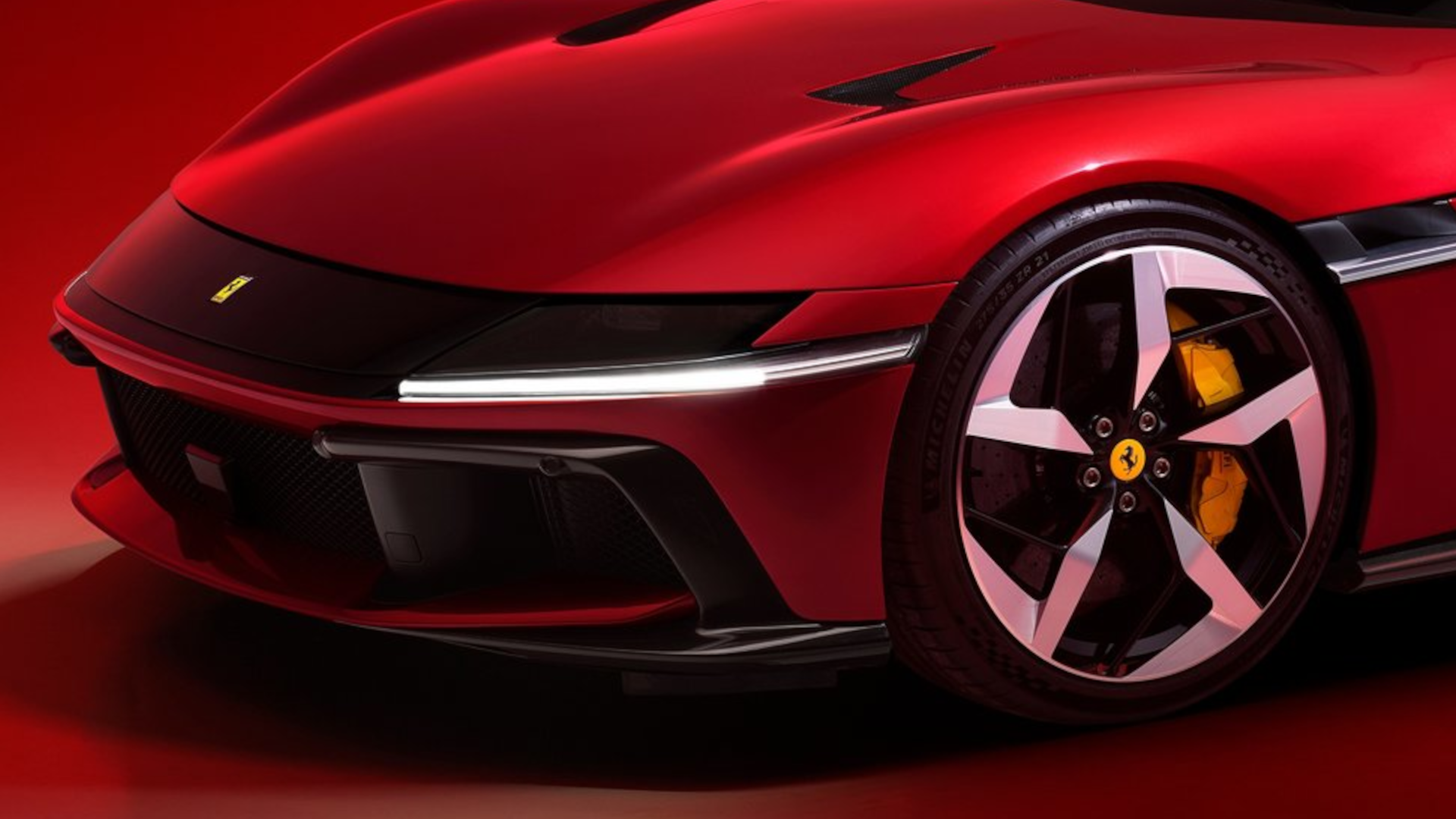
Of the handful of naturally aspirated V12 engines available in 2025, one stands out as the most powerful, but only by a small margin. The Ferrari F140HD V12 engine is used in the Italian automaker’s SUV and its Ferrari 12Cilindri grand tourer.
This article focuses on the latest version of Ferrari’s naturally aspirated V12 engine.
Ferrari’s F140HD V12
The most powerful naturally aspirated V12 engine available in 2025 is the Ferrari F140HD V12, the modern descendant of a long line of naturally aspirated Ferrari V12 engines. We’ve seen one member or another of the Ferrari F140 engine family in some of the automaker’s best and boldest, like the Ferrari Enzo, which was the first Ferrari model to utilize the F140 V12, the Ferrari LaFerrari, and the Ferrari 812 Competizione, to name a few.
Powering the Ferrari Enzo, the F140 V12 engine was the most powerful annually aspirated V12 engine available in any road car at the time and is one of the best Ferrari models powered by a naturally aspirated engine. The F140 V12 would continue to evolve from its application in a car built to honor the automaker’s founder, securing several awards in the International Engine of the Year competition, with its application in the Ferrari 812 Superfast securing the “Best New Engine” award. For the Ferrari 12Cilindri, the naturally aspirated V12 engine was improved.

Related
Ferrari Has Just Patented An Engine Like Nothing We’ve Ever Seen
This innovation could save the V12, and Honda has already proven that something similar can make production.
Ferrari’s efforts to further its V12 engine resulted in not only a redline increase to 9,500 rpm but also the introduction of several pieces of hard- and software that included new titanium connecting rods, a new aluminum alloy for the pistons, a lighter crankshaft, sliding finger followers sourced from Formula 1 coated in diamond-like carbon, a new manifold layout, and intake plenum design. The added hardware resulted in an engine that was lighter, more capable, and more powerful than the engine used in the Ferrari 812 Superfast, although not as powerful as the Ferrari 812 Competizione.
However, hardware was not the only change introduced for this rendition of the F140 V12 engine. The 12Cilindri’s engine also employed Ferrari’s Aspirated Torque Shaping software, which allowed the Ferrari engineers to modulate the torque curve in the third and fourth gears to improve the feeling of torque delivery without sacrificing acceleration, a first for a naturally aspirated Ferrari engine. With new hardware and software introduced, the F140HD’s efforts are vocalized through a revised exhaust system featuring a 6-1 manifold, equal-length exhaust traces, and a new design for the engine’s central section.
But how does it compare to the other Ferrari V12 engines?

The Ferrari Purosangue is powered by the same, sort of. The version of Ferrari’s V12 used in the SUV model is the Ferrari F140IA and has a significantly lower power output than the engine utilized in the Ferrari 12Cilindri. The Purosangue engine did feature a revised cylinder head design compared to the engine used in the 812 Competizione. It received similar upgrades to its engine internals to coax its performance to higher levels. Still, it is less powerful and is a lesser offering compared to the F140HD V12 engine. However, it is powering a Ferrari model that will go where no Ferrari ever has, so brownie points for that.
The same goes for the Ferrari 812 Superfast, which the Ferrari 12Cilindri was born to supersede. It was powered by the most powerful iteration of Ferrari’s naturally aspirated engine at the time. Still, a sprint from a standstill to 62 mph is identical despite increased power and revisions to the F140 engine for its application in the Ferrari 12Cilindri. It is the most powerful naturally aspirated V12 engine available in 2025, but as we said, only by a small margin. However, it is one of the fastest Ferrari models powered by a front-engine V12.
The Runner-Up
|
Model |
Ferrari 12Cilindri |
Lamborghini Revuelto |
|---|---|---|
|
Engine |
6.5-liter, naturally aspirated, V12 |
6.5-liter, naturally aspirated, plug-in-hybrid, V12 |
|
Horsepower |
819 hp @ 9,250 rpm |
814 hp (ICE only) / 1,001 hp (combined) |
|
Torque |
500 lb-ft @ 7,250 rpm |
535 lb-ft (ICE only) / 1,044 lb-ft (combined) |
|
0-62 |
2.9 seconds |
2.5 seconds |
|
Top speed |
211 mph |
217 mph |
The Ferrari F140HD is the most powerful V12 available in 2025, and the Lamborghini Revuelto’s V12 engine ranks second, with only five horsepower separating the two. Looking at total outputs, the Lamborghini Revuelto has a higher power output, trumping the Ferrari 12Cilindri’s output by more than 150 hp. However, without the assistance of its hybrid system and three axial flux electric motors, the Lamborghini Revuelto’s 6.5-liter naturally aspirated V12 engine commands an output of 814 hp, which is still an impressive output and enough to make it more powerful than the most potent Lamborghini Aventador models.

Related
Ferrari Was Technically The First Automaker To Fit An F1 Engine In A Road-Legal Car
Many automakers love to harp on about having F1-derived tech or engines in their road cars, but Ferrari was the first to do it.
The V12 engine in the Lamborghini Revuelto is an example of the Italian automaker’s new-generation V12 engine architecture used for Lamborghini’s first High-Performance Electrified Vehicle, the L545. It is a 6.5-liter V12, the lightest and most powerful V12 engine created by Lamborghini, and it has a completely different orientation than the unit used in the Aventador. The F140HD and L545 V12 engines have similar power densities, while Lamborghini’s engine is the most power-dense V12 in Lamborghini’s history. Through several revisions of its internals and electric nannies that oversee its movements, the V12 is significantly better than the one employed in the Avetandor’s swan song, the Lamborghini Aventador Ultimae.
The Last Of A Dying Breed
Although the naturally aspirated V12 segment is dwindling, Ferrari and Lamborghini keep this dying engine niche alive and well. The cherry on the cake is Ferrari’s plan for the future of its V12 engines, which stated that it would continue to produce V12 engines as long as the law allows. Aside from the Ferrari 12Cilindri and the Lamborghini Revuelto, only a handful of naturally aspirated V12-powered cars are left in 2025.

Related
The Highest Horsepower V6 Engine Available In 2025
What is the highest-horsepower V6 engine available in 2025? We’ll give you a clue. It’s in Ferrari’s new flagship model.
When we said a handful, we actually meant just three, and they’re all from the same manufacturer. Beyond the largest Italian automakers in car history, Gordon Murray Automotive is the only other manufacturer still producing naturally aspirated V12 engines. All three models in the British automaker’s catalog qualify. The GMA T.50 has a 3.9-liter naturally aspirated V12, the most power-dense V12 engine for a road car. In contrast, the T.50S Niki Lauda has an even greater power output of 752 hp compared to the 660 hp offered in the GMA T.50. The lowest ranking of the GMA trio, the GMA T.33, utilizes a similarly sized naturally aspirated V12, albeit with a significantly lower power output.
Aside from these models from the brain behind what is considered the world’s first hypercar, there are no other cars available in 2025 that are powered by naturally aspirated V12 engines. Why? It’s hard to pinpoint why different manufacturers abandoned NA V12s because there is no one reason but rather a medley. Suppose we had to make an educated guess, it’s likely that a mix of emissions regulations, the proposition of turbocharging versus naturally aspirated, production costs, a dwindling market, and so on. The writing is on the wall for the V12 engine, considering that only six automakers were keeping the V12 engine alive last year. Still, we’ll savor the last of this dying breed for as long as possible.
Sources: Ferrari, Lamborghini, Gordon Murray Automotive