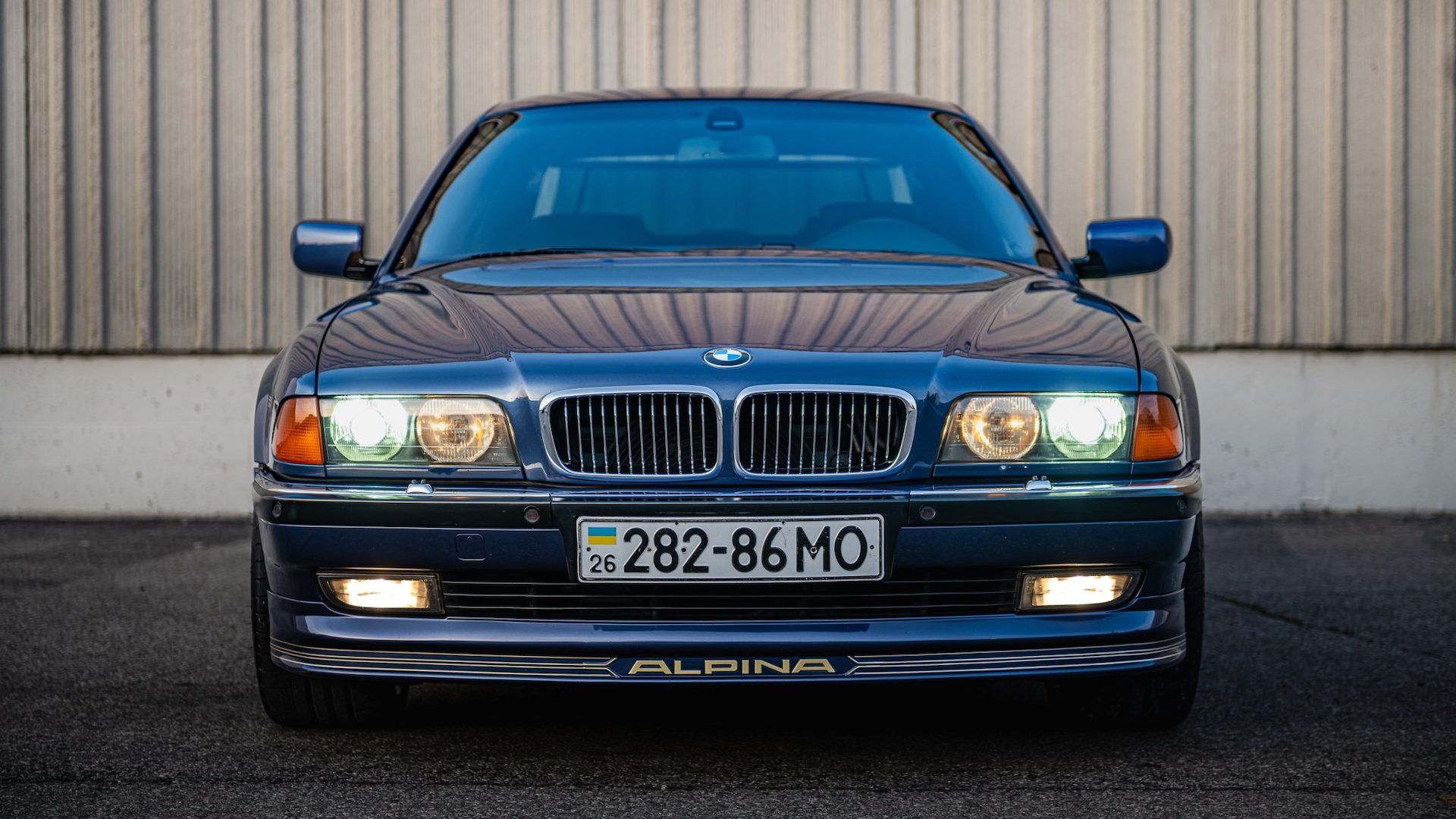
The Late-1990s BMW 7 Series Is Handsome With An Affordable Used Price
The BMW 7 Series has been a leader in the luxury sedan segment, while other manufacturers have failed to achieve the same level of success. The first generation, which BMW designated the E23, was a six-cylinder-powered sedan with advanced technology, including an onboard computer and a sophisticated climate control system.

- Base Trim Engine
-
3L I-6 Hybrid
- Base Trim Transmission
-
8-speed automatic
- Base Trim Drivetrain
-
Rear-Wheel Drive
- Base Trim Horsepower
-
375 HP @5200 RPM
- Base Trim Torque
-
383 lb.-ft. @ 1850 RPM
The follow-up was the E32 7 Series, which introduced a V12 engine to the 7 Series and represented a significant advancement in the model. However, the E38 generation that followed is the apple of our eye, characterized by its handsome styling, range of configurations, and tempting price tag on the used market.
This article focuses on the third-generation BMW 7 Series that launched for the 1995 model year. The story also looks at its range-topping derivative and the Alpina model.
Fit For An Eastern European Mob Boss
|
Model |
1995 BMW 728i |
1998 BMW 750 iL |
|---|---|---|
|
Engine |
2.8-liter naturally aspirated inline-six |
5.4-liter naturally aspirated V12 |
|
Horsepower |
193 hp @ 5,300 rpm |
326 hp @ 5,000 rpm |
|
Torque |
206 lb-ft @ 3,950 rpm |
361 lb-ft @ 3,900 rpm |
|
0-60 mph |
8.2 seconds |
6.3 seconds |
|
Top speed |
141 mph |
155 mph |
The E38 was the third generation of BMW’s 7 Series, and many fans consider it the best of the sedan’s iterations. Introduced in 1995, the E38 featured some styling cues reminiscent of the previous generation, but its looks had matured. This version featured a handful of engines spread across the model range. The lowest-ranking members of the E38 generation sourced their strength from an inline-six. Mid-range variants featured V8s similar to the powerplants in the previous generation 7 Series, and the highest-ranking models relied on gasoline-powered V12 engines.
The E38 was also available in three distinct body styles: short, long, and limousine. BMW’s 7 Series has always been one of the leading models in the German automaker’s lineup in terms of technological advancements, and the E38 was no exception. It was the first car to feature curtain airbags, the first European car to utilize satellite navigation, and the first BMW model to feature an onboard television. Aside from being a car of many firsts, it was the last incarnation of the 7 Series to be available with a manual transmission.

Related
The BMW M7 that Germany Was Too Afraid To Build
BMW South Africa built, arguably, what was supposed to be the BMW M7, which we never got for the first-generation BMW 7 Series.
The 7 Series was equipped with features that enhanced the driving experience, including auto-leveling xenon headlamps, Active Comfort seats, Electronic Damper Control, and a tri-zone climate control system. The sedan also came fully loaded with electronics that helped it stand out in its segment. Ultimately, the car was an alluring and luxurious sedan available for a surprising amount if you’re looking for an example in decent condition, but a fair bit more for a mint-condition example.
A Pretty Penny For A Handsome BMW
There were many E38-generation BMW 7 Series derivatives, and according to Classic.com, the average selling price of one is $15,183. However, that’s just the average selling price of the entire range. For this story, we are examining the entry-level and range-topping models. For the former, that is the BMW 728i with an inline-six engine that has an average selling price of $6,231.
For a 728i in mint condition, expect to pay up to $13,000 for a six-cylinder-powered 7 Series with relatively low mileage and in its original condition. One of them from 2000 sold for $10,850 in 2020. A 1998 example with 106,000 miles and in original condition sold for $13,406 in 2023.

Related
BMW 7 Series Generations: Key Updates Across All Model Years
BMW’s grand sedan continues to lead in tech, but it’s traditional market segment is now being threatened by SUVs, also within the BMW stable.
The range-topping 750iL, which BMW Classic has covered in great detail, demands a higher price, which makes sense considering it is the most feature-laden model and has a V12 engine. According to Classic.com, the average selling price for them is $18,894. At the time of writing this article, a 1998 example with 216,000 miles and in its original condition was for sale for $25,500. A car from 2001 with 71,000 miles in near-original condition is listed for $31,000.
Regarding sold examples, a 2001 BMW 750iL Sport with 55,000 miles and in near-perfect condition went for $61,000. Another 2001 sedan with 37,000 miles and in original condition, except for its wheels, sold for $45,100 in 2023.
7 Series Royalty
|
Model |
1995 Alpina B12 5.7 |
1999 Alpina B12 6.0 |
|---|---|---|
|
Engine |
5.7-liter naturally aspirated V12 |
6.0-liter naturally aspirated V12 |
|
Horsepower |
382 hp |
424 hp |
|
Torque |
413 lb-ft |
443 lb-ft |
|
0-60 mph |
||
|
Top speed |
174 mph |
181 mph |
The Alpina B12 is a name that fans of the early generations of the BMW 7 Series might be familiar with because the tuner has a history of tweaking these big sedans since the model’s introduction in 1977. Two of them are among the greatest Alpina models ever made. For the E38 generation, the B12 5.7 and B12 6.0 were based on the 750i and 750iL, respectively. Both featured a laundry list of modifications that improved performance and visual appeal.
The B12 5.7 had a modified V12 engine with a displacement of 5.7 liters and hardware upgrades such as new cylinder heads, Mahle pistons, a modified air intake, and more. Power significantly increased compared to the stock vehicle, while the interior received substantial improvements by adding high-quality leather pieces. In total, Alpina only built 202 examples of this model.

Related
BMW’s Big Limo Gets Some Character From Larte Design
This BMW will get you all of the attention you crave.
The Alpina B12 6.0 was the more powerful and rarer configuration of the E38 7 Series models. Like its lesser-powered sibling, the B12 6.0 had a significantly improved V12 powerplant. At the time, this was the most powerful and fastest naturally aspirated engine made by Alpina. In total, the company only built 84 examples of this model. Today, they demand a hefty sum on the used market.
Eye-Watering, But Fair
According to Classic.com, the average selling price of an Alpina B12, which includes both derivatives, is $57,347. A B12 5.7 with 57,000 miles and in near-perfect condition sold for $70,000. Another example in good condition but with 163,000 miles sold for roughly $25,127 in 2023.
As you’d expect, the version powered by the 6.0-liter V12 is much harder to come by on the used market. However, there have been a few examples that have sold. A 2000 Alpina B12 6.0 with 114,000 miles and in original condition, but showing some wear, selling for roughly $56,000 in 2023.
Sources: BMW, BringATrailer, Classic.com