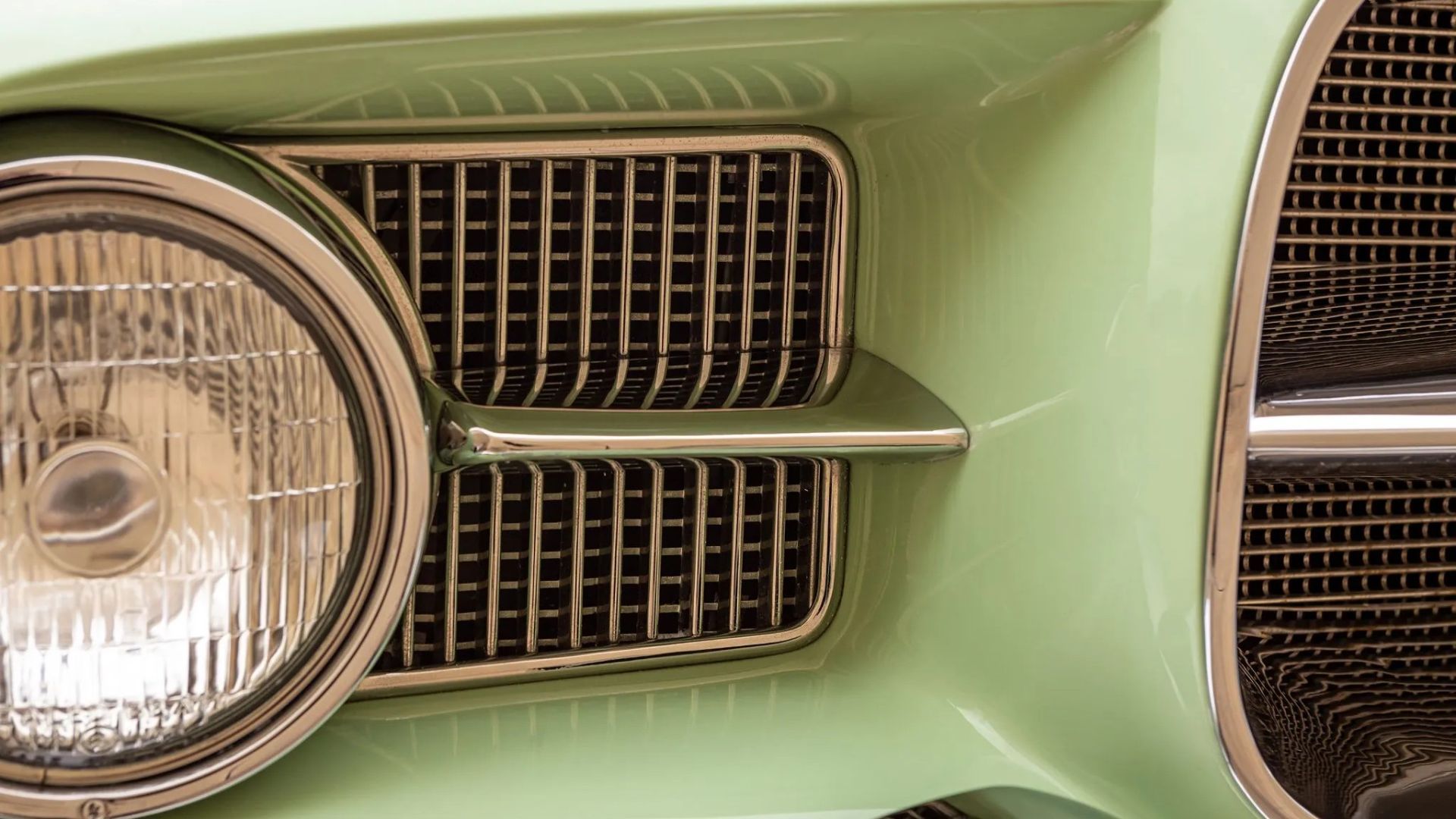
The Italian-American Star Car That Made Ferraris Jealous
Post-war Hollywood was a very glitzy and glamorous place. Celebrities would come and go in their Rolls-Royces, Cadillacs, and Ferraris. Some celebrities are forever associated with certain cars, such as Elvis’ pink Cadillac Fleetwood, James Dean’s “Little Bastard” Porsche 550 Spyder, and John Wayne’s C1-generation Chevrolet Corvette.
Dodge
- Founded
-
December 14, 1900
- Founder
-
John Francis Dodge & Horace Elgin Dodge
- Headquarters
-
Auburn Hills, Michigan, U.S.A
- Owned By
-
Stellantis North America
- Current CEO
-
Carlos Tavares
For those who wanted to appear effortlessly cool, though, there was an even better form of transportation. This is the story of the Dual-Ghia, which was both rare and quite expensive and born out of an unlikely transatlantic partnership involving Dodge and an Italian design shop.
We take a closer look at the Dual-Ghia, a transatlantic collaboration and one of the most exclusive cars ever made. We learn about its complicated build process and why you couldn’t simply buy one if you were interested. The figures in the table relate to the Dual-Ghia D-500 with its Dodge powertrain.
A Car for the A-Listers
A-list celebrities fell in love with the Dual-Ghia as soon as they saw it. It became the car to have and could even outclass those European exotics if you wanted to see and be seen on Sunset Boulevard. The brightest stars of those days wanted a lot more than just luxury and exclusivity became the name of the game.
|
1957 Dual-Ghia D-500 Specifications |
|
|---|---|
|
Engine |
5.2L NA Dodge Poly-head V8 |
|
Transmission |
2-speed Dodge PowerFlite auto |
|
Drivetrain |
RWD |
|
Power |
~218-260 hp |
|
Torque |
~330 lb-ft |
|
0-60 mph |
~8.9-9.9 seconds |
|
Top Speed |
~100-116 mph |
People like Frank Sinatra, Dean Martin, and even the eventual US President Ronald Reagan owned a Dual-Ghia, but as there were fewer than 120 of them around, they became a symbol associated with the true elite. In other words, if you were seen in a Dual-Ghia, you really were in the inner circle. Legend has it that Sinatra loved his Dual-Ghia so much that he made sure that nobody else had one with the same color as his. And the Rat Pack and other luminaries wouldn’t give Ferrari a second glance as they lined up to get their own Dual-Ghia instead.
A Concept is Born
In post-war America, there was an air of anticipation and plenty of prosperity to fuel the next automotive era. There was also a growing fascination with European design, and entrepreneur Eugene Casaroll decided to embark on a brand-new project. Casaroll had already formed Dual Motors to build military vehicles and other transporters in Detroit, but he had a much bigger vision. He wanted to merge the brute force of American V8 engines with the type of sophisticated craftsmanship that only European coachbuilders could provide. So, he picked up the phone to talk to Carrozzeria Ghia in Italy, a design house with plenty of good work to its name alongside Lancia, Fiat, and Alfa Romeo.
Dual, Dodge and Ghia – and Their Transatlantic Dance
The Dual-Ghia used the chassis and powertrain of the Dodge Coronet, and the first step with this new project was to ship these rolling chassis to the Ghia facility in Turin. There, the coach builders would create sleek bodywork with elegant curves and chrome accents through a hand-formed process. Once completed, the cars would be sent back to the US for Dual Motors to complete the final assembly. Certainly, this was a lengthy, complex, and expensive process, but the result was worth waiting for. The Dual-Ghia was a seamless blend of Italian elegance and Detroit muscle, and was certainly different to anything else at that time.
The Dual-Ghia Makes a Splash
When the first Dual-Ghia appeared, it was an instant success. Casaroll would move forward with limited production, but was very clear about his particular market. He knew that well-heeled and style-conscious buyers were looking for something other than a Cadillac, Lincoln, or Ferrari and so by 1956, the order books opened. This meant that you could buy a Dual-Ghia in the United States, but you’d have to pay more than $7,500 to do so (around $85,000 today), which was significantly higher than most competitors at that time.

Related
Volkswagen’s Most Famous Sports Coupe Only Produced 30 HP
This sports car only had 30 hp on tap but that didn’t really matter. Why was the 1950s Volkswagen Karmann Ghia so popular?
However, if you did want to buy a Dual-Ghia you’d need to talk directly to Casaroll. He would personally vet buyers to ensure that they perfectly matched the brand’s image. You couldn’t buy these cars from any dealership, but you’d have to get in touch with Casaroll instead. If he liked you, he would invite you to own one and that level of exclusivity made the Dual-Ghia one of the most desirable objects in California and beyond.
Engineering Beyond the Looks
The Dual-Ghia was a beautiful car, but it could also go, and underneath the hood there was a 5.2-liter Dodge Red Ram polyspherical V8 engine, derived from the HEMI V8, but with simpler valvegear that eliminated the rocker arms. It produced about 230 hp, but there are conflicting claims for power ouputs, with some sources suggesting as much as 260 hp. The engine produced plenty of torque and deliver it through a two-speed PowerFlite automatic transmission. The result was a car with smooth and confident acceleration with a very pleasing exhaust note on top. According to reports, some of the 1957 cars were also fitted with the 5.9L Chrysler “B” V8 engine. This car was built for the open highway and not for competition, so its handling was more composed than sharp.

Related
This Obscure Dodge Was Built For Women Only
Dodge conjured up a genius way to expand their market share, but it didn’t last long.
But it could certainly cruise comfortably at highway speeds and overtake with ease, so you could see the lineage that it shared with Dodge and Mopar. It was also very well-built as you’d expect for that kind of money, and inside, you’d get premium leather, polished trim, and custom upholstery to the buyer’s exact specifications.
Limited Edition Exclusivity
No two examples of the Dual-Ghia were the same and, as only 117 examples of the D-500 model appeared between 1956 and 1958, exclusivity was the name of the game. Casaroll kept production levels low to maintain that element of rarity and to take into account the high cost and complexity of shipping these vehicles back and forth across the Atlantic. That exclusivity came at a hefty price, as the Dual-Ghia cost about 50% more than a new Cadillac. But after all, this was more than simply a car as it was a bespoke vehicle handcrafted with care and attention and, in many respects, more of a fashion accessory for the ultra-elite.
Carrozzeria Ghia has worked with other American companies, including Chrysler, Ford, and others. It helped to produce the Chrysler Norseman concept car and also tinkered with the original Ford Mustang concept. Some people describe Ghia’s design language as muscular and, in that respect, it should perfectly suit American taste.

Related
What One Of America’s Favorite V8 Names Actually Means
While everyone knows the famous term, some don’t know what it actually means.
However, the designs were distinctly Italian and the company’s ability to blend and mix stylistic worlds would make it the ideal partner for Dual Motors. In the end, Ford would acquire Ghia in the 1970s and so the Dual-Ghia became one of the most significant and last examples of niche, transatlantic collaboration.
A True Collectible
In the eyes of a collector, the Dual-Ghia certainly is a unicorn. The company built so few of them and even fewer survive today in pristine condition that it’s one of the most coveted American cars of the era. At an auction, expect to pay more than $350,000 for a well-maintained example and way more if you find one in concourse condition. Owners ensure that they handle their cars carefully and often keep them in climate-controlled garages, to be shown only at the most prestigious concourse events like Pebble Beach. The car’s association with celebrity and absolute rarity makes each example a rolling piece of cultural heritage.
A Car for The Moment
The Dual-Ghia leaves behind a legacy all of its own. You could never buy them in large numbers, but the project helped to establish a blueprint for manufacturers to combine American power and European style. And it also set a precedent for what a luxury car should be in terms of being refined, rare and extremely well-crafted. So, the very unusual Dual-Ghia represented a form of timeless elegance and gave Detroit a significant amount of extra credibility. It was a car that was built for the moment and a different type of Italian-American dream that could even make Ferraris jealous.
Sources: Bring a Trailer, Vehq.com, Automobile Catalog.