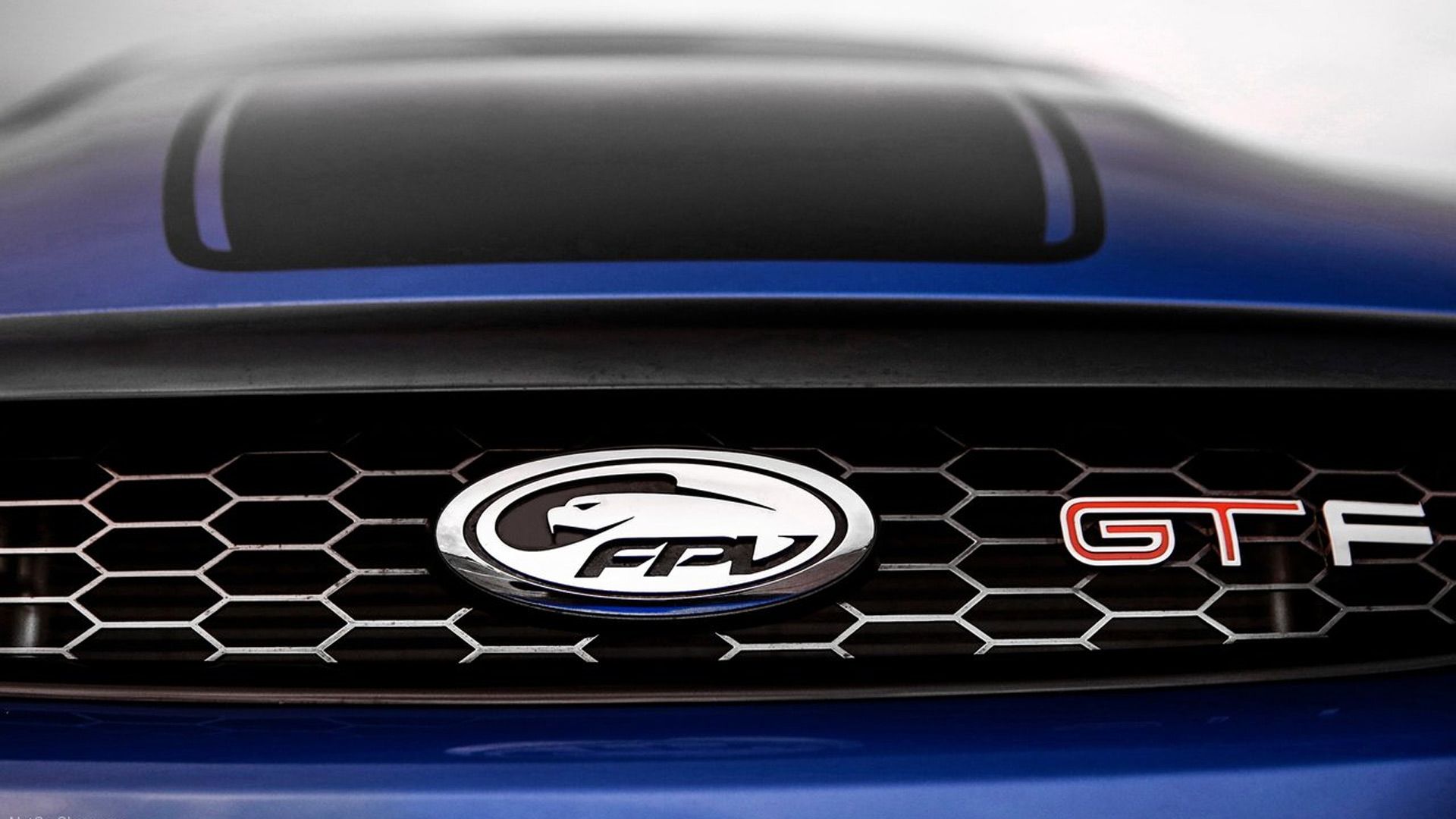
The FPV GT F 351 Is The Best Ford V8 Sedan America Never Received
Ford’s hottest sedans offered in the US over recent decades have largely been the Taurus SHO models, all powered by V6 engines that balanced performance with efficiency. While the SHO carved out a niche as a sporty family sedan, it never quite captured the raw muscle car spirit that some enthusiasts crave.
Ford took a very different approach in Australia, where, for several decades up until 2016, the automaker produced true rear-wheel-drive muscle sedans powered by robust V8 engines, under the Falcon nameplate. The peak of these was the FPV GT F 351, developed by a Ford performance skunkworks and sold in the closing years of the Australian Falcon’s run.
The Other Ford Falcons
Most Americans will know the Ford Falcon as the compact sedan from the 1960s whose mechanicals were used by a number of other Ford vehicles, including the original Mustang and even the original Econoline van. However, the mechanicals were also used in sedans built and sold under the Falcon name in other parts of the globe. One example was Argentina, where production ran until the early 1990s. Another was Australia, where production ran until 2016.

In both cases, these international Falcons started off being largely derived from their American cousin, but gradually they evolved into distinct vehicles. In Australia, this evolution started in the early 1970s with the launch of the XA generation. By this point, the Falcon nameplate was no longer available in the US, and Ford’s Australian division was free to fully tailor its version to suit local tastes and road conditions.
The XA was followed quickly by the XB, the two-door version of which served as the basis of the Pursuit Special from the original Mad Max movies. Multiple updates and redesigns were introduced until the final Falcon, the FG generation, was launched in 2008.

Throughout the years, Ford offered its own performance versions of the Falcon, typically badged as the XR6 for models with the Falcon’s standard inline-6 and XR8 for models with a V8. This was the case with the FG generation, but an even higher level of performance was available through the in-house tuner Ford Performance Vehicles, the culmination of which was the FPV GT F 351.
The Birth And Death Of FPV

In the 1990s, British engineering outfit Tickford was selected by Ford to start tuning the Falcon via a factory-backed program, similar to what Holden Special Vehicles (HSV) was doing to the Commodore sedan built and sold by General Motors’ Australian division, Holden. These tuned Falcons, marketed under the Ford Tickford Experience (FTE) name, saw only limited success. Things didn’t get serious until 2001, when Tickford was acquired by British motorsports and engineering outfit Prodrive, and the Falcon tuning business was rebranded as Ford Performance Vehicles (FPV).

Under FPV, the storied GT badge was reintroduced to the Falcon for the first time in almost four decades. FPV’s GT models served as spiritual successors to the iconic GT-badged Falcons of the 1960s and 1970s, and featured V8 engines. FPV also tuned Falcons fitted with inline-6 engines, specifically a turbocharged 4.0-liter unit that Ford introduced in the 2000s. FPV’s version of the engine produced 415 hp with only a mild tune, while aftermarket options could deliver much higher numbers.

However, the king of the hill was still the V8 engine. Initially, FPV used a naturally aspirated 5.4-liter V8 that shared some components with the 5.4-liter V8s used in the Mustang during the 2000s. FPV’s 5.4-liter V8 was finally retired in 2010, when the company switched to an early version of the Coyote 5.0-liter V8 found in multiple Ford products today.

Continuous tuning of the 5.0-liter V8 by FPV led to a supercharged version with 470 hp, which debuted in 2014 in the FPV GT F 351. The “351” in the name referenced the car’s power rating in kilowatts, but also paid homage to the 351 cubic-inch V8s used in GT-badged Falcons of the early 1970s, which dominated racetracks in Australia. The peak power could rise higher temporarily, thanks to an overboost feature, though FPV never said by how much.

By the time the FPV GT F 351 was launched, Ford had already announced plans to wind up Australian production by the end of 2016. As part of the wind-up, Ford shuttered FPV in 2014, making the GT F 351 the swansong for the performance division.
FPV GT F 351 In Detail

|
Engine |
Supercharged 5.0-liter V8 |
|---|---|
|
Transmission |
6-speed manual/6-speed automatic |
|
Power |
471 hp |
|
Torque |
420 lb-ft |
|
0-60 mph |
Under 5 seconds |
|
Top Speed |
155 mph (with limiter) |
With the GT F 351 being FPV’s final hot sedan to be launched, it naturally came with all the bells and whistles. Beyond the engine, the car also came with sports-tuned suspension borrowed from a separate model known as the GT R-Spec, which included stiffer springs, bushes, and strut mounts, as well as retuned dampers and thicker anti-roll bars.

Other features included 19-inch wheels wrapped in 275/35-size Dunlop Sport Maxx tires, a set of Brembo brakes, and the choice of a 6-speed manual or 6-speed automatic. The automatic was slightly quicker, but the manual was naturally a lot more fun.

Inside, the car suffered from aging hardware from the donor Falcon. FPV attempted to dress things up by adding orange detailing to highlight the unique badges, instrument dials, seat stitching, start-up screen, and a few other touches found in the cabin. A center touchscreen also featured digital gauges showing some of the car’s vital statistics such as boost, engine temperature, and oil pressure.

Only 550 examples of the FPV GT F 351 were built, including 500 for Australia and 50 for New Zealand. To help raise funds for charity, Ford auctioned off the first and final examples built.
Ford Calls It Quits On Australian Production

FPV may have been shuttered in 2014, but Ford’s line of Falcon muscle sedans continued for two more years before the automaker ultimately pulled the plug on Australian production, ending the story for both the Falcon and the related SUV model, the Territory. The final hot Falcons were the XR6 Turbo Sprint and XR8 Sprint, with the latter featuring the same engine as the GT F 351, but with a slightly lower 460-hp rating, thus ensuring FPV remained the most powerful Falcon from the factory.

Without an export program and with demand for large sedans slowing in Australia, as it has in much of the world, it was becoming increasingly difficult for Ford’s Australian division to turn a profit. By 2013, when Ford announced it would end local production, Falcon sales had fallen below 10,000 units annually, and the operations were running at a loss.
Ford’s decision to close its Australian plants set off a domino effect across the local automotive industry. Supplier networks could no longer be sustained, putting pressure on other manufacturers. Holden ended production in 2017, and even Toyota, despite a successful Camry program, ceased Australian production the following year, marking the end of mainstream car manufacturing on the continent.
While the US never got a taste of the Australian Falcon – unlike the car’s Holden Commodore counterpart which was offered here first as a Pontiac G8 and then as a Chevrolet SS – some of its legacy lives on today in models like the Ford Ranger and Bronco.
Although Ford ended production in Australia, it retained the engineering team responsible for multiple generations of the Falcon. That team developed the T6 platform that debuted in the previous-generation Ranger. An updated version of the platform now underpins the current Ranger and Bronco, as well as Volkswagen’s Amarok midsize pickup truck.
Sources: Ford