The Corvette So Special Chevrolet Tried To Convince People Not To Buy It
Unicorns are mythical creatures spoken of in legends and fairytales but never seen in reality. Automotive unicorns, however, are a little less rare, the term usually reserved for models that were ultra-scarce or that have become scarce many years after their release. But in the world of automotive unicorns, particularly in American car culture, the Chevrolet L88 Corvette stands head and shoulders above many others – the Corvette option so special that Chevy didn’t even market it and actively dissuaded normal customers from buying it by lying about how much power it made.
In 2024, it sounds insane not to market your halo car, and Chevrolet wouldn’t be caught dead not publicizing the new Corvette ZR1. Then again, Chevrolet is openly bragging about the ZR’s 1,064-horsepower twin-turbo V8. But back in 1967, Chevrolet did the opposite, not only not marketing the L88, but pretending it had less power than it did to dissuade customers from buying one.
The Most Powerful Corvette That Chevy Lied About
L88 Corvette Fast Facts
- Optional engine offered from 1967 to 1969
- Available for final model year C2 and early model year C3s
- Total of 216 produced
- Claimed 430-hp power output was realistically up to 580 hp
- Developed by Zora Arkus-Duntov to skirt 1957 ban on factory motor racing in the USA
L88 was technically an RPO (Regular Production Order) code for the 1967 model year Corvette, an engine order code nestled in the order guide for the last year of C2 production. At the time, it cost an extra $1,500 over and above the Corvette’s $4,240 MSRP – more than a third of the value of the car itself – and that was before you added the other options the car couldn’t be sold without, like power brakes, performance suspension, and the Positraction differential. But the kicker was that the 427 cubic inch (7.0 liter) V8 engine only made a claimed 430 horsepower, the same as the standard 427 big blocks in the standard car. So why on earth were you paying so much for an engine that made no less power?
Add CarBuzz to your Google News feed.
Why Chevrolet Lied About Its Most Powerful Car
Because Chevrolet lied about how much power it made. The L88 generated anywhere in the region of 540-580 hp depending on who you asked or which dyno you stuck it on. This was a pure racing engine, right down to its thirst for 103-octane fuel. It only managed to find its way into a street-legal package all because Zora Arkus-Duntov – the godfather of the Corvette – wanted to support racing teams from the factory despite the Automobile Manufacturers Association (AMA) ban on factory racing from 1957 followed by GM’s 1963 ban on motorsports for any of its brands.

Zora Arkus-Duntov
Zachary “Zora” Arkus-Duntov, often referred to as the “Godfather of the Corvette” was a Russian-American engineer who joined Chevrolet in 1953 and reinvented the Corvette from an American sports car to a world-beating one. Heavily influential in motorsport and hot-rodding culture, Duntov would become Director of High Performance Vehicles at Chevrolet in 1957. He is credited with being the man responsible for the L88 Corvette, Corvette Grand Sport, and Corvette SS among others.
But because of that, Arkus-Duntov didn’t want regular buyers accidentally ordering one. If Chevrolet had advertised how much power it really made, power-hungry gearheads would’ve ordered what was a barely street-legal race car and likely killed themselves.
Instead, Chevrolet downplayed the motor’s true potential, hoping to dissuade would-be buyers from even considering it. The tactic worked, with L88 Corvettes finding their way into the hands of race teams who used them for their intended purpose. Some might argue that selling only 20 L88 Corvettes in 1967 made it a sales flop, but it was quite the opposite, and the demand for the option was so great that it was availed for the 1968 and 1969 models years on the C3 chassis, too.
The L88’s Fire-Breathing V8
|
L88 427ci Chevrolet Corvette Specs |
|
|---|---|
|
Engine |
7.0-Liter (427 CID) L88 V8 |
|
Horsepower |
430 hp @ N/A (Factory Claim) / 540-580 hp (Tested) |
|
Torque |
N/A (Factory Reported) / 492.5 lb-ft @ 4,000 rpm (Tested) |
|
0-60 MPH |
4.2 Seconds |
|
1/4 Mile Time @ MPH |
13.56 Seconds @ 111.0 mph |
|
Top Speed |
171 mph |
The L88 V8 was a special one. It featured upgrades over the standard Corvette 427 CID big-block offered at the time, such as a reinforced cast iron construction, something seen basically only in motorsport in the 60s due to its more expensive nature. However, while the motor was heavier due to its cast iron makeup, it was as tough as ever thanks to the reinforcement used in its casting process.
The L88 also boasted a 12.5:1 compression ratio, chiefly responsible for its much higher power over other Corvette engines. A forged crankshaft, forged connecting rods, and forged pistons helped the motor withstand the rigors of motorsport while a high-lift camshaft was installed to help keep the valvetrain operating optimally at high revs, along with an 850 CFM carburetor being used to handle the sheer amount of fuel the motor required to reach that 580-horsepower figure.
The motor itself was paired with a 4-speed Muncie M22 gearbox, known to enthusiasts as the “Rock Crusher.” It was a close-ratio four-speed manual designed for circuit racing, and was one of the toughest transmissions of its time.
Other race-ready additions were your choice of either J50 power brakes or J56 heavy duty brakes, and heavy duty suspension, which received the code “F41.”
A Fortune Back Then, A Gold Mine Now
Like a true cult classic, the L88 has become a highly sought-after collectible among Corvette fans, striking the perfect balance of rarity, desirability, performance, and historical provenance. While the $1,500 cost of the L88 specification back in the late 1960s may have seemed like a bitter pill to swallow, the L88 has become a golden goose nearly six decades later. L88s continue to sell for huge sums at auction, with multiple entries on “most expensive Corvette” lists often occupied by the L88. For all intents and purposes, the L88 Corvette is to Chevy what the 250 GTO was to Ferrari.
|
Chevrolet L88 Corvette Sales Figures |
|
|---|---|
|
Year |
Cars Sold |
|
1967 |
20 |
|
1968 |
80 |
|
1969 |
116 |
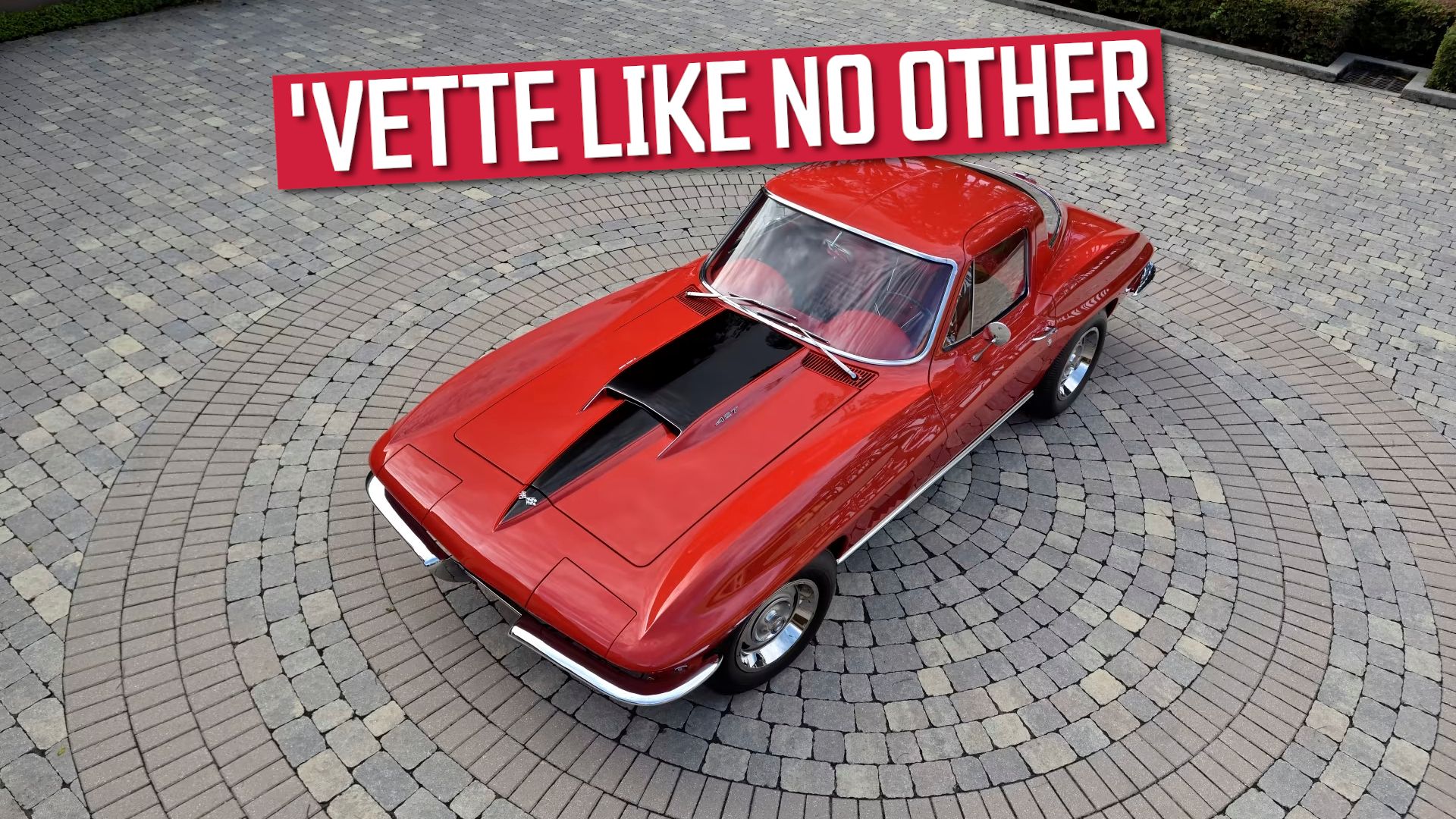
But despite only 216 ever being produced, some L88s are rarer than others. The most sought-after, and the ones that fetch as much as $3.85 million, are the 1967 models. Based on the C2 generation, these are the most limited, with only 20 built for the year, many of which appear in unique one-of-one specifications – like the red over red car pictured above. These cars seldom change hands, which is why, when they do, they fetch top dollar. Comparatively, 196 C3s (like the gold one above) were built with the L88 specification, making them vastly more common. But even these fetch high prices, with multiple sales in recent years on platforms like Bring A Trailer for over $600,000.