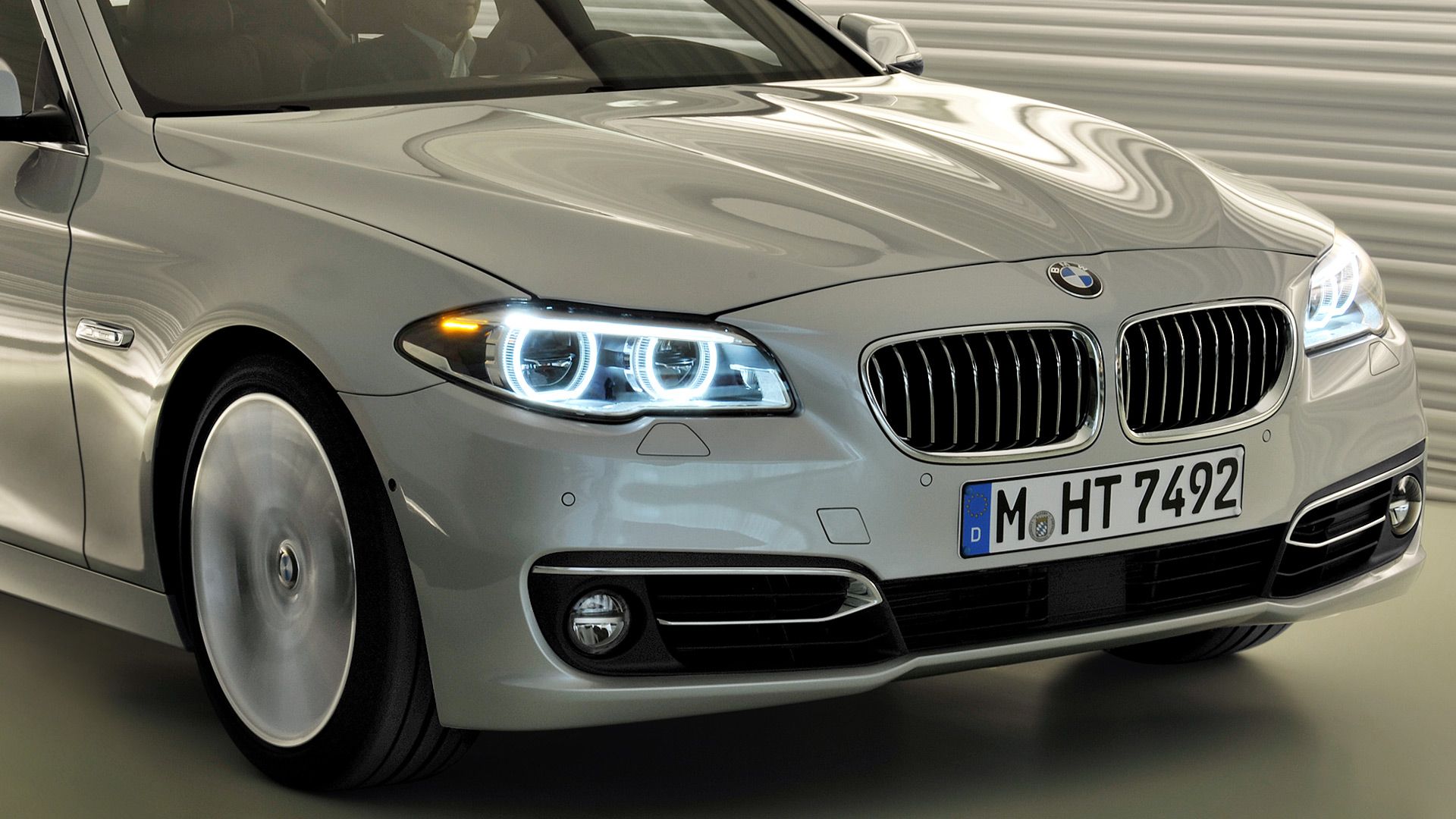
The 2014 BMW 535d Is An Awesome Sleeper Sedan
Diesel engines have long been seen in the U.S. as the grimy powertrains of heavy-duty trucks and agricultural machinery – torquey, unrefined, and purely utilitarian. But elsewhere, particularly in Europe, automakers have spent decades using diesels to deliver a sporty driving experience combined with long-range efficiency in unassuming sedans, wagons, and SUVs. These true sleepers can often embarrass flashier machines at street-legal speeds, where strong low- and mid-range torque is king – making them well worth a look for performance fans in need of some practicality, too.

- Base Trim Engine
-
2L I-4 Hybrid
- Base Trim Transmission
-
8-speed automatic
- Base Trim Drivetrain
-
Rear-Wheel Drive
BMW invited the U.S. to the party with the launch of the 2014 535d, the first diesel-powered 5 Series sedan to be sold here, and one whose twin-turbocharged 3.0-liter inline-six takes well to modification. Unfortunately, its time was short-lived due to the Volkswagen-led Dieselgate scandal that erupted in 2015, eventually casting a shadow over all diesel passenger vehicles both here and abroad. BMW phased out the 535d ahead of the arrival of the redesigned 2018 5 Series (which had its own diesel variant briefly), making this underrated and unassuming sedan a hidden – and affordable – gem on the used market today.
This article specifically focuses on the 2014 BMW 535d, but most of the information also applies to 5 Series diesels from later model years.
2014 BMW 535d Performance And Specifications
A Beastly Growl Of A Different Tune
|
Engine |
Twin-turbocharged 3.0-liter Inline-six |
|---|---|
|
Transmission |
8-speed Automatic |
|
Drivetrain |
RWD/AWD |
|
Horsepower |
255 hp |
|
Torque |
413 lb-ft |
|
0-60 |
5.7 seconds |
|
Top Speed |
130 mph (149 mph with M Sport Package) |
|
Fuel Efficiency (city/highway/combined) |
26//37/33 mpg |
|
Price When New |
$57,525, plus $925 Destination Charge |
BMW early last decade was slowly introducing Americans to its diesel engines, and when the sixth-generation 5 Series underwent its mid-cycle refresh for the 2014 model year, BMW introduced the 535d on these shores. At that time, buyers of the 3 Series and X5 could also opt for a diesel. The 3 Series diesel featured a turbocharged 2.0-liter inline-four while the X5 diesel came with the same engine in the 535d.
The engine is a twin-turbocharged 3.0-liter inline-six, code-named the N57. BMW also developed single- and even triple-turbocharged versions, with the latter reserved for an M550d with 376 hp and 546 lb-ft of torque sold overseas. BMW never introduced the M550d to the U.S., with the automaker at the time stating that Americans just weren’t ready for an M-badged diesel.

Related
Only 5 Automotive Brands Are Still Selling Diesel Cars In America
The number has dropped significantly in the past few years.
The twin-turbocharged version offers plenty of power, though, and big gains can be made with simple modifications. A popular and cost-effective one is remapping the ECU, which can liberate as much as 60 hp. Dialing up more power – for example, via changes to the turbochargers or exhaust – will require upgrades elsewhere, like a reinforced transmission. An uprated brake system should also never be overlooked when adding power to a stock car. The N57 is one of the most popular BMW engines for tuning, and as a result, there is a wide array of options easily found online.
Beyond the powertrain, the 535d offers all the luxury and technology one typically expects in a mid-range BMW. Much of the technology is outdated now – think analog gauges and a touchpad controller instead of a touchscreen – but this won’t distract from the driving experience. Anyone looking at used examples will want to inspect the leather trim, which will be showing its age by now. Buyers should also check whether the available LED headlights were selected, as these are much better than the standard xenon units.
Built For Highway Driving
Really Going The Distance
Imagine a midsize BMW sedan with stellar fuel economy and the ability to sprint from 0-60 mph in 5.7 seconds or less. We’re talking acceleration times that come close to matching those of compact sports cars and hot hatchbacks, such as the Toyota GR86 and Volkswagen Golf GTI. It doesn’t sound possible for anything outside the M portfolio, but the humble 535d lives up to the claim.
There’s a saying, often attributed to Carroll Shelby, that horsepower sells cars, but torque wins races. Anyone who’s ever driven a car with a modern turbodiesel engine knows exactly what Shelby was talking about. The strong wave of torque from early in the rev range gives you an almost instant thrust of acceleration when you need it, like making a passing move on the highway, charging up a hill, or quickly plugging a gap in traffic.

Related
The 15 Best BMWs Of The Last 50 Years, According To CarBuzz
BMW has produced many Ultimate Driving Machines over the last half-century, and these are our favorites.
The 535d will do all this while being barely any louder than its gas siblings. While older diesel engines are notorious for their clatter, caused by the delayed combustion process in these engines, BMW’s N57 unit incorporates several features that help mitigate this. Among them are direct fuel injection with solenoid valve injectors, which allow for precise control of the fuel to help smooth out the combustion process, as well as a variable-geometry turbocharger that can deliver boost pressure smoothly without abrupt transitions.
The highway is where the 535d really shines. The car will happily handle highway speeds with its engine ticking over at around 1,200-1,300 rpm, delivering a quiet and serene experience, as well as fuel economy that will surprise anyone not used to diesels. While the EPA quotes a total range of 555 miles on a tank, getting more range with highway driving is an easy feat. This is helped by the transmission, which has a coasting feature. Here, the transmission is separated from the engine when cruising along the highway or down a hill, helping to reduce drag from the engine and boost efficiency.
Current Prices And Reliability
A Rose By Any Other Name
This generation of the 535d was available from 2014 to 2016 in the U.S. (with some markets extending into 2017). A quick search of popular classified websites reveals prices ranging from a low of around $8,000 to a high of approximately $23,000, typically for later model years with lower mileage. Given that these vehicles are approaching or exceeding a decade in age, finding low-mileage examples is increasingly difficult. Most listings show around 100,000 miles or more, so a portion of any budget should be reserved for maintenance and potential repairs.
BMWs typically don’t fare too well in long-term dependability ratings, and maintenance can be costly – partly because parts for older models can be hard to come by. A search of Car Complaints shows that previous owners have reported issues with the engine and drivetrain, generally appearing after 100,000 miles. Specific problems include oil leaks, worn bearings, and one reported case of complete engine failure.

Related
Best BMW X3 Model Years For Reliability
Focus on these BMW X3 years to increase chances of scoring a trouble-free SUV.
A search of the NHTSA database reveals four recalls for the 2014 535d. Two are related to coolant leaks from the exhaust gas recirculation (EGR) system, a third involves defective Takata airbag inflators that could explode, and the fourth concerns a fuel pump that may fail. The NHTSA also lists 54 complaints for the 2014 535d, including 27 related to the engine. Many of these involve faulty sensors in the diesel exhaust fluid (DEF) system, which is designed to reduce harmful emissions produced in higher quantities by diesel engines compared to their gasoline counterparts – particularly nitrogen oxides (NOx) and particulate matter.
For anyone unfamiliar with diesel, cars designed to run on the fuel often require additional maintenance that gasoline cars don’t, especially related to their emissions systems – like the DEF system mentioned above, as well as the separate diesel particulate filter (DPF) and selective catalytic reduction (SCR) system. These components can also be sensitive to poor-quality diesel fuel, which can lead to costly repairs, and diesel pumps aren’t always available at every fuel station, making refueling less convenient in some areas.
Plenty Of Go But No Show
Unrecognized Potential

The 2014 BMW 535d is a true sleeper. Its plain, understated looks hide impressive performance, especially when cruising at highway speeds. It’s the kind of smooth, effortless acceleration that can really surprise and often leaves you with a smile on your face. Add in classic BMW comfort and handling, room for five, and excellent fuel economy for its size, and you’ve got a well-rounded package.
Used examples can be found at bargain prices today, making it a tempting choice for anyone on a low budget. However, there are some major caveats. Maintenance and repairs can be expensive, and older BMWs don’t have the best reputation for reliability. Diesel fuel also isn’t available at every gas station, and the technology under the hood – especially the emissions systems – can be sensitive to poor-quality fuel. And then there’s the negative stigma attached to diesels and their effect on the environment, which, post Dieselgate, is hard to avoid.
Sources: BMW, AutoTrader, Car Complaints, NHTSA