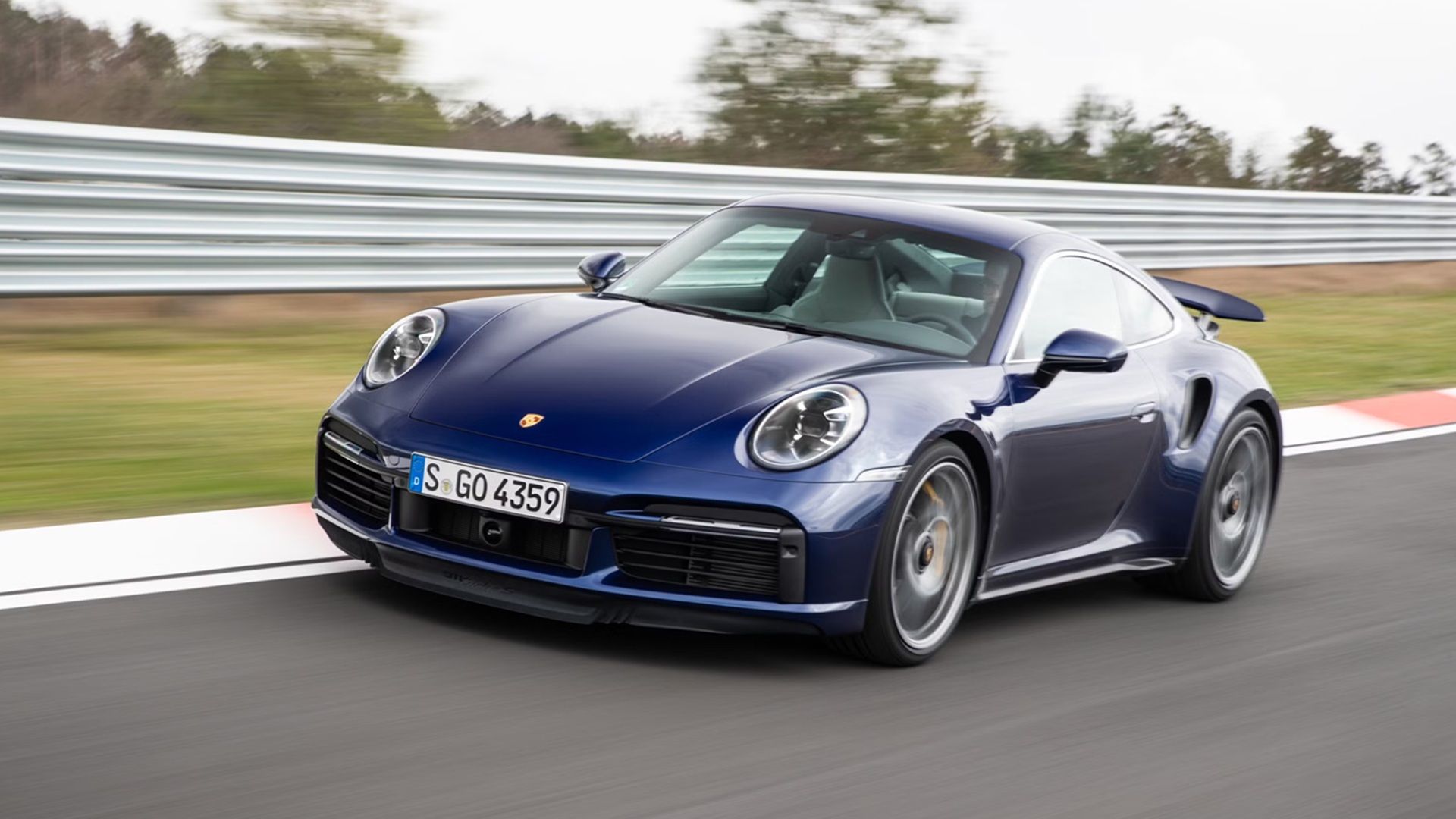
Porsche Files A Patent For A Water-Injection System
Water injection, sometimes used in conjunction with methanol, is a time-honored method of reducing intake temperatures, thereby improving power. So-called water-meth systems are very popular in modified, turbocharged cars, as they prevent the harmful premature detonation (or ignition knock) that can come with increased boost. And if a recent filing to the German Patent and Trademark Office is to be believed, Porsche may be considering such a system for its production vehicles – unsurprising since the entirety of the company’s internal combustion lineup now uses the same forced induction methods that were once exclusive to the flagship 911 Turbo.
Porsche 911 Turbo
- Base MSRP
-
$197,200
- Base Trim Engine
-
3.8L Twin-Turbo Flat 6 Gas
- Base Trim Drivetrain
-
All-Wheel Drive
- Base Trim Horsepower
-
572 hp
- Base Trim Torque
-
553 lb-ft @ 2250 rpm
Porsche Seems To Have Solved Some Of The Drawbacks
Water injection is the process of introducing some good ol’ H2O into the intake manifold and cooling down the air-fuel mixture before it enters the engine. However, while the system is effective at reducing the wear that comes from premature ignition and engine knock, it does have some drawbacks. It can introduce a water hammer effect wherein individual droplets slam into engine internals – since water isn’t compressible, those droplets can actually cause tiny dents and imperfections to the pistons, cylinder walls, or cylinder head.
However, Porsche’s solution is to inject a higher volume of water into the intake charge initially. The automaker claims that by wetting down the surfaces of the intake manifold, the air-fuel mix cools off more quickly and the water hammer effect becomes much less of an issue. It seems that the counter-intuitive method of introducing more water into the system may actually reduce the amount of water inside the combustion chamber, eliminating the associated damage.

Related
Each Generation Porsche 911 Turbo Ranked By Acceleration And Quarter-Mile Times
Porsche’s iconic 911 Turbo has been around for eight generations now, so let’s see how they stack up when it comes to speed.
Emissions Legality Continues To Be A Concern
Water and water-meth injection is one of those impressive feats of engineering that both improves horsepower, reduces fuel consumption, and cuts carbon and nitrogen emissions. However, it has yet to become a common solution for automakers – not only because of the water hammer effect but also because it relies on water tanks that must be refilled. That creates a legal problem with the folks who run the tailpipe sniffer.
Modern cars’ emission systems need to operate automatically, without external input beyond using the recommended fuel and keeping up with vehicle maintenance. If a driver needs to fill up a water tank in order to pass emissions, what’s to stop that person from doing so during the test and then ignoring the water injection the other 364 days of the year? Not only would that be inadvisable from a vehicle maintenance standpoint, it would also cause excessive emissions.

Related
E-Fuel-Sniffing Porsche Technology Might Save The Combustion Engine
Porsche could beat Europe’s combustion ban with an absolutely genius solution.
Unfortunately, Porsche hasn’t come up with a solution to that dilemma just yet. If it does, however, we can expect water injection to become a key component to the company’s pursuit of keeping internal combustion alive long into the future.
Source: German Patent and Trademark Office via Carmoses