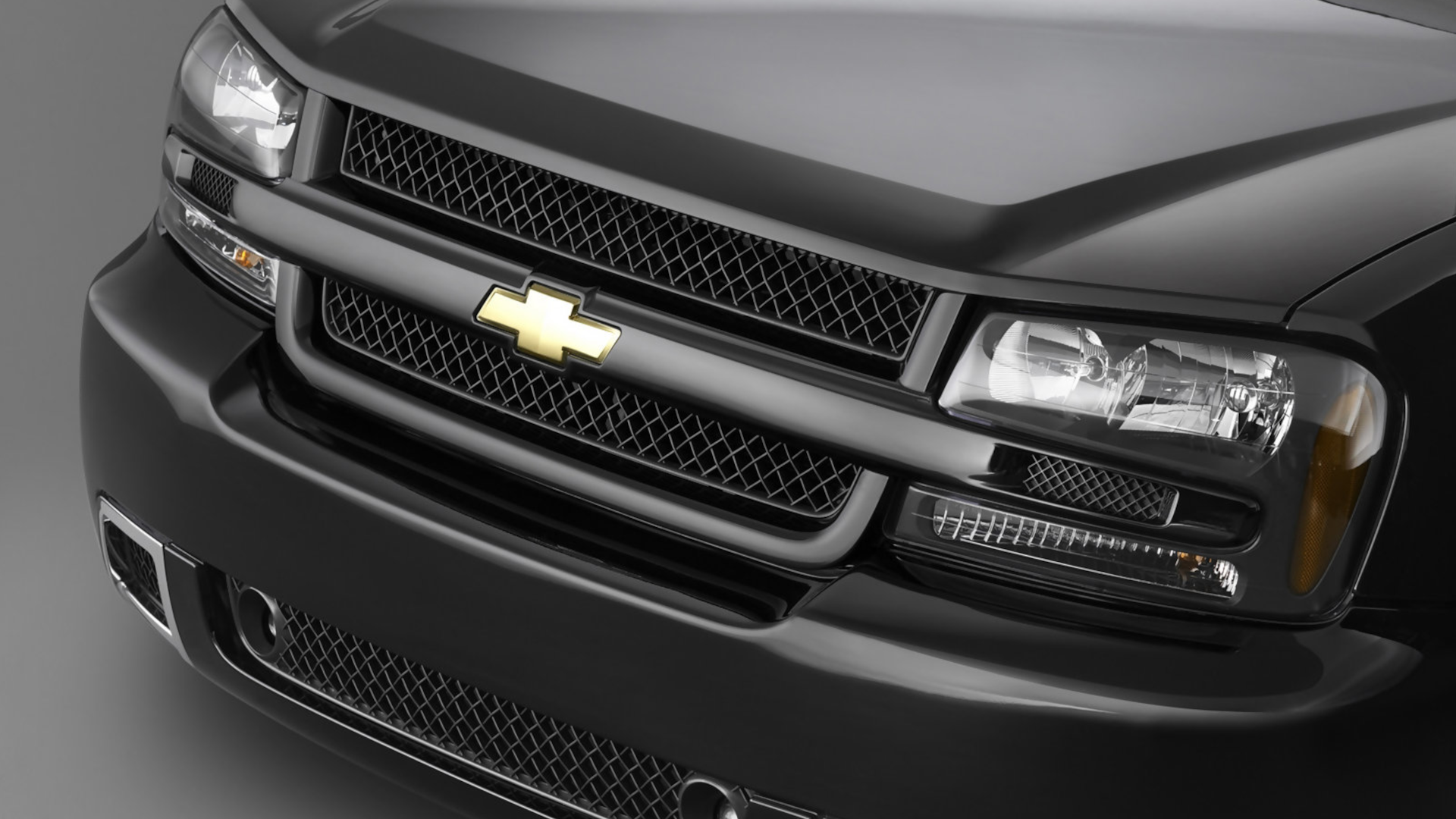
Only Three SUVs Have Been Powered By Corvette V8 Engines
For decades, the Chevrolet Corvette has been Chevy’s flagship sports car offering. As the front-runner in its performance wing, it has received the automaker’s best and often most powerful engines. The current Corvette ZR1, for example, is equipped with a 1,000-hp twin-turbocharged, which has allowed it to upstage several high-end supercars.
Chevrolet
Founded in 1903, Chevrolet is one of America’s oldest remaining legacy automakers. Acquired by General Motors in 1918, Chevrolet is the core GM brand responsible for the bulk of GM’s US sales. As a mass-market manufacturer, Chevrolet competes in multiple key segments, primarily the SUV and truck segments, but also sports cars and mainstream sedans and hatchbacks (until recently). Core models for the brand include the Silverado, Colorado, Suburban, Camaro, and Corvette.
- Founded
-
November 3, 1911
- Founder
-
Louis Chevrolet, Arthur Chevrolet, William C. Durant
- Headquarters
-
Detroit, Michigan, United States of America
- Owned By
-
General Motors
- Current CEO
-
Mary Barra
The latest rendition of the Chevrolet Corvette ZR1 is powered by an engine that commands a four-figure power output for the first time in the Corvette’s history, which is only one of the few crazy numbers behind the new ZR1. Interestingly, somewhere along the line, the engines that have been used to power the Chevrolet Corvette have also been used in three SUVs.
This article focuses on SUVs powered by engines used in the Chevrolet Corvette, regardless of their generation. However, engines based on the engines used in Corvettes that have been altered and used in SUVs do not count.
Chevrolet Trailblazer SS
|
Model |
Chevrolet Trailblazer SS |
2005 Chevrolet Corvette Z51 |
|---|---|---|
|
Engine |
6.0-liter, naturally aspirated, V8 |
6.0-liter, naturally aspirated, V8 |
|
Horsepower |
395 hp @ 5,400 rpm |
400 hp @ 6,000 rpm |
|
Torque |
400 lb-ft @ 4,400 rpm |
400 lb-ft @ 4,400 rpm |
|
0-60 |
5.8 seconds |
|
|
Top |
130 mph |
186 mph |
In 2005, General Motors introduced the new 6.0-liter naturally aspirated V8 LS2 engine based on the fourth-generation General Motors small-block V8 engine family. It was the most powerful standard small-block V8 engine offered in the Chevrolet Corvette until that point. Some of its stand-out features were a new aluminum deep-skirt engine block casting with cast-in-place iron cylinder bore liners and cross-bolted main caps, a new cylinder head design that was derived from the Z06 model of the C5 generation, increased camshaft lift to take advantage of the increased cylinder head airflow, a new exhaust manifold that was lighter than the engine it superseded, and better engine controller.
The LS2 V8 in the C6 Chevrolet Corvette allowed it to reach 62 mph in 4.1 seconds when equipped with the Z51 Performance Package and can reach one end of a quarter-mile drag strip from another in 12.6 seconds. However, a year later, Chevrolet introduced a high-performance version of its Chevrolet Trailblazer SUV that was powered by the Corvette’s LS2 V8, which elevated its status from a run-of-the-mill SUV to a performance SUV, a precursor to the modern offerings gunning for the Audi RS Q8’s Nürburgring crown.

Related
All The Legendary Engines Behind the Corvette Z06 and ZR1 Ranked By Horsepower
The performance-oriented Corvettes have had some properly impressive mills over the years
It was the first time a production SUV wore the Super Sport badge. While it utilized the same engine as the C6 Corvette, it featured a more restrictive exhaust system and a different intake manifold taller than the one offered in the Corvette’s LS2. This was done to accommodate the Chevrolet Trailblazer SS’ heavier body. The suspension was also improved, stiffer, and lower than the non-SS Trailblazer.
Although it had a slower 0-60 mph sprint than the Corvette, because of its heavier weight, the Chevrolet Trailblazer SS had help off the line thanks to the 4.10 rear axle ratio. It was still available in either rear-wheel drive or all-wheel drive. Unfortunately, the Chevrolet Trailblazer SS would only last for a single generation, with the arrival of the second-generation Trailblazer lineup devoid of the potent SS derivative.
Saab 9-7X Aero
|
Model |
Saab 9-7X Aero |
2005 Chevrolet Corvette Z51 |
|---|---|---|
|
Engine |
6.0-liter, naturally aspirated, V8 |
6.0-liter, naturally aspirated, V8 |
|
Horsepower |
390 hp @ 6,000 rpm |
400 hp @ 6,000 rpm |
|
Torque |
400 lb-ft @ 4,000 rpm |
400 lb-ft @ 4,400 rpm |
|
0-60 |
4.1 seconds |
|
|
Top speed |
Unconfirmed |
186 mph |
At one point, Saab was a well-established brand in the United States and was considered fairly popular after General Motors stepped in to help save it. However, ultimately, Saab’s venture in the States was cut short, and its operations ceased following the 2008 financial crisis. We did go into more detail about how Saab failed to capture the hearts of the American consumer market in another article, so feel free to find out how the automotive arm of a company that produced fighter jets failed in the States.
However, before the unfortunate collapse of Saab’s operations in the US, it took the advice and assistance of General Motors by introducing a handful of US-specific models to boost its appeal in the North American market. One of these models was the Saab 9-7X Aero, which was based on the same platform as the Chevrolet Trailblazer, with the Aero derivative being the Chevrolet Trailblazer SS of the Saab 9-7X range.

Related
The Best Corvette Never To Wear A Chevrolet Badge
While it doesn’t wear the badge, this Corvette deserves recognition regardless.
If you haven’t heard the phrase “badge engineered” before, it essentially refers to a model that has been reskinned and rebadged. In this case, the Saab 9-7X Aero was a badge-engineered version of the Chevrolet Trailblazer SS. Unfortunately for Saab, the consumer market would not fall in love with the 9-7X Aero, with no more than 6,000 units sold in a year for five years. Saab essentially failed to capitalize on the growing SUV market.
Cadillac Escalade-V
|
Model |
2025 Cadillac Escalade-V |
2015 Chevrolet Corvette Z06 |
|---|---|---|
|
Engine |
6.2-liter, supercharged, V8 |
6.2-liter, supercharged, V8 |
|
Horsepower |
682 hp @ 6,000 rpm |
650 hp @ 6,400 rpm |
|
Torque |
653 lb-ft @ 4,400 rpm |
650 lb-ft @ 3,600 rpm |
|
0-60 |
4.4 seconds |
2.9 seconds |
|
Top speed |
125 mph |
205 mph |
Chevrolet reintroduced the Z06 to the Chevrolet Corvette lineup in 2015 for its fourth appearance in the Corvette’s history. At that point, the C7 Corvette Z06 was the most capable model in the Corvette’s 62-year-long history, although not nearly as fast as the Callaway Sledgehammer. It was characterized by a level of aerodynamic downforce, power output, and raw performance not present in any other Chevrolet model. That is until the C7 Corvette ZR1 arrived, which is now a great investment.
The engine was one of the most notable features of the C7 Corvette Z06. Much like the Chevrolet C6 Corvette Z06 that served as the pioneer of the then-new LS2 V8, the Chevrolet C7 Corvette Z06 introduced the LT4 supercharged V8 engine that leveraged the technology used in the Corvette Stingray, which included features like cylinder deactivation, Active Fuel Management, and direct injection to name a few. It also utilized a more efficient 1.7-liter supercharger. It was an impressive power unit that would be adopted by one of Cadillac’s most athletic full-size SUVs: the Cadillac Escalade-V.

Related
The Most Affordable And Reliable Used Chevrolet Corvette You Can Buy In 2024
On top of its legendary reputation, the Corvette is also a relatively cheap and simple piece of equipment.
Specifically, the Cadillac Escalade-V that debuted in 2023. When it debuted, this iteration of the Cadillac Escalade was considered the most powerful production SUV in the world, resulting from Cadillac implementing the potent supercharged LT4 V8 engine. Unlike the Chevrolet Trailblazer SS and the C6 Corvette Z06, in this instance, the SUV was more laden with power than the Corvette that superseded it. Despite an all-wheel-drive system and higher power output, the Cadillac Escalade-V was and still is slower than the Corvette in a straight-line sprint.
For its application in the hulking and domineering SUV, Cadillac included a quad-exit exhaust system to retort its LT4’s efforts, which featured a larger supercharger than the Cadillac CT5-V Blackwing (which also used the LT4 engine). In contrast to the other SUVs that used Corvette V8 engines, the Cadillac Escalade-V is still in production and remains one of the most powerful production SUVs and is one of the two cars in our perfect American two-car garage.
Sources: Chevrolet