Modern Cars Are Made To Be Disposable
I’ll never forget the first time I saw a screen in a car. It was an E38 BMW 7 Series that belonged to my dad’s boss. It sat there right next to the tape deck, blowing my mind into a thousand pieces. How did BMW manage to get a functional screen into a car, and how does it possibly know where the car is and where it wants to go? Keep in mind I was nine years old at the time. Now that I’m older and supposedly wiser, I have more appreciation for the interior of a Mercedes-Benz W114 280CE because of its elegant simplicity and build quality. There aren’t even any buttons on the steering wheel because it would have spoiled the magnificent design of a basic wheel with the famous German emblem in the middle.
BMW
- Founded
-
1916
- Founder
-
Karl Rapp
- Headquarters
-
Munich, Germany
- Owned By
-
Publicly Traded
- Current CEO
-
Oliver Zipse
The 7 Series was one of the first cars with a screen, but it took a while for that technology to filter down to regular cars. In the early 2000s it was still an optional extra, but the technology has become so cheap to produce that it’s now the standard. That’s why Porsche had to drop its famous analog tachometer. It could no longer find a supplier to make them at a large scale. It’s also why the standard interior now consists of two screens, perched on top of the dashboard. Automakers appear to be caught up in a penis-measuring-like contest, seeing who can put the biggest screen in a car. Mercedes-Benz currently has the largest metaphorical penis at 56 inches, which makes the Toyota Prius 12.3-inch screen look acorn-like.
The proliferation of affordable touchscreen interfaces has obviously made interior design much cheaper and easier, but I fear the car is going the same way as our mobile devices. Cars will start aging more rapidly, and the technology within them will become obsolete much faster. And it’s not just screens…
Why Do All Cars Have Screens?
Blame The Government
The Evolution of Screens
- 1986: Basic touchpad in the Buick Riviera
- 1994: BMW adds navigation with the help of Phillips
- Late ’90s: Small screens in instrument clusters provide basic information
- Early 2000s: Basic screens become standard in high-end cars
- Early 2010: Screens filter down to more affordable cars
- 2018: The USA makes reverse cameras compulsory
Let’s go back 11 years to 2014. Screens had already made their debut in more than half of all cars. In 2014, 53% of all cars sold in the USA had a screen of some sort in them. Then, on May 1, 2018, reverse cameras became compulsory fitment in all cars and light trucks. By 2019, 82% of cars had screens, and now that figure for passenger cars obviously stands at 100%. Personally, I never had a problem simply turning my head, which is something I still do because no amount of reverse camera angles and parking sensors can do a better job than my own man-made eyeballs.
I don’t want to be too harsh on screens because they are responsible for a massive evolution in practicality. Apple CarPlay and Android Auto quickly became the standard means of listening to music and making phone calls, but that’s where it should have stopped. If I had my way, every car would only have a small display large enough for the main CarPlay buttons. A standardized screen that you can pop out every 10 years and replace with a new unit, so it wouldn’t become obsolete.
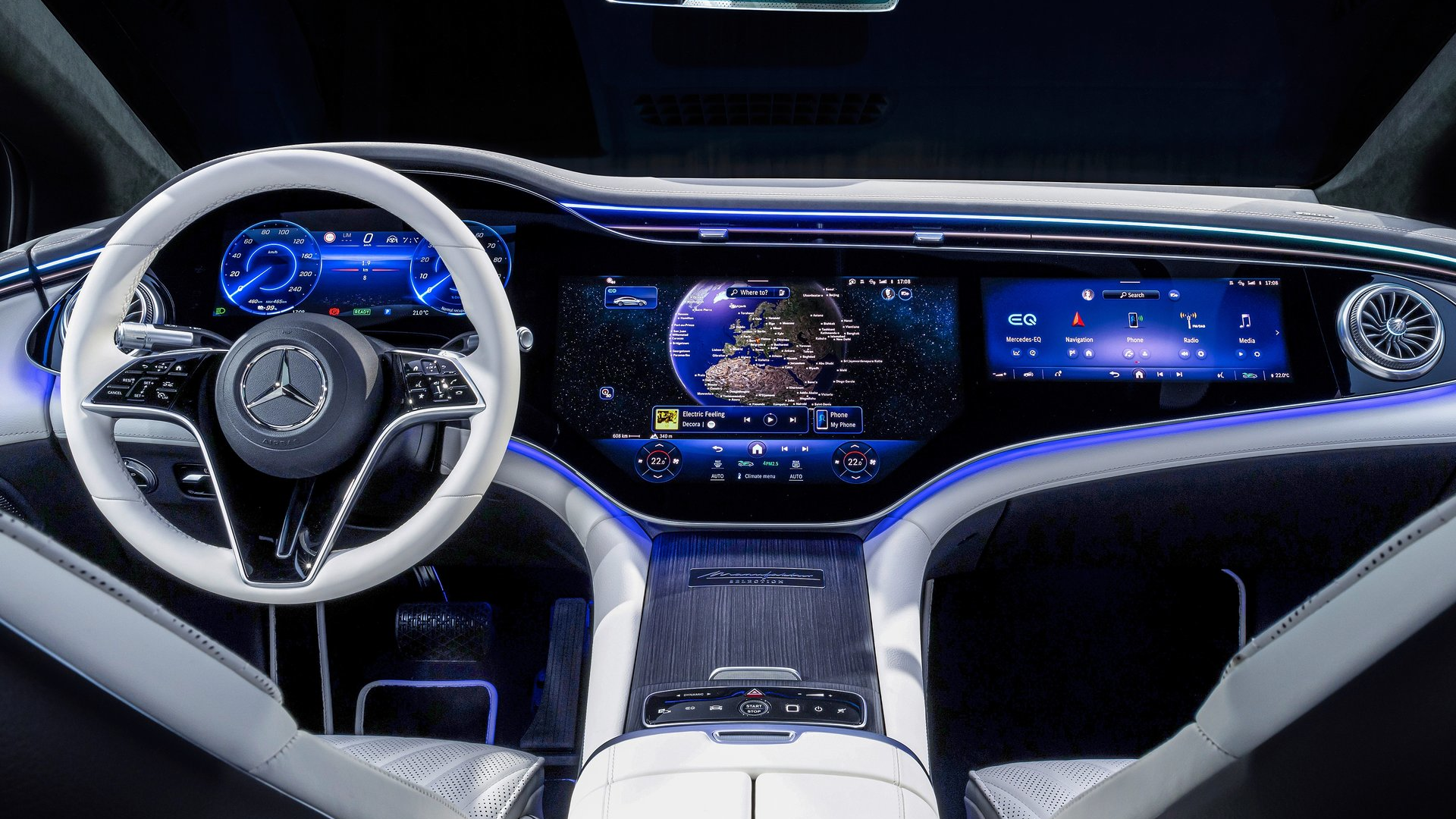
But now I look at new screens like the ones you’ll find in the Mercedes-Benz EQS, and three things come to mind. Firstly, smudges. Secondly, what’s it going to look like in 10 years? Third, there’s no possible way you’ll be able to replace it. At some point in the future, Mercedes will move on to the next S-Class, and replacement screens will no longer be available.

Related
10 Cars With the Worst Depreciation
We apologize in advance if any of your cars are on this list.
Will it even make financial sense to replace it, considering how rapidly luxury cars depreciate? And finally, it just looks like a cheaper interior design compared to a W126 S-Class. Back then, Mercedes was forced to use the finest wood, leather and high-end plastics because the S-Class was the S-Class of cars. You couldn’t get away with poor build quality because people interacted with the buttons and switches daily. These days, you slap a screen where the center console used to be and call it a day.
A big shout-out to Genesis for avoiding this trap. Sure, their cars also have screens, but the designers still left enough room to showcase what their designers are capable of. On a trip to Korea recently, Genesis told our Deputy Editor that the brand foresees a reduction of screens in the industry and a return to analog, since phones already have everything we need, and most people use phones for navigation and multimedia anyway. Genesis also mentioned how the continuous updates are “painful” for the brand, and the customer.

Related
9 Biggest Screens In New Cars Right Now
RIP, buttons and knobs.
The point of this section is essentially about how these screens will impact a car 10 years from now. Porsche made a brilliant move when it started offering modern infotainment systems for its older models, but how do you physically update a Mercedes Hyperscreen, or any other massive screen without a massive investment in a car that has most likely lost 70% to 80% of its value? It’s very much like the smartphone industry. My phone is two years old, and it’s already outdated to the point where the hardware can no longer run the new operating system. How many times can an automaker use over-the-air updates to keep old hardware up to date, and when is the cut-off point when they decide that it’s no longer worth providing updates for a Tesla Model S, for example?
The Big Battery Question
EVs Appear To Be Disposable
|
2026 Tesla Model Y Long-Range RWD |
|
|---|---|
|
Drivetrain |
Single Electric Motor |
|
Power |
295 hp |
|
Torque |
309 lb-ft |
|
Price without Federal Tax Credit |
$44,990 |
The Tesla Model Y is the best-selling EV in the USA, and with good reason. It’s a sublime car, made even better by the recent Juniper facelift. But as good as the Model Y is, it suffers from the same problem as every other EV and smartphones. The battery will degrade over time, though it has to be said that the degradation is not as bad as we originally thought. According to Tesla, its Long Range battery loses 15% of its capacity after 200,000 miles. Still, if you look after an ICE car, it loses no range after 200,000 miles.
There isn’t really enough evidence regarding the longevity of batteries yet, but there is a million-mile Tesla and the amount of battery and motor replacements are concerning. The average price of a battery replacement also means you’d be better off scrapping a car rather than buying a new battery for it. The same goes for plug-in hybrids that use a much larger battery pack than a traditional hybrid. Replacing an 18 kWh battery after the warranty runs out will knock your wallet big time.
This would have been fine if the average lifespan of a car was eight years, which is basically how long battery warranties are supposed to last. But the average lifespan of a car went from 12 years to 16 years in a very short timeframe. As cars get more expensive, people hold on to their existing cars for longer. If the pandemic taught us anything, it’s that the best car is a paid-off car.
Conclusion: We’re Going To Need More Scrapyards
As we can see, EVs by their very nature have an expiration date. Even if batteries don’t degrade as fast as we thought, there will come a time when an EV can no longer cover a sensible distance, and then you’ll have no choice but to send it to the scrapyard. I don’t think it was planned, but it is possibly the biggest argument against electric vehicles. If you look at our list of million-plus mile cars, you’ll see a trend. They’re all simple, easy to fix, and built sturdy straight from the factory. For the most part, they’re also from the 1980s to the mid-2000s, before too many nannies and screens entered the picture.

Related
Million-Mile Cars That Prove Reliability Isn’t Just A Toyota Thing
Million-mile cars can come from any brand. Here are some of the most iconic.
As for the screens, I don’t see a solution. We’ve all dreamed of owning a used luxury sedan as a third or fourth car. The 50-year-old W116-generation 450 SEL 6.9 is a prime example. It has a timeless exterior, but, more importantly, an ageless interior. You can put a modern Bluetooth receiver in there, but otherwise it is perfection. Its modern equivalent is the Mercedes-AMG S63 E Performance, which is a very impressive car indeed. But it uses a 13.1 kWh battery for part of its 791 hp output, and its interior design is less design and more graphics, which everyone with a gaming PC or console will tell you ages extremely quickly.
Unlike the 50-year-old car, it’s not timeless. In 10 years, it’s going to feel outdated, and I’m not sure if it will have the same allure as its 1970s counterpart. As a result, it won’t find a home once its original owner is done with it, and has moved on to the next best thing.