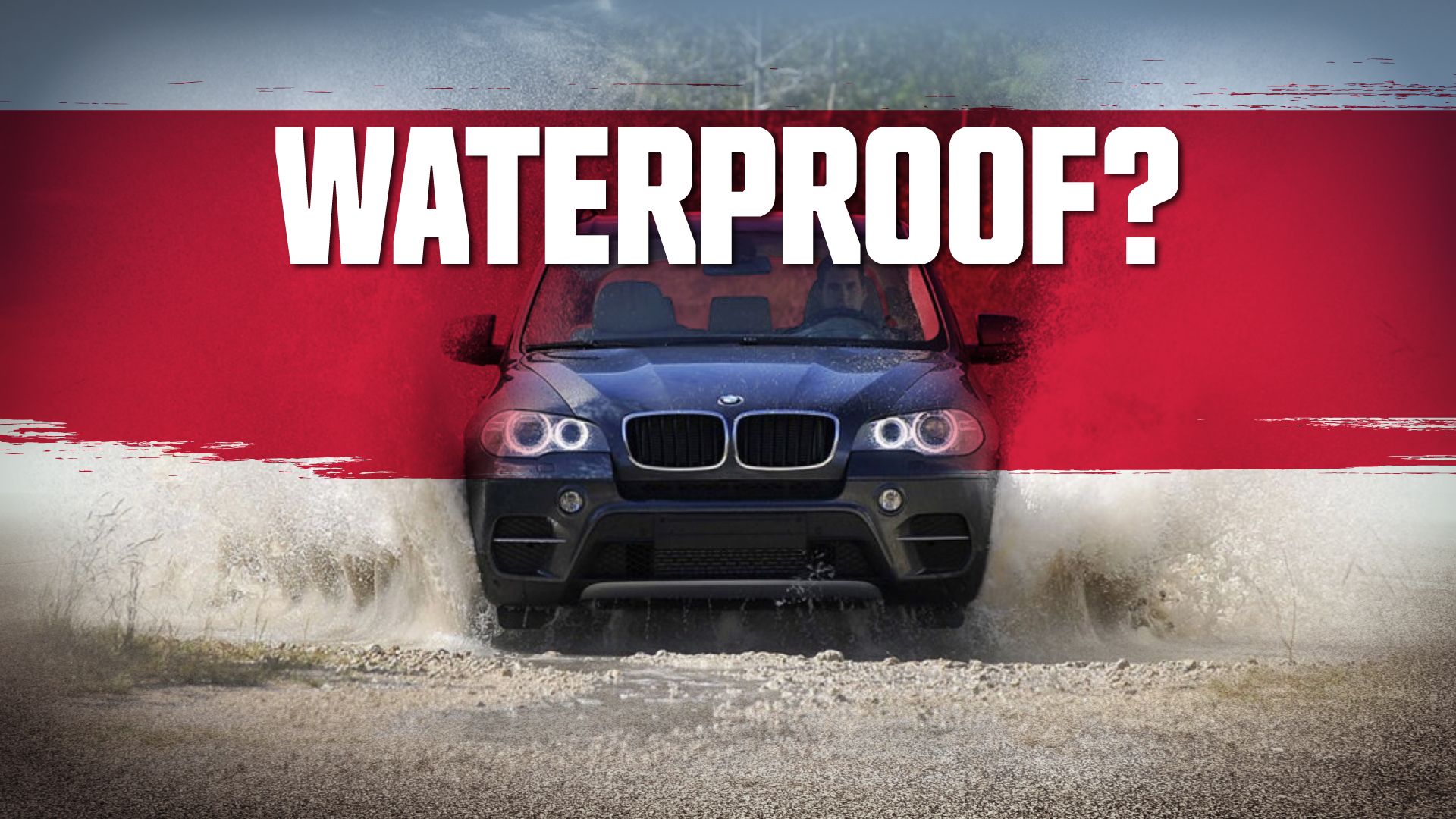
Is It Possible To Waterproof An Off-Roader?
How many truck and SUV commercials have we seen with drivers piloting their vehicles through lakes and puddles with unshakable confidence, certain that their new Wrangler or Silverado can handle the terrain as well as any fishing boat? It makes for a great-looking TV spot, but any experienced off-roader knows that a laissez-faire approach to water and mud is one of the quickest ways to introduce a whole range of mechanical issues that never quite go away.

- Base Trim Engine
-
3.6L Pentastar V6 ICE
- Base Trim Transmission
-
6-speed manual
- Base Trim Drivetrain
-
Four-Wheel Drive
There are ways to make an adventure vehicle more water-resistant, but water-proofing is another matter entirely, and it’s not something you can achieve with simple aftermarket gadgets and a set of chunky tires. Here’s what you need to know.
The following is based on research into automotive safety resources and input from the off-roading community. Any opinions or conclusions offered thereupon are those of the author unless otherwise attributed.
Why Is Water So Bad For Vehicles?
During 2024’s especially unpredictable hurricane season, we ran a piece on the long-term damage that a car can suffer after being subjected to floodwaters. Long story short, they become uninsurable, which is why unscrupulous sellers will move them across state lines to sell under bogus titles to unsuspecting buyers. It doesn’t necessarily need to be floodwater, though. Any time you’re getting water up above the recommended wading depth, or even over the axle, you’re inviting serious damage, including:
Hydrolock
Hydrolock is a worst-case scenario where your combustion chambers get flooded with water. Water does not compress like gasoline, which means that you have your engine essentially straining to push its pistons against an immovable object. This results in, at the very least, bent rods and total mechanical failure. From that point on, it’s more advisable to try and salvage whatever parts from the engine you can than it is to try and fix it.

Related
As Flooding Increases, New Underwater Safety Tests Will Become The Norm
Your car may be exceptionally safe, but how will it perform if you’re trapped underwater?
The scary thing is that you don’t need to put your car through a flood for this to happen. The water gets in through the cold air intake, so if the intake is submerged for even a few seconds, you could wind up with an engine full of water.
Rust, Everywhere
Let’s say you never expose your engine to a drop of unwanted moisture. Great! Now what about your wheels, suspension, and axles? If they’re going for a swim every weekend, corrosion is an inevitability. At the very least, you’re probably going to have to replace your wheel bearings sooner or later, a fix that can cost around $500 a wheel, according to RepairPal, or a couple grand for a set.
Thermal Cracking
Even if you can avoid hydrolock, it doesn’t take that much cold creek water to result in thermal cracking, wherein hot metals split in two upon sudden exposure to cold liquids. Pretty much anything on the outside of your vehicle can take it, and most parts under the hood can, as well. But splashing even a tiny bit of water in through the cold air intake, you’ll have it coming in contact with components like the exhaust manifold, which can run at temperatures of up to 1,400 degrees Fahrenheit.

Related
Florida Flooding Destroys Multi-Million Dollar Collection
Don’t watch if you’re a sensitive Ferrari lover.
Aluminum tends to be more flexible, but not every part of your vehicle is made of aluminum. Even low-mounted headlights can shatter when they come into contact with a bit of cold water.
What Aftermarket Gadgets Can (And Can’t) Do
A snorkel is a must for any serious off-roader who plans on crossing even the shallowest of creeks and ponds. Off-roading snorkels function exactly like the ones we use on beach trips, giving the wearer access to air while keeping water out of the internal systems. Jeep owners typically go with Mopar for their snorkels, and most overlanders will tell you to do some extensive sealing to make sure you’re good to go. If you’re going aftermarket, be sure to read the reviews. Some brands are known for quality and functionality, others are more cosmetic.
Spare No Expense In Keeping Water Out
Lubricants like Green Grease can help to provide a protective coating over your whole suspension system, wheel bearings, and axles to make your vehicle more water-resistant. It’s not impossible to wash off Green Grease in the creek, but it’ll take most drivers a few trips before they’re driving on exposed metal.

Related
Original Land Rovers Make Great Electric Off-Roaders
The Inverted shop works its electric-conversion magic on the classic family of Land Rover models, while retaining their classic off-road capability.
Water bras can seriously help to limit the grime, water, and debris getting into the front end of your truck or SUV. They look kind of like those rain covers you see cops wearing on their hats, and they’re a hundred-dollar investment that can potentially save you thousands in engine repairs (or the cost of a brand-new vehicle) later on down the line. These coverings essentially push water out of the way as you’re trudging through, but they won’t do you much good if you get stuck in the creek.
Bottom line: products like snorkels and water bras can help to improve your vehicle’s rate of survival in the water, but you’re not turning your car into a submarine without taking it apart and rebuilding it with waterproof seals on everything. Even a pint of water sloshing around can collect in all the nooks and crannies and corrode your vehicle in hidden areas.
How Can You Cross Water Safely?
If you must cross deep water, we’ve published an in-depth guide on the matter. The guide is oriented more around emergency situations than it is around adventure driving, which should tell you that it’s best avoided no matter how rugged your SUV or pickup may be. To go over some key points:
Slow (But Not Too Slow) And Steady Wins The Race
It’s not an Olympic diving event, so ease into the water, don’t go slamming into it. From there, seasoned off-roaders will tell you to go at about the pace of “a swift walk,” creating the perfect bow wave to keep water to a minimum in the engine compartment. If you drive a manual, avoid shifting, because the last thing you want is to stall in the middle of a creek. Drive straight across, or downstream, never upstream.
If Your Car Stalls, Pull It
If your car does wind up stalling in the water, trying to get it going again will only invite water into the internal systems. Don’t try to start it. Tow it. Yeah, your buddies will laugh at you when you call them for help, but you can take the ribbing easier than you can take the cost of a total engine replacement.

Related
WATCH: LS1 V8 Engine Teardown Shows Why You Shouldn’t Buy Flooded Cars
The engine sourced from a Chevrolet Camaro was flooded during Hurricane Ian.
Just Stay Above Wading Depth
If you’re not an experienced off-roader who knows how to handle creeks and ponds, just stick to your car’s recommended wading depth. Most trucks and SUVs will have this number printed in the manual or somewhere online if you simply Google it. Some Wranglers are rated for 30-, 35-inches of wading depth, so you’ve got some room to play without voiding your warranty.
Remember The Golden Rule: Go Around It
If you can go around it, you should go around it. This applies to creeks and ponds just as well as thick brush, narrow passages, and mountain-side death traps. It’s fun to wrestle with the elements, but you don’t get any extra points for taking unnecessary risks.
Sources: RepairPal, Jeep, JL Wrangler Forums.