How Toyota Can Bounce Back From It’s Recent Recall Nightmares
It shouldn’t be lost on anyone that the automotive industry is a business at its core. Even though car manufacturers build cars that will appeal to as many people as possible, and insist they are built purely to enhance drivers’ lives, ultimately they have been designed and built to secure the company as much profit as possible. As a result, certain directions are taken to ensure that vehicles can be built as cheaply as possible to help the bottom line on the other end.
Toyota
Toyota is a Japanese automaker founded in 1937 that has developed a reputation for reliability across a multitude of segments, from sports cars and family sedans to pickup trucks and off-roaders. Famous models from the brand include the Hilux, Land Cruiser, Camry, Crown, and Corolla, the latter being the world’s best-selling vehicle nameplate, with more than 50 million Corolla-badged vehicles being sold since it was first introduced. Toyota typically competes in the mainstream market, but is also famous for launching Lexus as a luxury sub-brand to take on Mercedes-Benz.
This tends to materialize as quality problems with cars, and therefore recalls to fix production or design oversights are common in the auto industry. Even though Toyota is known to build some of the most reliable cars on the planet, the brand has had to deal with its fair share of recalls. It has recently come under fire for yet another one.
We utilized trusted sources such as the NTSA to find the correct data relating to recalls put against various Toyota vehicles issued throughout its history. This data is used to illustrate the argument that the manufacturer has suffered from recalls in the past, but lived to tell the tale.
Transmission Issues With Its Latest Tacoma Truck
Explaining The 2024 Tacoma Gearbox Drama
- Toyota is currently dealing with a court case regarding faulty automatic gearboxes in 2024 Tacomas
- Brand currently hasn’t issued a recall for the problem, only a technical bulletin
- The TSB doesn’t cover all affected vehicles, so a case was filed with Californian district court
- The problem relates to faulty pressure control solenoids and torque converter clutch actuator, causing the gearbox to feel jerky when upshifting and or to jump forward when shifting
The Japanese marque is currently in big trouble as a result of a major transmission issue that has affected the latest N400 generation of its popular Tacoma pickup truck. Many owners of the truck have suffered problems with its eight-speed automatic gearbox not shifting correctly, with jerking between gears and slow acceleration being two of the main symptoms of the issue. The rough shifting also causes the truck to jump forward unexpectedly, leaving owners fearing for their safety should they continue driving their trucks.
The problems, combined with the fact Toyota has yet to issue a recall on the affected vehicles, have led to a class action lawsuit being called against it in a Californian district court.
Toyota Is Well Aware Of The Problem
Following a rise in the number of complaints to the National Highway Traffic Safety Administration (NHTSA), Toyota has put out a Technical Service Bulletin to its workshop staff laying out the aspects that need to be checked should any trucks suffering the problem be brought in. The checks center around various pressure control solenoid actuators and the torque control clutch actuator, which have in some cases failed and led directly to the transmission issues.
The claimant of the court case, Abdul Syed, says his truck isn’t covered under the TSB Toyota has issued, meaning it won’t be fixed free of charge. Until an official recall is issued, or Toyota changes the guidelines of the TSB, he can’t use his faulty Tacoma.
There Are Engine Issues With The Tundra and Lexus LX600, Too
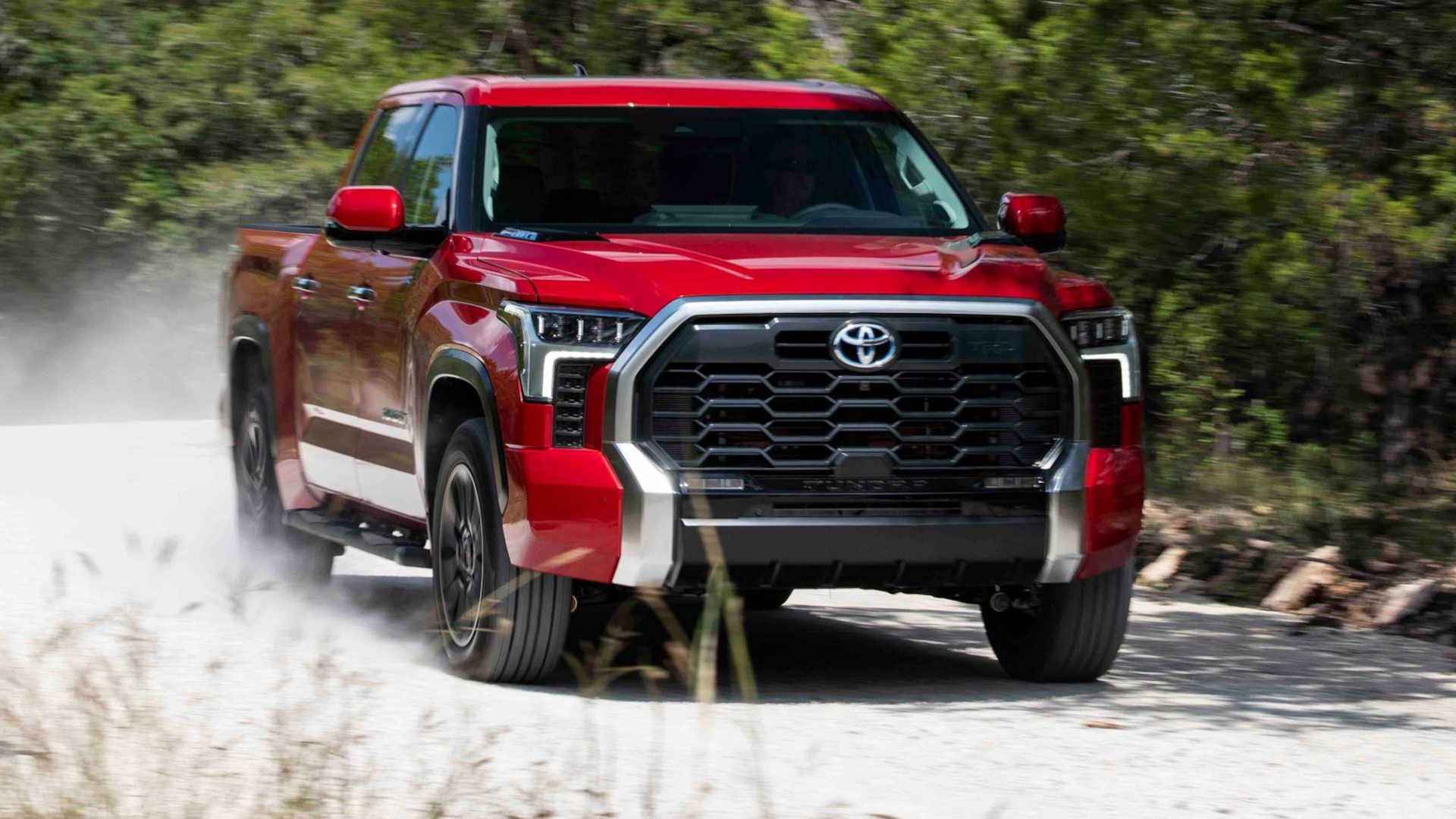
Aside from the Tacoma transmission woes, Toyota is also having to deal with a well-documented issue with the twin-turbo 3.4-liter V35-FTS V6 engines featured in its Tundra truck and Lexus LX600 models. A manufacturing defect, which consists of leftover material not being cleaned out during the production process, can lead to engine knocking and potential failure.
The problem is a serious failure of the brand’s quality control process, and over 100,000 vehicles have had to be recalled, so the problem can be rectified via a complete engine change, free of charge. These recent cases haven’t done Toyota’s public image any good, though this is far from the first time it has had to deal with something like this.

Add CarBuzz to your Google News feed.
Toyota Has Been At The Center Of Some Serious Recalls In Its History
The largest recall Toyota has been part of, aside from the Takata airbag scandal which affected many other brands too, was its 2009-2011 unintended acceleration problems. Following a list of complaints filed to the NHTSA regarding their Toyota, Lexus, or even Pontiac Vibe models accelerating unexpectedly, Toyota had to recall 5.2 million cars worldwide after finding the vehicle floor mats could slide forward and trap the pedals, causing the throttle to engage.
It later turned out that many of the incidents were caused by the throttle sticking on mechanically, forcing Toyota to recall around nine million vehicles in the end. The NHTSA recorded 37 deaths caused by the problem, which led to Toyota paying out over $2 billion in fines and damages to the US government and families of the affected victims. The fine was the largest ever afforded to a car company, with the steep penalty coming as it was found that it had hidden information about the defects from the public, potentially costing many their lives.

Discussion
Is the 2015 Toyota Camry SE a reliable car?
The 2015 Camry has an exemplary quality and reliability rating of 90 out of 100 from J.D. Power, so is expected to provide trouble-free motoring. The SE trim is one of the more basic Camry variants, featuring the dependable 2.5-liter four-cylinder engine and only a few luxuries, but that means less can go wrong with it.
Toyota Suffered Another Serious Problem Just A Couple Of Years Later
The early 2010s turned out to be a tumultuous period for Toyota, as it was forced to recall a further 7.4 million cars shortly after the faulty throttle debacle in 2012. It was found that due to many lock switches not being greased correctly, the lock ended up corroding over time. As a result, many of these components ended up catching fire, which posed a huge risk to owners of the vehicles affected.
While not quite as many cars were affected as in the dodgy throttle scandal, it was another huge setback for the image of the brand.

Related
Why We’ve Seen So Many Hybrid Recalls Lately
An uptick in recalls relating to hybrids may have some fairly obvious causes.
Toyota Has Also Been Involved In Many Lower-Key Recall Programs
|
Issue |
Year(s) |
Number Of Vehicles Affected |
|
Unintended Acceleration |
2009-2011 |
9 million |
|
Faulty Window Switches Causing Fires |
2012 |
7.4 million |
|
Engine Problems Caused By Excessive Oil Sludge |
2007 |
3+ million |
|
Battery Trays Didn’t Fit Aftermarket Batteries |
2023 |
2 million |
|
Faulty Passenger Airbag Sensor Preventing System Working |
2023 |
1 million |
Another embarrassing setback came in 2023, when it was forced to recall nearly two million RAV4 models due to them being shipped with battery trays that didn’t fit aftermarket batteries properly. The batteries used by the factory fitted perfectly, though customers found when eventually replacing them with aftermarket components that they wouldn’t fit tightly, and moved around as a result.
This can cause short-circuiting and fires, leading to models made between 2013 and 2018 being recalled.
Toyota Had To Reimburse Owners Of Over 3 Million Owners For Oil Sludge Damaging Engines In 2007
Toyota’s reputation had been growing rapidly in the US during the 2000s, though it was knocked back after having to pay for the damage caused by excessive oil sludge buildup in around 3.5 million cars. The buildup eventually led to engine components failing, leading to expensive repair bills for affected drivers.
It was later found the issue was the result of a design fault, and a Louisiana district court case in 2007 ruled that the brand had to pay for all proven damages to engines caused on 3.5 million vehicles built during the late 1990s and early 2000s.
A Million Vehicles Were Recalled Due To Faulty Airbag Systems
Another major recall scandal Toyota had to deal with was when it had to repair around a million cars built between 2020 and 2022, including Siennas, RAV4s, Corollas, and others. It was found that an airbag sensor placed in the front passenger seat of the car was built incorrectly, causing it to not function properly in the event of a crash.
This problem surfaced just months after the RAV4 loose battery, making it another tough period for the brand.

Related
A Now-Defunct Brand Had The Most Embarrassing Pick-Up Truck Recall Of All Time
A wide range of recalls have been applied to vehicles throughout history, but nothing as embarrassing as this Australian model’s failure.
Toyota Has Always Managed To Bounce Back, And It Will Again
Ultimately, despite the many examples of embarrassing and concerning recall situations Toyota has been involved in throughout its history, it remains one of the most popular manufacturers in the US. Part of the reason is that, for the most part, unless they become seismic like the throttle pedal problems, most tend to get swept under the carpet behind bigger issues in the world, meaning many drivers are completely unaware of them. The other reason why Toyota remains a trusted brand is its response to problems. They may not have a fix for the Tacoma yet, but the engines in the Tundras and Lexus are being replaced entirely, free of charge.

Related
Why The Number Of Automotive Recalls Is Much Higher Than 20 Years Ago
The frequency of automotive recalls has skyrocketed in recent years, so CarBuzz investigated why this is the case.
The brand’s cars also retain their commanding reputation for being reliable, as illustrated by the 2023 J.D Power dependability study. Toyota’s luxury Lexus brand topped the survey, while the parent brand secured a still-strong sixth. Alongside its model’s sustained reliability record, they are also affordable to purchase and run. Due to these factors, sales have remained strong despite the many bumps it has had to navigate.
Plus, Toyota is far from the only manufacturer to be placed at the center of major recall programs. American institutions General Motors and Ford, as well as many other brands, have all undergone public scrutiny for mistakes made during the design process. Ultimately, even though the numbers attached to some recalls are very high, they represent just a fraction of the overall number of cars Toyota and their rivals make, and tend to be the exception rather than the rule.
This, of course, doesn’t make it OK. This is why it’s important that government-led departments like the NHTSA remain on top of complaints leveled against models and file recalls to ensure they are dealt with quickly and efficiently. With manufacturers consistently being held to account, the number of recalls, and therefore the safety of drivers worldwide, should decline sharply in the coming years.
Sources:
National Highway Traffic Safety Administration
,
J.D Power