
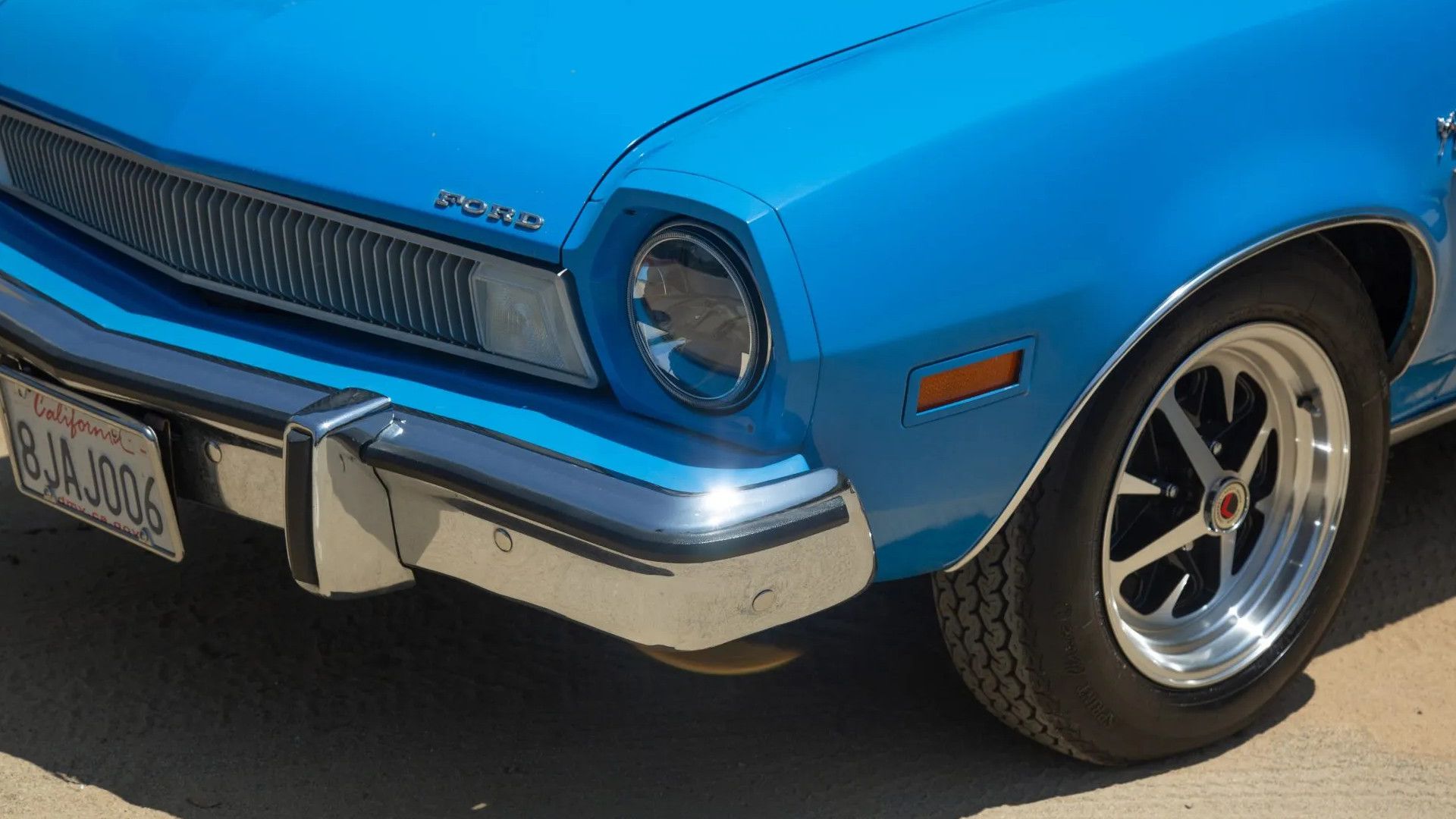
How The Ford Pinto Ultimately Made Cars Safer
There are a few things that can make the auto industry safer. One is legislation. Airbags became mandatory in the US in late 1998, and traffic fatalities have been on the decline ever since. The steady progress of automotive technology is the second thing making the industry safer. Road users are more protected with features like front crash avoidance and lane-keep assist. Third on the list? Unmitigated disaster.
Ford
Ford is one of America’s oldest automakers and one of the oldest in the world, popularized for being the first to effectively mass produce the automobile under Henry Ford with the Ford Model T. In over 120 years, Ford has become a sales leader in a variety of segments, with popular nameplates like the Ford F-150, Transit, and Mustang.
- Founded
-
June 16, 1903
- Founder
-
Henry Ford
- Headquarters
-
Dearborn, Michigan, USA
- Owned By
-
Publicly Traded
- Current CEO
-
Jim Farley
That refers to when something really bad happens, and it results in lawsuits and government intervention and manufacturers paying out big damages – that’s the kind of thing that motivates carmakers to start running the ship a little tighter. One such disaster, and certainly one of the big ones, would be the release of the Ford Pinto, the subcompact that Ford probably wishes they could erase from the history books. Here’s how this dangerous malaise-era car ultimately made American highways safer, in a “learning by counter-example” sort of way.
Information for this overview has been sourced from various legal resources, with relevant details included at the author’s discretion.
Why The Ford Pinto Was So Unsafe
Some of our readers may know the answer, but here’s a refresher for those who aren’t in the know about the Ford Pinto, a car that once served as the poster boy for dangerous vehicles and manufacturer negligence. Here’s the short version: this car would literally explode when it was rear-ended.
The scary thing is, Ford knew the car had a major safety issue. Internal documents show that Ford crash-tested the car more than forty times, and, in every single test going over 25 mph, the fuel tank would rupture, creating a severe fire risk. Making the car safer could have been achieved with nylon bladders for the fuel tank and structural protection for the rear of the vehicle, fixes that would have only cost a few more dollars per unit. Ford didn’t bother doing any of that, owing in large part to then president Lee Iacocca’s dictate that the car shouldn’t weigh more than a single ton, or cost a penny more than two thousand bucks.

Related
Ford Is Getting Sued Again Over Another EcoBoost Issue
The problem lies with the intake valves on six Ford and Lincoln vehicles.
One test saw the car being made safer by a one-dollar, one-pound piece of plastic used to prevent tank puncture. This solution was rejected as an unnecessary addition of expense and weight. It didn’t help that the car was rushed through production over the course of barely over two years in order to compete with the influx of small Volkswagens and Hondas, meaning that a substantial redesign was out of the question.
As the story goes, Iacocca was never even informed of these issues directly, as safety was kind of a taboo subject with the president, who used to say “safety doesn’t sell.” As a result, Iacocca’s part is kind of tricky to suss out. The president certainly had a hand in creating an anti-safety culture within the company, but would he have approved the final version of the Pinto had he been informed of the safety issues? We can’t say without asking the man directly, and it’s too late for that.

Related
Ford Moves To Dismiss Fuel Economy Lawsuit
Manufacturer wants a host of class-action lawsuits to be dismissed.
An automaker rushes an unsafe vehicle through production to save a few bucks, and it winds up in the hands of drivers who have no idea of the danger. It happened hundreds of times before the Pinto, and it’s happened hundreds of times since, and it always ends the same way. The thinking at Ford was that a few lawsuits would be cheaper to settle than any fixes would be to install. That’s what Grimshaw v. Ford Motor Company would go on to change.
Grimshaw V. Ford Changed How We Hold Automakers Accountable
Exact numbers are hard to pin down, but it’s estimated that anywhere from 500 to 900 people died as a result of Pinto’s exploding gas tanks, and that’s not even counting the serious injuries. However many individuals were injured or killed in Pinto accidents, it resulted in more than 100,000 lawsuits across the country, with Grimshaw v. Ford being widely regarded as the most significant. This wasn’t just a handful of cases that Ford could sweep under the rug, this was a full-blown movement of justice-seeking consumers.

Add CarBuzz to your Google News feed.
Grimshaw v. Ford resulted from a 1972 incident wherein the driver was killed, and the passenger, Richard Grimshaw, suffered severe burns, resulting in several operations. The tort action resulted in an award of $2.516 million to the Grimshaw family, $559,680, and punitive damages of $125 million, a record in any area of American industry at that time. This last number was later reduced to $3.5 million, but even so, when combined with the expense of fighting or settling countless other lawsuits, the American consumer and the legal system drew a clear line in the sand: there are consequences for neglecting the safety of the American public.
We All Benefit From The Pinto Lawsuits And Recalls
Following a long list of complaints and lawsuits, the NHTSA’s investigation into the Ford Pinto would result in the recall of 1.5 million 1971-1976 units, along with 30,000 Mercury Bobcats, and 320,000 Chevettes. The decision to not recall the Pinto, early on, is said to have been motivated by a cost of $121 million, whereas the total legal costs of sweeping the problems under the rug was expected to run the automaker around $50 million. In the end, Ford would wind up paying for both. This alone would help to set a simple precedent: it’s cheaper to just do the recall now, because, when the problem is this severe, you’re gonna have to anyway.

Related
Ford Has To Pay Nearly $300 Million Because Of Fatal Takata Airbags
Doesn’t sound so bad considering Takata paid $1 billion in fines and went bankrupt.
A new precedent had been set in American automotive culture, as well. The Ford Pinto had been such an embarrassment for Ford that automakers would soon begin advertising specifically on matters of safety, and it’s not hard to find TV spots from the 1980s for the US market with brands like Volvo and Mercedes-Benz emphasizing advanced features and impressive crash test numbers.
Would the Pinto be the last time automakers ever tried to pawn sub-par goods off on the public, at the risk of the buyer’s life and limb and the automaker’s reputation? Absolutely not. Take a look at the Takata airbag recalls, or, beyond matters of immediate safety, scandals like Dieselgate. The auto industry is an expensive business, and correcting a mistake can cost an automaker hundreds of millions of dollars, so it’s not hard to see why the temptation to cut a few corners is there. But Grimshaw v. Ford, and Ford’s subsequent failure to get the punitive damages thrown out, had a significant hand in discouraging companies from putting profits before safety, and would ultimately help to make American highways that much safer.
Sources: Tort Museum, Ceb.com, Justia U.S. Law

