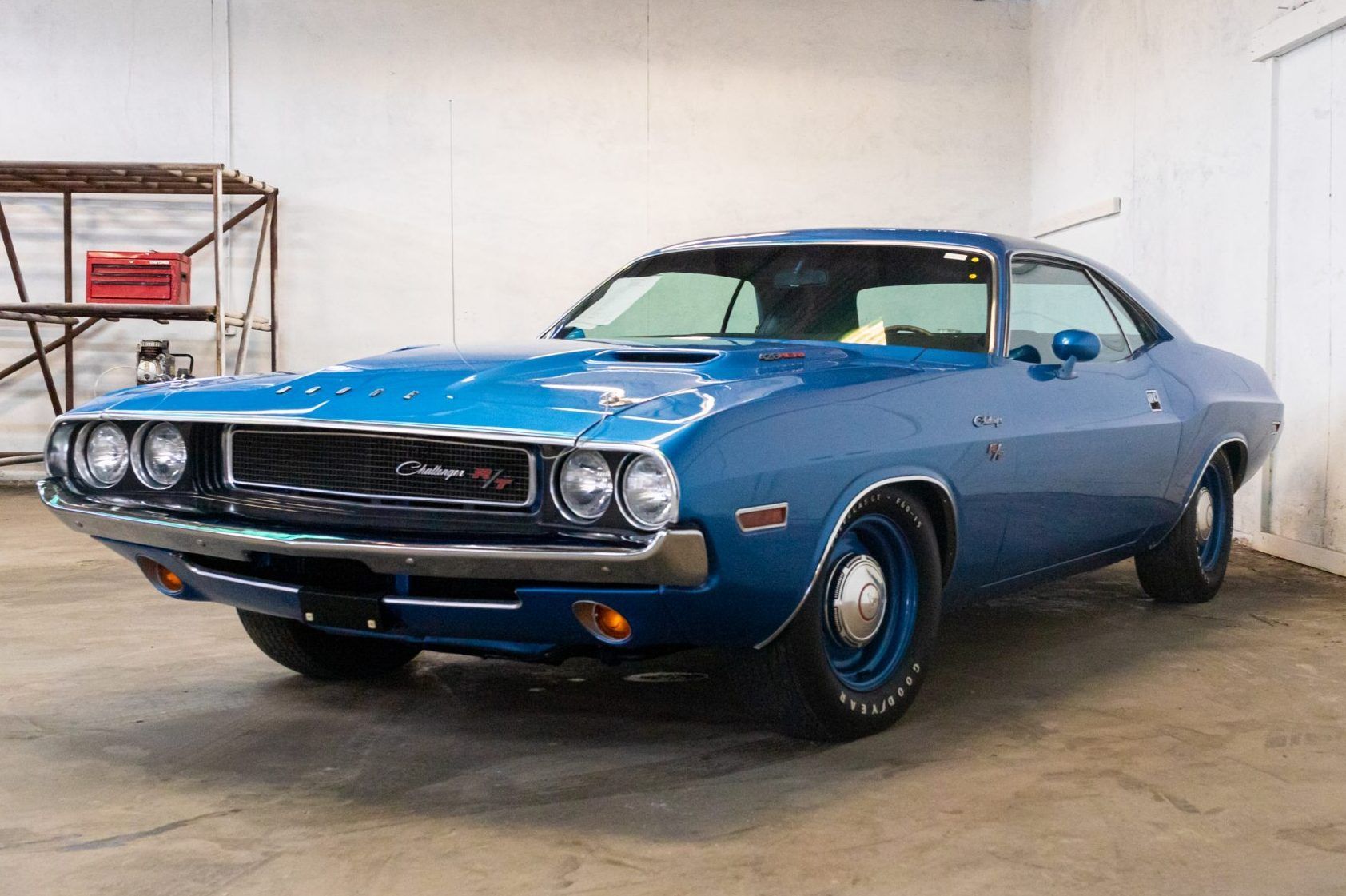
History Of The Dodge Challenger
The Dodge Challenger is officially dead. After a prolonged goodbye that included a special “Last Call” edition for dedicated enthusiasts, the Challenger nameplate was officially shelved in 2023 (although the chance of it being used again somewhere in the future remains higher than zero, according to Dodge CEO Tim Kuniskis). A legendary pony car that became a household name over the decades, the Challenger is an icon of American automotive culture, and its demise signals a radical shift in the direction the US market and the automotive world as a whole are going.
Interestingly enough, the long history of the Challenger name begins with a car that is not a Challenger.
Related
10 Great Cars With 300 HP: The Horsepower Sweet Spot
In the real world, 300 horsepower in a car is just about right.
That is because Dodge first used the Challenger name on a special edition of the Coronet, dubbed the “Dodge Silver Challenger”. The Silver Challenger was introduced in 1959 and only lasted for a single model year, as the Coronet went out of production the following year and did not appear again until 1965. The first standalone model to carry the Challenger name made its debut in 1970; over the course of the following five decades, three different generations of the Challenger made their way into Americans’ garages. Let’s take a drive down memory lane and explore the different incarnations of this quintessentially American pony car.
First Generation: Last of the Pony Cars?
The first Challenger was introduced in 1969 for the 1970 model year, one of two cars (along with the Plymouth Barracuda) using Chrysler’s “E-body” platform. The Challenger was a slightly late entrant to the pony car race, having made its debut five years after the arrival of the Ford Mustang, but it still managed to establish itself against competitors such as the Pontiac Firebird and Mercury Cougar. During its first year on the market, the Challenger was available in two versions: a “standard” variant (available with a variety of engine choices, the default option being a 3.7-liter inline-six) and the Challenger R/T (Road/Track), which was equipped with a 6.3-liter V8. A T/A (Trans-Am) special edition was also available, as the Challenger was a competitor in the Trans-Am championship (more on that later).
When the Challenger arrived on the scene, the pony car market was already past its heyday. The car had barely spent a year on the market before sales began to decline. By 1974, sales had fallen so low that Chrysler stopped production of the Challenger halfway through the model year; the Challenger name would be shelved for four years afterward.
From the track to the road: The 1970 Challenger T/A

During the model’s first year on the market, Dodge entered the Challenger in the Sports Car Club of America’s Trans American (Trans-Am) Sedan Championship. According to the championship regulations, in order to race, Dodge had to build a production version of their race car: the Challenger T/A, named after the Trans-Am racing series, was born.
The Challenger race cars were equipped with a modified version of the “340” engine, a slight misnomer since the resulting engine had a displacement of 303 cu. in. rather than 340. The T/A, on the other hand, came with a version of the standard 340 fitted with three two-barrel carburetors: this engine was named the “340 Six Pack.”

Related
This Is Every One Of Dodge’s Last Call Charger And Challenger Special Editions
All of Dodge’s Last Call models are in one place including the Demon 170.
Other upgrades included a large air scoop, a modified exhaust system, and different-sized tires fitted in the front and rear (the T/A is one of the first muscle cars in the US to come with two different sizes of tires). On the cosmetic front, stripe decals, custom graphics, and fiberglass front and rear spoilers distinguished the T/A from the standard Challenger.
The Challenger’s participation in the Trans Am series was short-lived. After a year of poor racing results, partly due to a low development budget, Dodge withdrew from the championship, and the street version of the Trans Am race car disappeared from the market at the end of the model year. In total, 2,399 Challenger T/As were built.
Second Generation: A rebadged Mitsubishi?
In 1978, four years after production of the first-generation Challenger ended, Dodge brought the nameplate back to the market in a slightly unconventional way. The new Challenger wasn’t really a Dodge at all, but a rebadged version of the Mitsubishi Galant Lambda coupe, sold on the US market through Dodge as a “captive import” (a foreign-built car sold under the name of a local company acting as an importer). While Dodge initially marketed the car as the “Colt Challenger”, its sister brand, Plymouth, sold the same car under the name “Plymouth Sapporo” (after the Japanese city of Sapporo, which had made itself known to the US public thanks to the 1972 Winter Olympics).
The Lambda, Challenger, and Sapporo were mechanically identical, powered by a 1.6-liter or 105hp 2.6-liter inline-four engine; the minor differences between them were mostly cosmetic, such as interior trim and taillights. However, they were marketed to different sectors of the market: while the Challenger targeted the performance sector, the Sapporo leaned heavily on the luxury aspect.

Add CarBuzz to your Google News feed.
1981: The facelifted Challenger/Lambda
In 1981, the Lambda/Challenger underwent a redesign. The refreshed model came with new bodywork, as well as increased headroom and legroom for passengers, increased trunk capacity and better soundproofing. An electric sunroof was also added. The new version of the Mitsubishi-based Challenger had one choice of engine; while previously a 1.6-liter inline-four had been available, now the only option was a 105hp, 2.6-liter inline-four engine. The word “Colt” was also dropped from the model’s name, making it simply the “Dodge Challenger”.
Third Generation: A Legend Returns
After three years of hype, fueled by Dodge publishing spy photos and unveiling an early concept in 2006, the third-generation Challenger made it to production in 2008, twenty-five years after the last car carrying the Challenger nameplate rolled off the production line.
The new Challenger took styling cues from the iconic first generation of the model, adapting them for the modern era and resurrecting the concept of the pony car for today’s drivers; it proved to be a popular and enduring model, spending nearly 15 years on the market alongside giants of the muscle car world such as the Mustang and the Camaro. In 2014, a special edition was released to commemorate Dodge’s 100th anniversary, and the following year the Challenger received a facelift which saw, among other changes, the introduction of the iconic Hellcat version.
Extreme Challengers: The SRT Hellcat and Demon

The third generation of the Challenger produced two high-performance variants that became household names in their own right: the SRT Hellcat and the even more extreme SRT Demon. The Hellcat made its debut for the 2015 model year, and was equipped with a supercharged 6.2-liter Hemi engine producing 707 hp. One of the features that made the Hellcat unique was the “black key/red key” combination, with the former limiting power output to 500hp and the latter unlocking the car’s full capabilities.

Related
Every Hellcat-Powered Car Ranked By 0-60 MPH Times
Obviously, the Demon 170 is the quickest.
The Demon, a drag racing-oriented variant of the Hellcat, arrived two years later, making its first appearance at the 2017 New York Auto Show. The Demon’s 6.2-liter engine is fitted with a 2.7-liter supercharger and produces 808 hp (840hp with 100-octane fuel). Every aspect of the Demon is geared towards drag racing, from the transbrake system (a mechanism that places the transmission in two gears at the same time, building up hydraulic pressure before launch) to the tires (the Demon was the first production car to come with a set of drag radial road tires). The result is a car so powerful and hard to control that it became the first production car to successfully perform a wheelie.