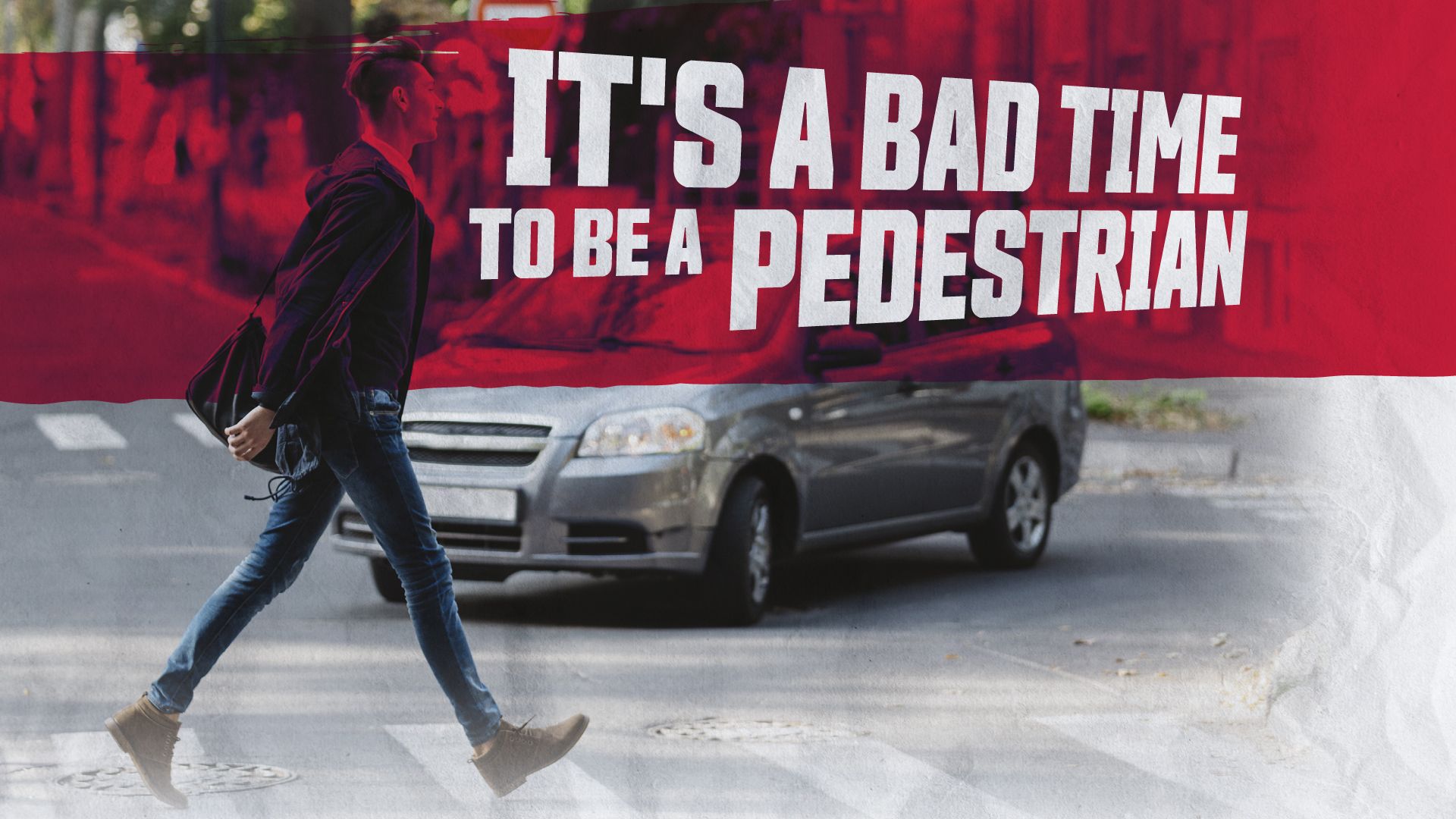
Here’s Why More People Are Getting Run Over By Cars Than 10 Years Ago
Worrying data from the Governors Highway Safety Association shows pedestrian traffic fatalities at a high in 2024, down slightly from the previous year, but up by nearly half over 2014 pedestrian fatalities. For anyone who’s driven a new car recently, this doesn’t seem to make a lot of sense. Even the entry-level advanced driver assistance systems in brand-new Hyundai Elantras and Ford Explorers barely let you sneeze without taking over and guiding you to the pullover lane, so how are roads getting more dangerous for walkers while cars are getting less dangerous?
Ford
Ford is one of America’s oldest automakers and one of the oldest in the world, popularized for being the first to effectively mass produce the automobile under Henry Ford with the Ford Model T. In over 120 years, Ford has become a sales leader in a variety of segments, with popular nameplates like the Ford F-150, Transit, and Mustang.
- Founded
-
June 16, 1903
- Founder
-
Henry Ford
- Headquarters
-
Dearborn, Michigan, USA
- Owned By
-
Publicly Traded
- Current CEO
-
Jim Farley
As it turns out, there isn’t any single culprit you can point to. Here’s what the GHSA has turned up in their research into the problem.
The following is based primarily on a report published by the GHSA, with additional data sourced from the EPA. Any conclusions or opinions drawn thereupon are those of the author unless otherwise stated.
The Streets Are Becoming Less Safe For Pedestrians
To go over some of the key takeaways from the GHSA report:
- 3,304 pedestrians were killed in the US in the first six months of 2024.
- 2024 pedestrian fatality rates for the first six months were down 2.6% from 2023, but up 48% from 2014.
- 2024 pedestrian fatality rates were 12% higher than in 2019.
- The rate of pedestrian fatality has risen at seven times the pace of US population growth.
- California remains the leading state for pedestrian traffic fatalities in volume, with 439 on the record for the first half of 2024, despite a 12.9% decline.
- Florida saw 366 traffic fatalities in the first half of 2024, down 18.9% from the previous year.
- Texas saw 340 traffic fatalities in the first half of 2024, down by 8.1% from the previous year.
More populous states will naturally have more traffic fatalities, but when you consider that California, Texas, and Florida are also known for their sprawling highway systems, a picture begins to form. These three states alone accounted for 35% of all pedestrian deaths in the first six months of 2024, but they only make up 28% of the US population.
More people on the street means more people potentially getting hit by cars, but clearly, there’s something else going on here, or else population density and pedestrian fatalities would track one-to-one.
Cities Are Becoming Less Walkable, And Drivers Seem To Have Lost Their Senses
A lot of the data that the GHSA is covering here is brand-spanking new, which means that we’re still in the process of learning exactly what’s happening and why, but check the data, and the going theories should be clear.
Traffic Fatalities Were Spiking As We Came Out Of Lockdown
Pedestrian fatalities shot up from 0.90 per 100,000 people to 1.04 between 2020 and 2021, and stayed there until 2022. In 2023, this number was down to 1.01, and, in 2024, it was down to 0.97. The period from May 2020 through December 2022 saw a 17% jump in traffic deaths compared to a typical two-and-a-half-year stretch, and pedestrians were naturally a major part of that spike.

Related
The Pandemic Has Made Us Better At Fixing Cars
And that trend is set to continue.
As we started to readjust to our daily lives, we saw a sudden surge in traffic on public roads and highways, no doubt exacerbated by the fact that so many of us had grown accustomed to working from home and getting our groceries delivered, and we seem to have forgotten how to drive safely. This theory is supported by the fact that pedestrian fatalities have been trickling down since the initial post-lockdown spike.
Vehicles Are Getting Heavier
The EPA says that the average vehicle in the US weighed around 4,330 lbs in 2022. In 2012, that weight was closer to 4,130 lbs, splitting the difference between light trucks and cars. That may seem like a marginal fluctuation, but it doesn’t mean that every vehicle on the road is exactly 200 lbs heavier, it means that there are more heavy cars on the road, and the heaviest vehicles, like the three-and-a-half-ton Rivian R1T, are getting heavier, which is great news for the people inside these tanks, but not so good for the people crossing the street in front of them.

Related
America’s Safest Pickup Truck Is A 7,000-Pound EV
This electrified pickup is easily the most-awarded pickup of the last five years, despite not being on sale that long.
City Planners Aren’t Taking Pedestrians Into Account
It’s not just your imagination, and it’s not just old timers going on about “the good old days” when they used to run their errands on foot (uphill both ways). Cities really are becoming less walkable.
The term “stroads” is used to refer to a phenomenon wherein wide, multi-lane roads intended for high-speed travel are flanked by commercial development. Street + road = StRoad, get it? The problem is you’ve got walkers and drivers essentially occupying the same space, with city planners and lawmakers not even considering the possibility of pedestrian-only infrastructure. The sucky thing about it is that a town experiencing an economic boom will naturally see more pedestrian fatalities as developers plant more sidewalk cafes and convenience stores along busy 45+ mph roads.

Related
2024 IIHS Criteria Gets Even Stricter To Encourage Improved Rear Passenger And Pedestrian Safety
After being subjected to the new tests, Hyundai Motor Company leads the way with 16 awards this year.
How Are We Supposed To Fix This Mess?
The really frustrating thing about this problem is that so few people are even aware of what’s going on, so we’re still in the “raising awareness” stage. The good news is that fatalities are ticking down from their 40-year post-lockdown high, but it’s still a scary place out there for people taking the size-nine express.
According to GHSA, we’re looking at a three-prong approach if we want to get anywhere:
- Rethink city planning and development. We need clearer separation of streets and roads so you can walk down to the grocery store without dodging semis and SUVs.
- Get people to adjust their behavior. Pedestrians should be more aware of drivers, drivers should be more aware of pedestrians, and we need to be less tolerant of distracted driving.
- Keep making vehicles safer. Higher front-ends and improved assistance systems can help to offset the increasing weights.

Related
The Average American Has Finally Started Trusting Advanced Driver Assistance Systems
Why American drivers have been more receptive to ever-advancing driver assistance features.
All of this means getting lawmakers, city planners, commercial developers, and automakers on the side of safety. It’s an uphill battle, but if even a few lives are saved each year, that’s better than leaving the problem unaddressed.
Sources: GHSA, AAA, EPA