Ferrari Has A Brilliant Strategy For Keeping Its Cars Valuable
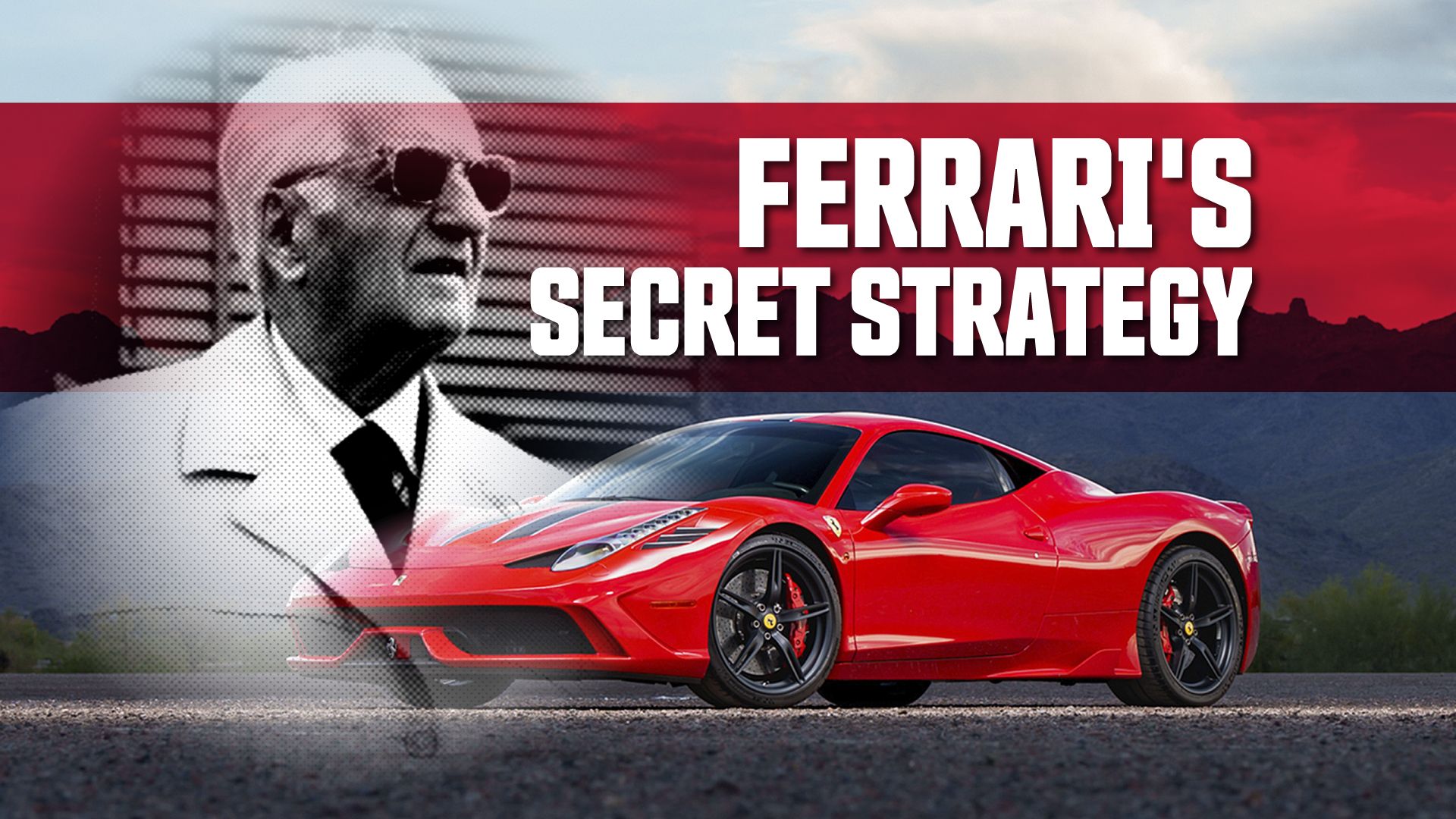
Enzo Ferrari famously said: “Ferrari will always deliver one car less than the market demands.” It’s a statement that would make the hair rise on the neck of the financial manager of just about any major auto company in the world. Building fewer cars than there is demand for? More cars obviously results in more profit, right? Not according to Mr Ferrari.
Despite the perception that the more is more theory is sound, Ferrari’s “less is more” philosophy seems to have paid dividends. The Ferrari brand is highly aspirational, and the cars are in high demand. This increases the value of said cars. So did Mr Ferrari create a goose that lays golden eggs? Or is it all just smoke and mirrors?
We take a deeper dive into Enzo Ferrari’s philosophy of steering clear of mass production. Instead, he believed that the company should build one car less than the customers wanted. It’s a philosophy followed to this day… and it is one that seems to work really well.
Enzo Calls The Shots
|
1947 Ferrari 125 S |
|
|
Engine |
1.5-liter V12 |
|
Power |
118 hp @ 6,800 rpm |
|
Power per liter |
79 hp |
|
Top speed |
112–130 mph (estimated) |
Racing driver Enzo Ferrari created the Scuderia Ferrari Racing team in 1929. It would take another 18 years before Enzo – after some trails and tribulations – created Ferrari as we know it today, and gave us the Ferrari 125 S road car. Enzo had always been a difficult customer… as the man in charge, it was his way, or the highway.
So when he said that the Ferrari brand would never indulge in mass production, his management team – specifically those crunching the numbers – were probably convinced that they would soon be hunting for new jobs. How on earth did the charismatic Italian believe he would turn his racing cars into successful road-legal cars if he didn’t make as many as possible? Surely, more cars would ensure more profit. This must be the focus of any company.
Enzo Ferrari, 50 years old at the time, rejected all the counterarguments, objections and spreadsheet presentations. He insisted that his business module would work: instead of mass-producing thousands of cars, resulting in a small profit margin per car, he insisted on manufacturing more exclusive cars, in very limited numbers… and then selling the cars at premium prices, resulting in a sizable profit margin.
Marketing his expensive and exclusive road cars? Easy. Win races, sell cars. At the time, literally hundreds of thousands of folks flocked to race meetings around the world, with the cars not only garnering support from excited spectators, but achieving near cult status. Like the Ferrari’s 125 S racing car, which was celebrated on the track winning Formula One races, and the object of desirability on the road.
But Ferrari only built two road-legal 125 S cars, ensuring maximum exclusivity. It is a trend that continues to this day, 78 years later. That said, it wasn’t always moonshine and roses. On the contrary, Ferrari’s unique business model almost caused the end of the brand.
Here Comes The Drama
In the early 60s, Ferrari was rocked by what has been termed as Enzo’s very own “Night of the Long Knives”. According to urban legend, Enzo’s wife Laura, following their son Dino’s untimely death, insisted on playing a more prominent role in the business of Ferrari. This, maybe not surprisingly, upset some of the experienced members of the management team, including some of the best designers and engineers in the car business.
Eight of these senior Ferrari team members apparently wrote a letter of complaint to Enzo, discussing Mrs Ferrari’s interference in their daily tasks. This is said to have enraged Enzo to no end, and he summarily dismissed the eight employees on the spot. This was only the beginning of the trouble. Enzo had also become increasingly difficult to work with, and staff turnover at Ferrari was at its highest level ever. This clearly had a negative impact on Ferrari’s cars, as development and quality suffered.
At least the 60s got off to a roaring start for Ferrari in endurance racing, the Scuderia dominating the Le Mans 24 Hour race from 1960 to 1965. But by 1965, Ferrari was in trouble. The loss of some of the industry’s top engineers and designers, high staff turnover having an adverse effect on quality, and the continued conflict inside the company, combined with issues in the homologation process for its road cars, resulted in Ferrari seeing red… the red of a negative bank balance, with creditors knocking on the front door.
As so aptly depicted in the film Ford v Ferrari, Ford wanted an easy entry into the world of exotic sports cars, to enhance its image. It also wanted to win the famed Le Mans race. With rumors of Ferrari’s financial woes swirling around, Ford made Ferrari an offer to purchase the company. However, when Enzo Ferrari realized that the deal would entail handing over full control of the Scuderia racing team, he saw red again… and this was the angry type of red. He refused the offer.
This enraged Henry Ford II to such an extent that he commissioned racing legends Carrol Shelby and Ken Miles to build a car that would beat Ferrari. With no costs apparently spared, Shelby and Miles created the GT40, which would go on to finally break Ferrari’s six-year stranglehold on Le Mans, the Ford winning the iconic race in 1966 and 1967.
With no deal in the bank, and the Ferrari bank account increasingly heading the wrong way, the obstinate Enzo battled on. By 1969, he had finally struck a deal with fellow Italian company Fiat, and sold a 50% stake in Ferrari to the automotive juggernaut. The move provided Ferrari with the cash injection he needed to create better race and road cars. Again, he refused to go the mass production route. For Enzo Ferrari, his cars still needed to be exclusive, and the stuff of dreams and aspirations. Enzo was as foolhardy as ever. Or was it a brilliant move?
The Red Tide Comes in
With the backing of Fiat, Ferrari continued to win in Formula One and create magnificent road cars. And true to Ferrari’s original tradition, the company kept its manufacturing volumes down, and exclusivity up. Selling great, exclusive cars for a premium price seemed like the right thing to do, after all.
Enzo Ferrari passed away in 1988, aged 90. But even after his death, Fiat continued to follow the same doctrine. The company continued to prosper, with cars like the F40, F50 and Ferrari Enzo mesmerizing fans and enthusiasts. The 360 Modena was maybe the closest thing Ferrari ever came to mass production, with more than 16,000 cars made.
Still, in a market where brands like Toyota have manufactured and sold more than 50 million Corolla cars, 16,000 still represents a small and exclusive piece of the pie. More importantly, when Enzo decided in 1947 to build the first Ferrari road car, riding on the back of the brand’s on-track success, he had created a unique niche. And in 1999, when Ferrari revealed the 360 Modena, it was following that very recipe, just on a much grander scale.
At the time, a German called Michael Schumacher dominated Formula One in a Ferrari. In fact, he dominated F1 from 2000 through to 2005, just about on cue with the production cycle of the 360. With Ferrari winning races on Sundays, customers were lining up outside the Ferrari dealership on a Monday. But still, Ferrari resisted the temptation to churn out 100,000 cars, as it easily could have done. Instead, it gave us less than there was a demand for.
A Public Matter
In 2016, Fiat Chrysler Automobiles (FCA), as the Ferrari holding company was known by then, turned Ferrari into a publicly traded company. Ferrari is now primarily owned by the public, while Enzo’s son Piero is said to own a 10.5% stake in the company.
Amazingly, the company, now valued at billions of dollars, still insists on sticking to Enzo’s original philosophy of building one less car than there is demand for. In this way, the brand has remained highly exclusive, desirable and collectible.
More recently, Ferrari created the XX development program, catering to only the most loyal and well-heeled Ferrari customers (and further elevating the brand as one of the world’s most exclusive automotive entities). In this development program, selected customers pay millions of dollars for a Ferrari XX model, which they don’t actually get to take home. Yep, these exclusive cars remain in the custody of Ferrari’s XX division, and owners only get to drive them on special Ferrari-organized track days. Enzo would surely be impressed.
Another example is the Ferrari Purosangue FUV, or Ferrari Utility Vehicle. After decades of refusing to indulge in the highly profitable SUV segment, Ferrari finally relented with the Purosangue, its version of what an SUV should be. Despite an asking price that will make most enthusiasts’ eyes water, the demand for the FUV far exceeded expectations. So much so that Ferrari has officially closed the order book for the car, saying it will only focus on building the cars on order already, with no clear plans to take on more orders in the future.
This way, the value of the Purosangue cars already made will not only be maintained, but will increase, hand over fist. Its exclusivity is therefore guaranteed. The grumpy and temperamental Enzo Ferrari got it right on the money, after all.
Sources: Ferrari, Fifth Gear, Britannica.com.