
Dodge Viper Generations: All Model Years
The Dodge Viper debuted in 1991 with an 8.0-liter V10 developed in collaboration with Lamborghini – the large engine was good for 400 horsepower and 450 lb-ft of torque. Initial models lacked exterior door handles and came with vinyl windows. The second-generation Viper arrived in the mid-1990s with a revised exhaust system that increased horsepower and a new GTS coupe model with a “double bubble” roof design.
For the third-generation Viper introduced for the 2003 model year, Dodge undertook a major redesign, stretching the wheelbase 2.6 inches, revising the bodywork, and increasing the V10’s displacement to 8.3 liters. For the 2008 model year, the fourth-gen Dodge Viper arrived with an 8.4L V10 making 600 hp and saw major revisions to the chassis, electrical system, and drivetrain.
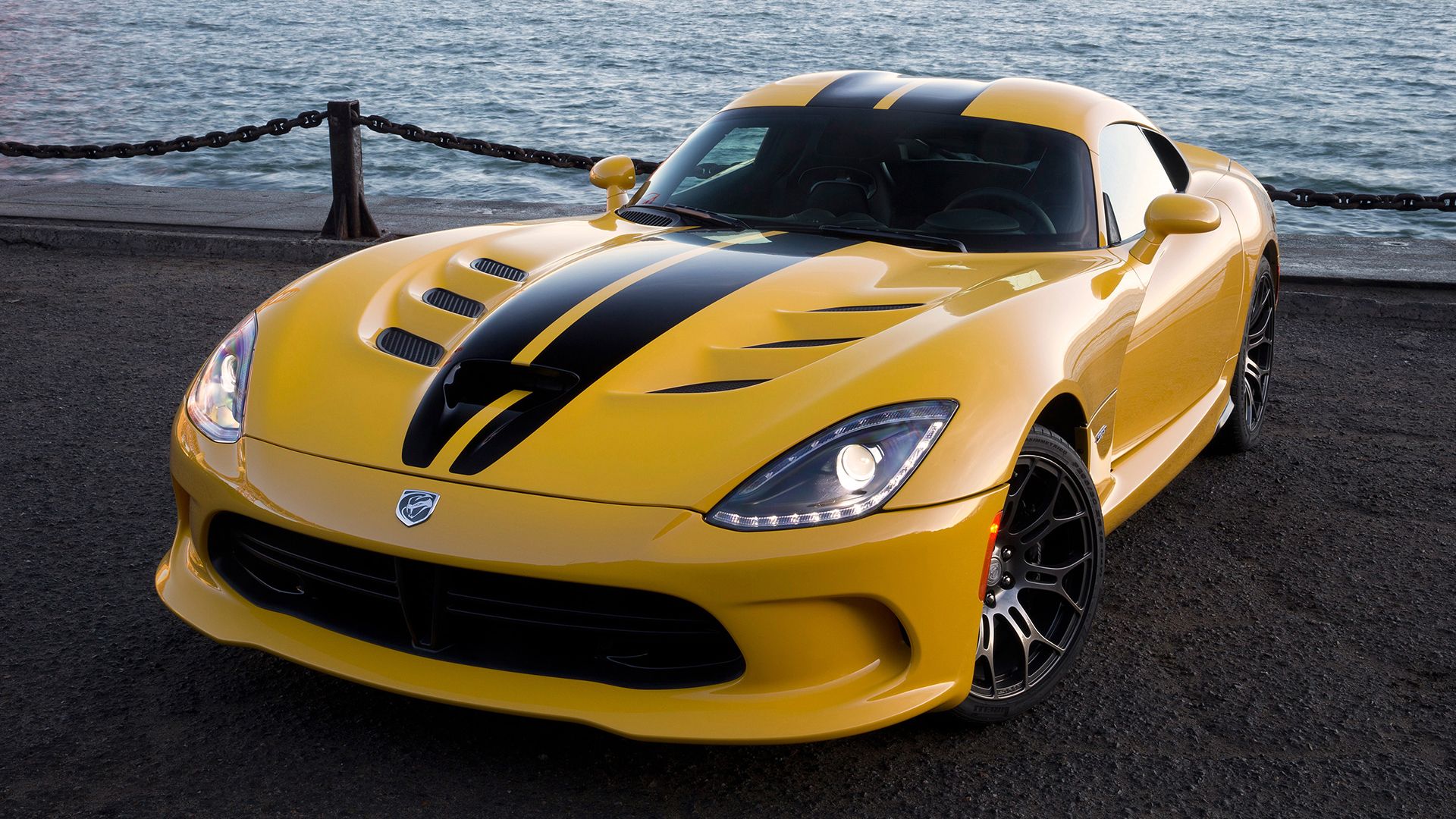
The fifth and final iteration of the Dodge Viper ran from the 2013 to 2017 model years. Initially sold as the SRT Viper, it was all-new with an 8.4L V10, modern vehicle dynamics systems, and an updated interior. Capable of more than 200 mph, these fifth-gen Vipers ended production making 645 hp and 600 lb-ft of torque. We’ll look through all the Dodge Viper models by year below.
Available Years
Viper
- Segment
- Coupe
- Base MSRP
- $87,895
2013-2017 Dodge Viper 5th Gen (VX)
After a brief hiatus, the fifth-generation Dodge Viper arrived for the 2013 model year under the “SRT Viper” nameplate. Fully redesigned, it has an 8.4L all-aluminum V10 rated for 640 hp and 600 lb-ft of torque. The transmission is a six-speed manual spinning the rear wheels. Updates included a claimed 50% stiffer chassis along with a carbon fiber and aluminum body, the addition of stability control, Pirelli P Zero rubber, and Brembo brakes.
Special Edition 5th Gen Vipers
- TA (Time Attack) 1.0 – features revised aerodynamics, a stiffer suspension, and added carbon fiber components
- TA 2.0 – adds a larger rear wing and fiberglass racing seats
- ACR – comes with a carbon fiber body kit, carbon ceramic brakes, and adjustable Bilstein dampers
- GTC – offers enhanced customization in the form of 8,000 paint colors, 24,000 hand-applied stripes, ten wheel options, and more
Sold as a base SRT Viper and upscale GTS, the final Viper generation offered niceties like a reconfigurable digital cluster display and Harman Kardon audio system. A slight power bump to 645 hp arrived in 2015 with a reversal to the Dodge Viper name as production wound down. Several special editions were released for this final of Vipers until 2017 when it came to an end and the Conner Assembly Plant was closed permanently.
|
Engine |
Transmission |
Drivetrain |
|---|---|---|
|
8.4L V10 |
6-Speed Manual |
Rear-Wheel Drive |
Fifth-Generation Viper Production Years
2017 Dodge Viper Review
2016 Dodge Viper Review
2015 Dodge Viper Review
2014 Dodge Viper Review
2013 Dodge Viper Review

Add CarBuzz to your Google News feed.
2008-2010 Dodge Viper 4th Gen (ZB II)
The fourth-gen Viper was little changed from the prior series on the outside, aside from a ventilated hood. However, the V10 engine’s displacement was increased to 8.4 liters and featured higher-flow heads, larger valves, variable-valve timing, and dual electronically-controlled throttle bodies. Developed in collaboration with McLaren, the Viper now made 600 hp and 560 lb-ft of torque.
2010 Viper ACR Colors
- Viper Red
- Viper Black
- Viper Violet
- Viper Bright Blue Metallic
- Viper Very Orange
Other changes included a new Tremec TR6060 6-speed manual with triple first-gear synchronizers, a GKN ViscoLok limited-slip differential, an updated electrical system with a 180-amp alternator, and a redesigned exhaust system. The ACR returned in 2010 with a more aggressive ACR X variant making 640 hp and 605 lb-ft of torque.
|
Engine |
Transmission |
Drivetrain |
|---|---|---|
|
8.4L V10 |
6-Speed Manual |
Rear-Wheel Drive |
Fourth-Generation Viper Production Years
2010 Dodge Viper Review
2009 Dodge Viper Review
2008 Dodge Viper Review

Related
Dodge Viper GTS With 819 Miles On The Clock Is A Collector’s Dream
Here’s your chance to purchase a ’90s time capsule.
2003-2006 Dodge Viper 3rd Gen (ZB I)
Dodge’s Street and Racing Technology (SRT) performance division delivered the third-generation Viper in 2002 (for the 2003 model year) with a major design overhaul led by Osamu Shikado. It sat on a 2.6-inch longer wheelbase, but the overall length was nearly the same. Newly christened the SRT-10, this Viper featured an 8.3L V10 making 500 hp and 525 lb-ft of torque.
The new Viper SRT-10 takes that unbelievable rush of performance to an entirely new level – beyond even that of the current American performance car standard. If one ride doesn’t thrill, exhilarate, energize or excite you more than any other car on the road, check your pulse.
Initially sold in roadster form only, a coupe variant arrived three years later with 510 hp and rear-end design cues inspired by the earlier Viper GTS. A limited edition Mamba package was offered in 2004 featuring a black interior, red accents, and a production run of just 200 units. Dodge skipped the 2007 model year to prepare for 2008 Viper production.
|
Engine |
Transmission |
Drivetrain |
|---|---|---|
|
8.3L V10 |
6-Speed Manual |
Rear-Wheel Drive |
Third-Generation Viper Production Years
2006 Dodge Viper
2005 Dodge Viper
2004 Dodge Viper
2003 Dodge Viper

Related
The Snake That Couldn’t be Charmed: Dodge’s Scrapped Mid-Engined Viper
Imagine if the notoriously wild Viper became a mid-engined supercar.
1996-2002 Dodge Viper 2nd Gen (SR II)
The second-generation car, which covered the 1996 through 2002 Dodge Viper model years, was largely a carryover design from the original model in RT/10 roadster configuration. The main update was relocating the exhaust outlets from beneath the doors to the rear with a dual central layout. It helped reduce back pressure, which in turn increased output to 415 hp from the 8.0L V10.
Bigger-and badder-than life. Few legends truly live up to their press. The Dodge Viper GTS, on the other hand, exceeds the hyperbole that engulfs it.
A new GTS couple model also arrived with the second-gen Viper that made up to 450 hp and featured 90% new body panels versus the roadster. In 1999, an ACR variant showed up with an adjustable suspension, BBS wheels, and 460 horsepower.
|
Engine |
Transmission |
Drivetrain |
|---|---|---|
|
8.0L V10 |
6-Speed Manual |
Rear-Wheel Drive |
Second-Generation Viper Production Years
2002 Dodge Viper
2001 Dodge Viper
2000 Dodge Viper
1999 Dodge Viper
1998 Dodge Viper
1997 Dodge Viper
1996 Dodge Viper
1992-1995 Dodge Viper 1st Gen (SR I)
The first of the Viper generations was designed as a pure performance car, debuting in 1991 (for the 1992 model year) without door handles or air-conditioning. Features included a canvas roof and vinyl windows with zippers for opening and closing. The focus, of course, was the 8.0L aluminum-intensive V10 developed with help from Lamborghini, a Chrysler subsidiary at the time.
Featuring a tubular steel frame with resin transfer molding fiberglass body panels, the original Viper weighed 3,280 pounds and lacked traction control and anti-lock brakes. Its V10 made 400 hp and 450 lb-ft of torque, and was paired with a six-speed manual to spin the rear wheels. All Dodge Viper models over 26 years and five generations retained this configuration.
|
Engine |
Transmission |
Drivetrain |
|---|---|---|
|
8.0L V10 |
6-Speed Manual |
Rear-Wheel Drive |
First-Generation Viper Production Years
1995 Dodge Viper
1994 Dodge Viper
1993 Dodge Viper
1992 Dodge Viper

