Do Engine Start-Stop Systems Help Efficiency More Than They Annoy Drivers?
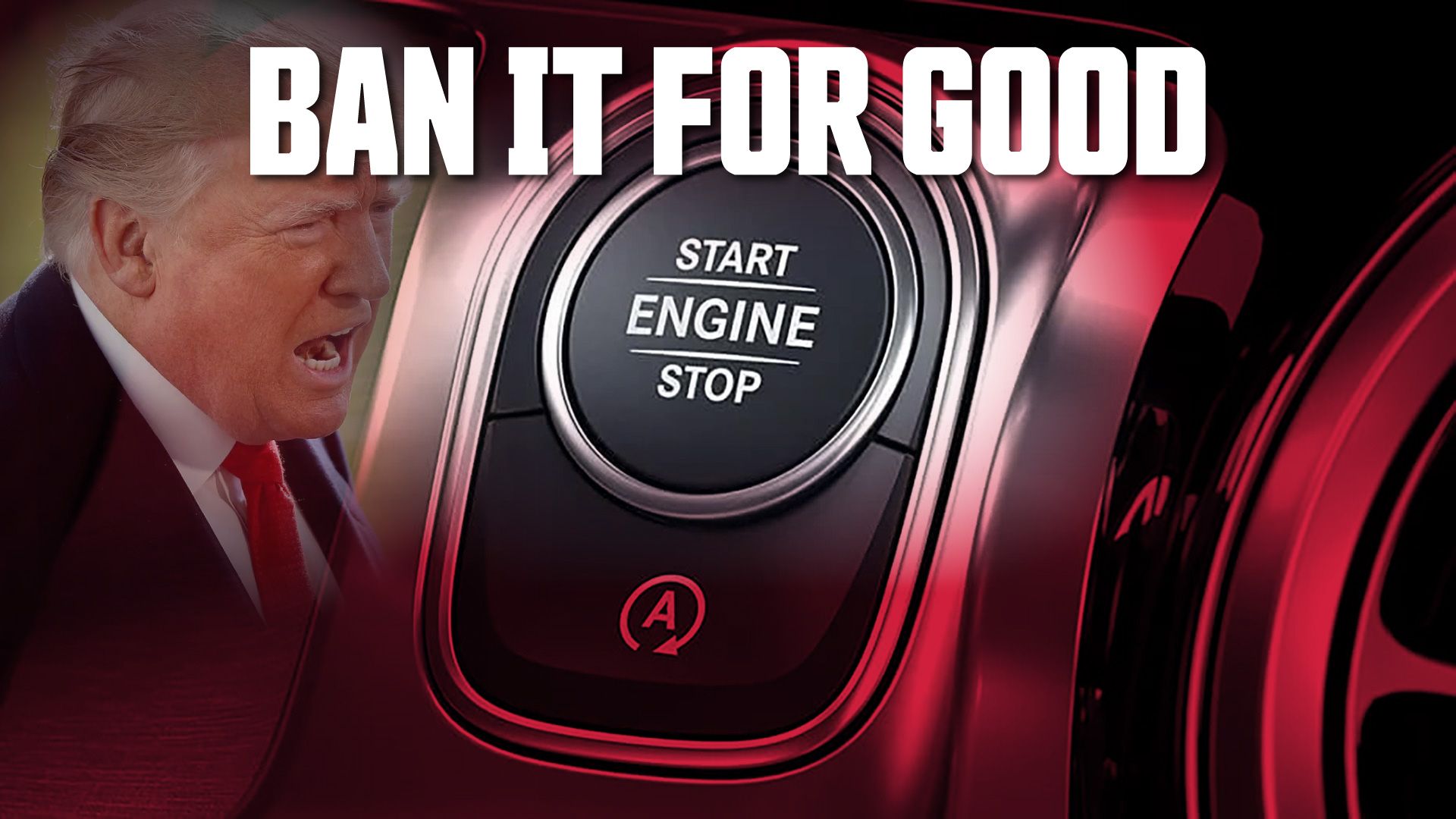
The controversial automatic engine stop-start system, which shuts off a car’s powerplant when it comes to a halt, may soon be a thing of the past. Lee Zeldin, the new Environmental Protection Agency (EPA) chief, recently posted a social media update on X, stating that the engine-stop-start technology only serves car companies to earn a climate participation trophy. He said the administration would fix the problem, implying a potential ban on technology.
In 2014, the American Auto Association (AAA) conducted fuel consumption tests, using the EPA’s urban driving cycle, on cars fitted with automatic stop-start systems. The organization found that, in some conditions, a fuel saving of up to seven percent can be achieved in a vehicle using the stop-start system, versus not using it. At the time, the AAA touted stop-start ‘technology’ as the next best thing, and that it only requires “a minor adjustment” for motorists.
Truth be told, a “minor adjustment” for motorists can also be translated into “a major frustration.” Because most engine-stop-start systems just don’t cut it, and turn the daily traffic slog into an unpleasant and potentially even unsafe business. Should stop-start tech be banned? We reckon get it done already!
Related
The Most Important Car Of The 21st Century Is One You Probably Don’t Like (Yet)
Only recently coming into it’s own, this is the car that we believe influenced the automotive landscape most.
This is an origin story, as we try to understand how this controversial technology came to be. We also look at the good and bad examples of stop-start technology. And why we agree that it is time for this technology, or at least the less efficient versions of it, to hit the bench. Permanently.
The Crown Jewel?
|
1974 Toyota Crown |
|
|---|---|
|
Engine |
2.6-liter, Inline-6 |
|
Power |
138 hp |
|
Torque |
152 lb-ft |
|
0-60 mph |
11 seconds (estimated) |
|
Top speed |
102 mph |
It all started in January 1974. Ahead of more strict emission control regulations in Japan, Toyota Motor Corporation unveiled its patented Engine Automatic Stop and Start (EASS) system as an option on the company’s Crown models with manual transmissions. The system automatically turned off the car’s engine after the car had been stationary for about 1.5 seconds. The engine restarted when the driver depressed the clutch pedal. Drivers could switch off the feature via a button on the dashboard.
According to Toyota, EASS helped to reduce fuel consumption and the amount of harmful gases emitted by the Crown’s two-liter four-cylinder and 2.6-liter inline-six engines. The system was initially only made available in Tokyo, Japan’s capital and most populous city.
At the time, Toyota conducted its own fuel consumption test on the busy Tokyo streets. It concluded that EASS reduced the amount of carbon monoxide emissions by up to 30%, and fuel consumption decreased by up to 15%. Notable numbers, it must be said.
However, 51 years ago, internal combustion engines were not nearly as efficient as today. For example, the Crown engines used carburetors, rather than fuel injection. Shutting down the older generation engines in heavy traffic certainly had a more telling impact than on modern, more efficient designs.

Related
10 Modern Car Features That Won’t Age Well
Modern cars are great. But there are some features we could really do without.
The computer-controlled system was advanced for its day, featuring several safety features. When stopped and with the right indicator switched on, the EASS system would not activate. In Japan, vehicles turning right must yield to oncoming traffic, and any delay in taking off briskly during that right turn is unsafe. The system would also not cut off the engine if the vehicle was on an incline of two degrees or more, when the engine temperature exceeded 212 degrees Fahrenheit, or when several electrical systems were in operation at the same time, such as the air-conditioner, headlights, and window defroster.
In a nutshell, Toyota pioneered, engineered, and patented the stop-start system 51 years ago. And the latest version, as deployed in the modern Crown Hybrid, operates very much according to the same principles, albeit with a raft of refinements, improvements, and new technology included. Toyota has sorted most of the stop-start gremlins, especially regarding the hybrid model.
However, the situation is much less rosy for companies that simply add the technology to an internal combustion engine (ICE). Even though consumption may be lower to some degree, the overall result is not always as good as expected.
So Where Did It Go Wrong?
It all started to go wrong recently when car companies added basic and often ineffective engine-stop-start systems to their internal combustion engine cars. Some of these brands only added these systems as a ‘quick fix’ to decrease emissions and improve fuel economy, as stricter emission standards came into play. A few automakers even added a ‘Micro Hybrid’ label to the product’s rear door.
‘Nano Hybrid’ may be more applicable, though, as most of these systems have no connection to any hybrid drive whatsoever. The emission and fuel consumption savings they actually achieve are negligible. Some are so ineffective to use in a daily runner that most drivers disconnect the system at the very first opportunity.
To better understand the conundrum of this technology, it is important to consider the various versions of the system, and there are a few. The most basic version is a stop-start system, simply integrated with a traditional internal combustion engine. So come to a stop, the engine shuts off, and when the driver depresses the clutch pedal or releases the brake pedal, the powerplant fires up, and off you go. That’s the theory, anyway. Most of these systems have a degree of lag between the moment the clutch is depressed or the brake is released, sometimes leaving a driver stranded at a green traffic light for a few seconds longer than required.

Related
The Most Annoying Feature On Modern Cars Might Not Be All It’s Cracked Up To Be
At scale? We’re saving a lot of fuel. Individually? The usefulness of this gadget is highly situational.
So what, you ask? Surely, those impatient drivers behind you should take deep breaths and make peace with the few seconds of their driving time lost? Well, there’s more to it. The driver is in no-man’s land, stuck between moving forward and holding up traffic. It’s a highly frustrating experience, with a distinct feeling of loss of control that would, without the stop-start system, not even be “a situation.” For many drivers, the juice is just not worth the squeeze.
There are other issues, too. In most cases, when the engine shuts off, the air-conditioning turns down or completely switches off. The power steering might no longer work, as well. This combination is enough to get most drivers hot under the collar. The worst part is that you can’t just turn the system off once. For a car’s emissions rating to count, this feature has to be on as the default. So you have to switch it off every time you get in the car.
Search the internet for advice on stop-and-start systems, and you’ll come across a host of ‘expert’ mechanics telling you exactly why these systems are a no-go and a big hoax. We’ll not go as far as calling them a hoax, as they do have some merit. It’s just that they are horribly irritating, sometimes very inconsistent, and sometimes just not worth the effort.
A False Start?
Some cars feature more advanced systems, which include a regenerative braking system linked to a generator-type system and an extra battery. Examples of these cars have an integrated starter generator system (ISG), which replaces a traditional starter motor and alternator, while an additional lithium-iron battery is charged through regenerative braking. In some systems, the generator can, to a small extent, provide a small amount of propulsion to assist the internal combustion engine. The system’s battery can theoretically keep the air-conditioning and other auxiliary functions running, even if the engine shuts off.
Even though the fancy integrated starter generator ensures instant engine restarts, thanks to the ISG system being directly attached to the engine’s crankshaft, taking that frustrating restart time delay out of the game, the air-conditioning may still not operate sufficiently when the engine is shut off. The extra weight of the additional battery and other hybrid components versus a car with the same engine running without the ‘hybrid’ system also results in more lethargic performance. For example, the Suzuki Grand Vitara Hybrid is available in international markets. It’s great on paper, not so wonderful on the road.
On the other end of the scale, you get an ISG system like the one used in the 2001 Volvo S80 luxury car, which sent a shot of electrical power to the air-conditioner, ensuring the cabin remained reasonably cool, while performance did not suffer significantly.
Is there any light at the end of the tunnel for the engine stop-start system that is not a speeding train, heading your way? Yes, there is. It is called the hybrid. The real hybrid.

Related
10 Common Car Technologies That Didn’t Exist 25 Years Ago
Some features that are standard on today’s cheapest cars were science fiction in 2000.
The Real Deal
|
2024 Toyota Prius |
|
|---|---|
|
Engine |
2.0-liter, inline-4 & electric motor |
|
Power |
194 hp |
|
Torque |
139 lb-ft |
|
0-60 mph |
7 seconds (estimated) |
|
Top speed |
112 mph |
If the basic engine stop-and-start system is a stop-gap solution to earn car companies an environmental participation trophy, the modern hybrid, where a traditional internal combustion engine, an electric motor or motors, and a complex drive system are combined to offer effortless performance, may well represent the future of motoring.
At the moment, fully electric vehicles are under pressure. Sales are slowing down around the world, and a new Trump administration bill looks set to remove incentives for buying EVs. Hybrid powertrains seem to hit the sweet spot between saving the planet and providing the world with a practical transport solution without relying on the charging grid.
Take the Toyota Prius as an example. This hybrid model has made the biggest impact on the car industry. Launched in 1997, the first generation was not particularly easy on the eye, nor was it pleasant to drive. However, with all those years of experience in stop-start technology, it was only a question of time before Toyota turned the Prius into a real competitor against traditional internal combustion-powered cars. With around seven million hybrid Prius cars sold around the globe, it is the leading proponent of real hybrid vehicles, with a highly efficient stop-and-start system.

Related
There’s Only One Way Toyota’s Most Iconic Model Could Survive
It led the way, but now its future is in question.
Toyota’s patented Hybrid Synergy Drive was good enough that Ford licensed the hybrid technology to use in the Ford Escape Hybrid, which served taxi duties for years in places such as San Francisco and New York.
We’re fully on board with ridding the automotive world of ineffective engine stop-and-start systems connected to ICE engines. Never mind the additional strain on components like the upgraded battery and starter motor, which could require replacement of the more sophisticated components at premium prices. Yes, you may save a few drops of fuel along the way, but it depends on your route, driving style, the amount of time you are stationary in traffic, and many other factors.
With some refinements, next-generation integrated starter generator systems may still offer a viable alternative in the future. The same is true with modern, hybrid systems.
However, it really is time for the slap-it-on-to-get-a-participation-trophy stop-and-start systems to get the boot.
Sources: American Automobile Association (AAA), Toyota, Volvo, X, Ford, Suzuki, Porsche, Ford.