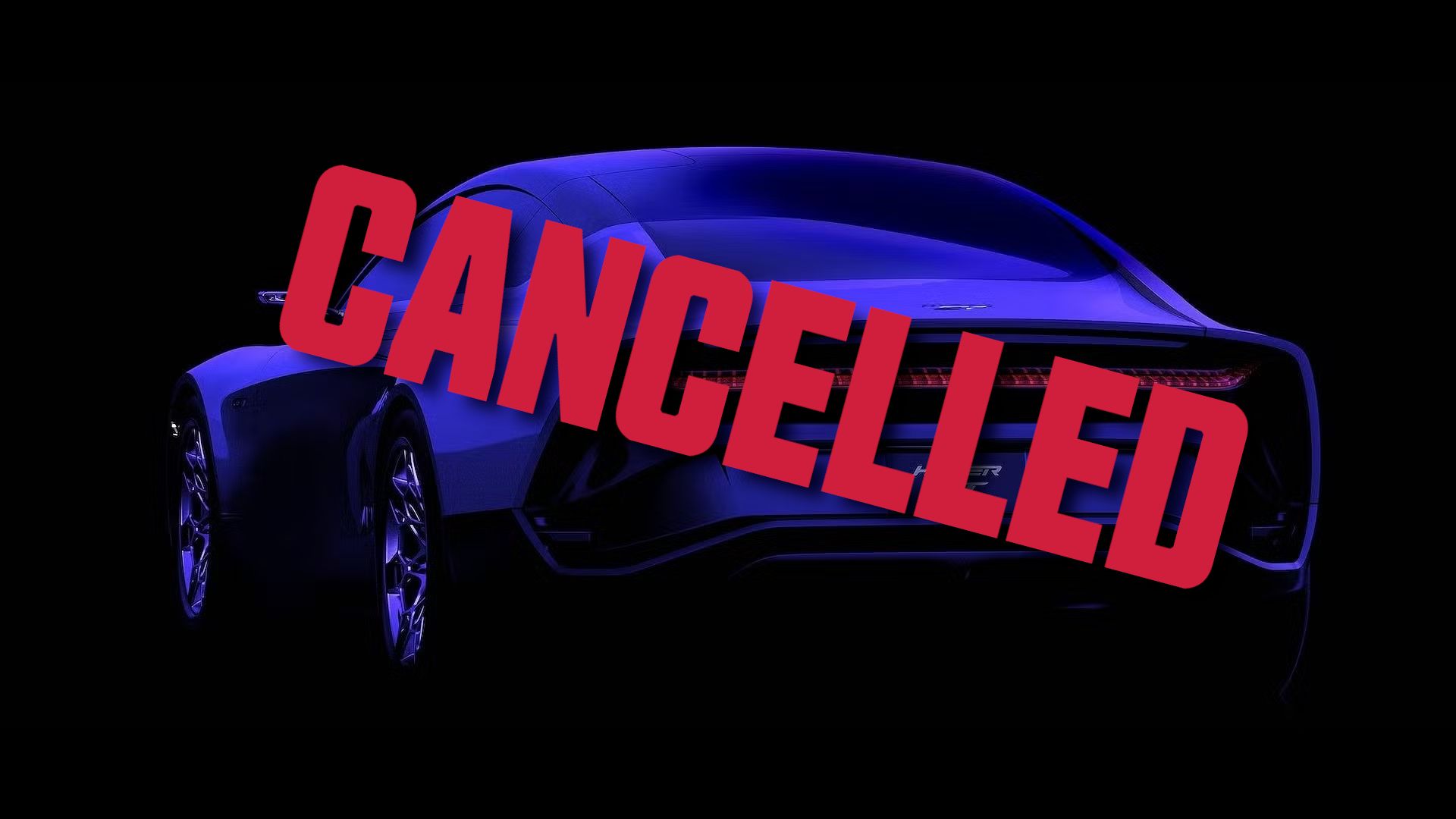
Czinger Pulls An Anti-Industry 180, Cancels Plans For SUV And Grand Tourer
American independent Czinger has walked back plans to go toe-to-toe with the likes of the Lamborghini Urus and the Bentley Bentayga, and will instead focus production on its 1,250-horsepower 21C hypercar and future variants thereof. One year after prototype production began on the 21C in 2021, Lukas and Kevin Czinger’s eponymous company unveiled a Hyper GT concept during that year’s Monterey Car Week, and announced plans to build 1,000 road-going examples. The grand tourer would have been the second of a planned six-car line-up, and was originally due to be followed by a luxury SUV.
According to a recent report by Autocar, however, Czinger has u-turned these plans, with chief commercial officer George Briggs explaining it would be unwise for the “high-end” California-based independent to chase market trends like the ever-more bloated SUV segments.
“If you look at the portfolio, the Czinger brand needs to be something which is very high-end that has a sustainability to it. And I think if you want to chase the market trends, you’re going to find it tricky over the long term.”
– Czinger CCO George Biggs
Why Czinger Has Reversed Its Decision
First presented at the Covid-hit Geneva Motor Show in 2020 – which, ironically, helped bolster headlines for the California-based Czinger – the 21C was marketed as the world’s first 3D-printed production supercar. Said method was adopted both to save money and resources, and significantly cut emissions during each car’s build. Initial production, which is due to end early next year, is limited to just 80 examples, with the 21C being offered in two variants: the ‘standard’ roadcar, which features a McLaren F1-esque center driving position, and the lighter, track-focused 21C V-Max.

Moving forward “into and beyond 2035,” and having now scrapped a multi-model approach, Czinger will now look to extend the life of the 3D-printed 21C with additional variants. This could potentially include another road-going model with “a more traditional seating arrangement,” and a more dynamic example that pushes the brand’s “performance credentials” yet further.
“Performance is always going to be an important part of the brand. But ultimately we’re seeing customers that want a wider application…so I think the trajectory is a wider application of technology, continued performance. I don’t think you can really live in this segment without performance credentials.”
– Czinger CCO George Biggs
A 3D-Printed Hybrid Supercar?
Alongside its centralized seat layout (a single passenger chair is mounted behind the driver), a “power dense” 2.88-liter twin-turbocharged V8 worked in tandem with three electric motors to produce 1,250 hp, with a NIO EP9-rivaling 1,350 hp optional powertrain also available. The hybridized setup, including the chassis and the singular BrakeNode unit, which amalgamated the calipers and the suspension components, would also have underpinned the originally planned GT and SUV.

Top speed for the 21C, which could hit 0-60 MPH in just 1.9 seconds, was a robust 281 mph. The American hypercar raised further eyebrows when it set a record-breaking time on the famous Goodwood Festival of Speed hill climb in 2024, and repeatedly broke production lap records around Laguna Seca in 2021 and 2024. The 21C even beat the Koenigsegg Jesko to do so, a variant of which, as of this week, once again holds the much-sought-after 0-400-0 kph sprint record for production cars.
Source: Autocar