Beloved Engines Killed By Stellantis
Many consumers can’t tell you what type of engine fits into their chosen form of transportation and, so long as it gets them from A to B, they don’t care less. However, a legion of enthusiasts will take a different approach and can rattle off every last statistic to show why their chosen engine is the best of all.
Dodge
- Founded
-
December 14, 1900
- Founder
-
John Francis Dodge & Horace Elgin Dodge
- Headquarters
-
Auburn Hills, Michigan, U.S.A
- Owned By
-
Stellantis North America
- Current CEO
-
Carlos Tavares
For those fans in particular, it’s sad to see the demise of certain engine types, like the HEMI V8 in the Jeep Grand Cherokee, and mostly in the name of progress. So, with this in mind, let’s look at some of the much-loved engines that the motoring giant Stellantis has decided to withdraw from the new vehicle market.
We took a closer look at the Stellantis business model to see which internal combustion engines it’s decided to kill off in the name of progress. We gathered information from the manufacturer and from online forums and any opinions expressed in the article are those of the author.
Stellantis Moves with the Times

Stellantis emerged from the 2021 merger of Fiat Chrysler Automobiles (FCA) and Groupe PSA. It’s in the absolute business of consolidation and the pursuit of profit and does not care too much about loyalty to any particular engine group. Instead, decision makers look at newer engines like the Hurricane inline-six with their impressive performance and future potential even though they don’t carry the historical weight of some of the engines that they replace. And some of those outgoing motors are not just obscure four-cylinder or outdated diesels, but they are power plants that have become icons in their own right and even defined certain brands along the way.
The HEMI V8 Family (Apart From One)
Perhaps no engine family symbolizes 21st-century American muscle as much as the HEMI V8. Despite this, Stellantis has decided to shelve certain versions, including the 6.4-liter 392 and the 6.2-liter Hellcat. From the Charger Scat Pack or Challenger SRT to the Jeep Grand Cherokee Trackhawk or Ram TRX, these units transformed otherwise ordinary platforms into outright beasts. After all, the Hellcat’s 700 hp figure rewrote the rulebook when it comes to factory performance, with a heady mix of speed, swagger, and sound, and this may be the point. The HEMI engine wasn’t simply about power but more about personality. Just consider that satisfying exhaust note emanating from the 5.7-liter or the angry wine from the Hellcat’s supercharger. Each characteristic gave the engine its distinct flavor and transformed the cars and trucks that they powered.
In a surprising twist, Stellantis appears to have reversed course on one of these controversial decisions. The 5.7-liter HEMI V8 will return within the 2026 Ram 1500 lineup, and perhaps customer backlash drove part of this decision.
Stellantis decided to pull the plug on these engines in 2023 for various reasons. These included better fuel economy targets, more stringent emissions standards, and that global push towards electrification that may well terminate the golden age of American horsepower altogether. In place of the HEMI V8s, you’ll get something like the twin-turbocharged Hurricane inline-six or a whisper-quiet full EV. But still, one survivor remains from the HEMI family and that’s the 6.2-liter Hellcat which you’ll find in the 2025 Dodge Durango SRT Hellcat. Dodge was to revive this due to customer demand, but don’t view it as a comeback for the much-loved HEMI.

Related
Stellantis Makes A Big Decision About Its American Future
Stellantis wants to work on its existing brands in America, not make their slices of the automotive pie any smaller.
The 3.0-liter EcoDiesel V6
The EcoDiesel always sat in the shadow of the more famous HEMI but, nevertheless, earned respect as one of the more torque-rich and most efficient engines for heavy-duty trucks. It appeared in a range of vehicles, such as the Jeep Grand Cherokee, Gladiator and Ram 1500 between 2014 and 2023, and was a great workhorse. It could easily give you up to 480 lb-ft of torque while also delivering up to 30 MPG on the highway. Little wonder that it was the preferred engine among some long-distance drivers and the EcoDiesel certainly has a legion of loyal fans. Owners came to appreciate how it would help them with interstate hauling and effortless highway cruising, and trailblazers appreciated its low-end torque on trails and rough tracks. In many respects, this was one of the most versatile engines for real world use, but Stellantis waved goodbye to the EcoDiesel in 2023, citing stringent emissions regulations and cost.

Related
The Dodge Durango’s HEMI V8 Refuses To Die
The Hemi Durango looks to live another year. Again.
The Maserati 3.8-liter Twin Turbo V8
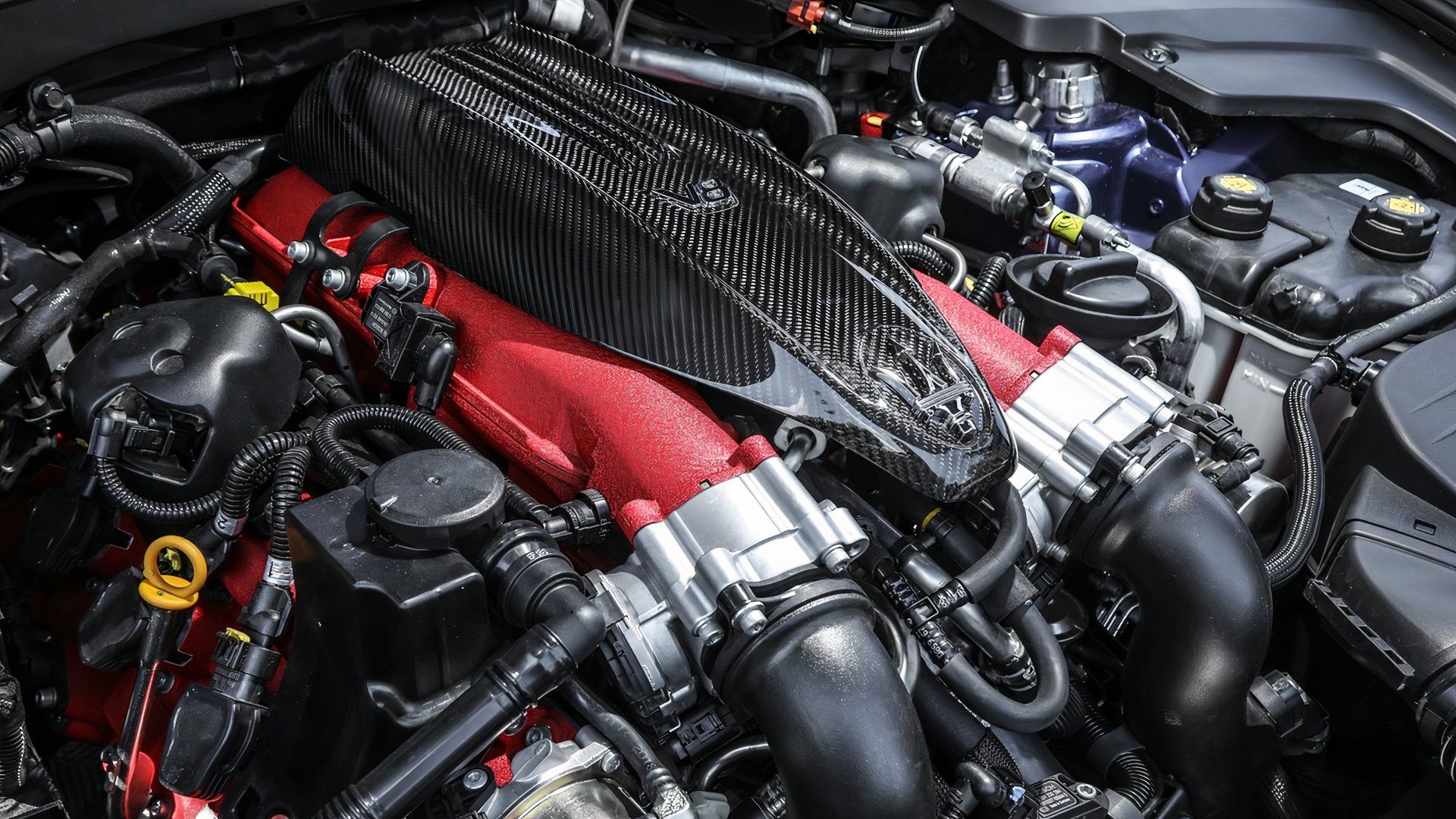
While the previous two engines had real mass market appeal, this Ferrari F-154 engine, found in several Maserati vehicles, was a niche market singing beauty. It could deliver up to 580 hp and its performance was to help Maserati recover from some earlier stumbles to become a real player in the crowded luxury segment. You’d find this twin-turbo V8 in the Quattroporte GTS and Levante Trofeo, and it was certainly distinctive due to its howling exhaust note. The Maserati/Ferrari connection that gave birth to this engine deal was special and potentially marks this engine as a future collectible.
The Maserati V8 was refined on the one hand and aggressive on the other. It managed to combine Italian drama with everyday drivability. Nevertheless, Stellantis ended its ten-year stint, and Maserati was left with the Nettuno V6 instead, as it started to think about a downsized and even electrified line-up. Who knows what this future will hold for Maserati, but one thing’s for sure, this iconic engine will not play a part.

Related
10 Coolest Cars To Use The Discontinued 5.7 Hemi
Some of the models that have been powered by the 5.7-liter version of this iconic engine.
The Alfa Romeo 2.9-liter Twin Turbo V6
This V6 engine was another that featured Ferrari expertise, and also helped Alfa Romeo to up its game. It’s a 505 hp monster that would surely help to sell both the Alfa Romeo Giulia Quadrifoglio and Stelvio Quadrifoglio along the way. While Stellantis has not officially ended its production run as yet, it has confirmed that both models will cease production in 2025. This is bad news for enthusiasts who loved the responsive nature of this V6, in addition to its sound and linear power delivery, as it ensured both the Giulia and Stelvio developed into serious threats to their German competition. Still, it may be possible to buy special Super Sport editions of these vehicles, which could appear as final run models – although there is nothing conrete from Alfa to confirm this as yet. The company may yet pick a hybridized approach for its future, and it remains to be seen what engine it uses, but just like its Maserati cousin, we’ve probably seen the end of ICE development for Stellantis’ European luxury brands.
The Pentastar V6
Stellantis has not ditched the Pentastar 3.6-liter V6 outright, and you can still buy a range of vehicles with this reliable, efficient, and long-lived unit. However, persistent rumors suggest that the company is phasing it out, even though it was once the go-to engine for almost every FCA product that didn’t use a HEMI. Sadly, it certainly doesn’t have that dominance today, and in recent years, Stellantis has chosen more modern options like the 2.0-liter GMET 4 turbocharged inline-four or the Hurricane inline-six. Meanwhile, halo vehicles like the Grand Cherokee feature plug-in hybrid power or turbo four-cylinder options instead of the V6.
Apparently, the Pentastar will remain in the new Ram 1500 Ramcharger but may feature as a generator for the hybrid battery rather than a traditional drive engine. The Pentastar was never as famous as the HEMI, but it was, rather, the silent workhorse in the Stellantis fleet, and if it does disappear altogether, it may become another victim of the push toward electrification.
The Wider Industry Picture
Stellantis isn’t the only major automotive company making these moves, of course, but it’s certainly making some abrupt and sweeping decisions. It’s getting rid of almost all the performance-focused V8s, diesels, and characterful European engines, and this appears to mark a clear turning point. Certainly, the Hurricane engine is efficient, scalable, and powerful, plus electrification can give performance advantages that a gas engine might not be able to match, but how do you classify soul?
Consumers tend to think about more than just speed, power, and heritage because fuel economy, government incentives, and emissions worries tend to shape sales. And in markets where electric vehicles are taking off, there’s just a weakening business case for legacy engines in any case. So, with all of this upheaval and changing customer demand, it looks like we’ll just have to forget about all the character, thunder, and personality of those internal combustion classics.
Sources: Stellantis.