8 Coolest Cars With 2-Cylinder Engines
When we think of small, economical cars, we typically think of hatchbacks sporting four or even three-cylinder engines. Models such as the Toyota Corolla’s 2.0-liter four-pot or the previous-generation Mini Hardtop’s three-cylinder mill come to mind. However, there are some small cars that have sported engines with just two cylinder motors in the past.
These tiny two-banger motors aren’t seen very often, and when they are, it’s a special sight to see, if not a little bit outrageous to think two pistons is enough to propel something as large as a car. They deserve some recognition, so CarBuzz decided to compile a list of some of the coolest two-bangers ever on the market. Read on, and we’ll see what we can learn about these elusive little engines.
Related
Why We Need To Fall Back In Love With Small Cars
Compact hatchbacks offer everything the average consumer needs, so why do we avoid them like the plague?
The following specs pertaining to each list entrant were sourced from either their respective manufacturer’s websites, or other sources such as AutoData.net.
Alfa Romeo Mito
|
Engine |
0.9-Liter Turbocharged Inline-Two |
|---|---|
|
Horsepower |
84 hp |
|
Torque |
107 lb-ft |
|
0-60 MPH |
12.3 Seconds |
|
Years Produced |
2008–2018 |
Our first two-banger is the Alfa Romeo Mito, the Fiat 500L’s distant cousin, due to the fact both models were produced by Stellantis-owned companies and used the same SCCS platform. The Mito was another Alfa Romeo meant to save the company, but it failed. The main reasons were an unreliable 1.4-liter turbocharged four-cylinder engine, a terrible dual-clutch transmission, and a lack of practicality. It looked good and was extremely fun to drive, however.

Related
The Greatest Three-Cylinder Engine We’ll Never Get To Experience
Perhaps the only three-cylinder engine anyone would ever get truly excited about has been put to pasture, for the time being at least.
The tiny two-cylinder only became an option later in the Mito’s life. The mill in question is the 0.9-liter TwinAir two-pot. An engine with less than a liter of displacement almost sounds wrong, but the Mito made it work, sort of. Thanks to a low-pressure turbocharger, the 0.9-liter was able to produce 80 horsepower, just enough to move the Mito around in the city center, but that’s about it. The little engine also sounds kind of cool. Almost like an angry ant.
Fiat 500 (Modern Version)
|
Engine |
0.9-Liter Turbocharged Inline-Two |
|---|---|
|
Horsepower |
84 hp |
|
Torque |
107 lb-ft |
|
0-60 MPH |
10.6 seconds |
|
Years Produced |
2012–2019 (United States) |
Next up is the Fiat 500, arguably one of the most iconic people’s cars ever produced. We’re focusing on the modern version, introduced in 2012 for the United States market. Much like the Mito we discussed previously, the 500 offered a litany of engine options, with a 0.9-liter TwinAir turbo, the same two-banger motor as the Mito, offered as the base power plant.
As with the Mito, this tiny engine only became available later on in the car’s life, and it was never brought to America, because who would buy a car with six cylinders less than a V8? Thanks to the 500 being roughly 200 pounds lighter than the Mito, it can get from 0-60 MPH in a bit less time. The 500 can also reach a top speed of over 100 MPH, but just barely.
After a seven-year run and relatively dismal sales, Stellantis decided to pull the plug on the 500 in the States. These days, Fiat still lives on in the US, offering two models; the 500X compact crossover and the 500e, an electric version of the modern people’s car.
Citroën 2CV
|
Engine |
0.4-Liter Flat-Twin |
|---|---|
|
Horsepower |
9 hp |
|
Torque |
17 lb-ft |
|
0-60 MPH |
N/A |
|
Years Produced |
1948–1990 |
The Citroën 2CV is another example of an extremely popular people’s car from France. However, unlike the Fiat 500, the 2CV wasn’t designed with any sort of styling in mind, and was purely meant as utilitarian transport. This sentiment showed in its original powertrain, a flat-twin, air-cooled engine only producing 9 horsepower. Basically, the 2CV’s main competition was a mule cart.

Related
Retro Citroen 2CV Van Homage Is A Modern Coachbuilt Oddity
Here’s how you look hella stylish while delivering eggs in France.
The 2CV survived largely in its original configuration until 1990. Only a few engine upgrades were made during its 42-year tenure, with the final mill featured in the 1990 model year 2CV producing 29 horsepower and 29 lb-ft of torque. Even at the end, the 2CV still retained the option to hand-crank to start it. Later models reached a top speed of 71 MPH, with 0-60 MPH taking place in 35 seconds.
BMW 600
|
Engine |
0.6-Liter Flat-Twin |
|---|---|
|
Horsepower |
19.5 hp |
|
Torque |
28 lb-ft |
|
0-60 MPH |
34 seconds |
|
Years Produced |
1957–1959 |
Next is a car that’s much rarer than the 2CV and the Fiat 500. It’s the BMW 600, and those of you who are well-versed in BMW’s small-car craze of the 1950s will point out it looks quite a lot like the BMW Isetta. You’d be correct, as it’s based on the iconic little car. The 600 used an engine borrowed from BMW’s R67 motorcycle, a 582 cc flat-twin mounted at the rear of the car. It was a torquey little motor, producing a whole 28 lb-ft of the stuff.
The BMW 600 was only produced for two years, after which it was axed and replaced by the BMW 700, a much more conventionally-shaped car serving as another cheap and cheerful people mover without any frills.
Volkswagen XL1
|
Engine |
0.8-Liter Two-Cylinder Diesel Hybrid |
|---|---|
|
Horsepower |
68 hp |
|
Torque |
100 lb-ft |
|
0-60 MPH |
11.7 Seconds |
|
Years Produced |
2013–2016 |
The Volkswagen XL1 looks like just another concept car dreamed up by an overzealous design team that never made it to production. However, you’d be wrong on that last part, as the XL1 did, in fact, go into production starting in 2013. It featured a tiny, 800 cc diesel engine hooked up to a hybrid powertrain. VW themselves called it an SEV, or Super Efficient Vehicle, as it could achieve over 260 MPG. The XL1 was the brainchild of Ferdinand Piech, who was famous for pushing the Volkswagen Group to develop great products. Piech’s contributions include the Audi Quattro, the Volkswagen Phaeton, the W12 engine, and the Bugatti Veyron.
Only 250 examples of the XL1 were produced for the 2015 and 2016 model years. While the car did, in fact, achieve great fuel mileage, it was reported that creature comforts such as air conditioning and radio use drastically increased its fuel consumption from the 260 MPG mark to less than 100 MPG. Regardless, the XL1 was, overall, a success, at least according to VW.
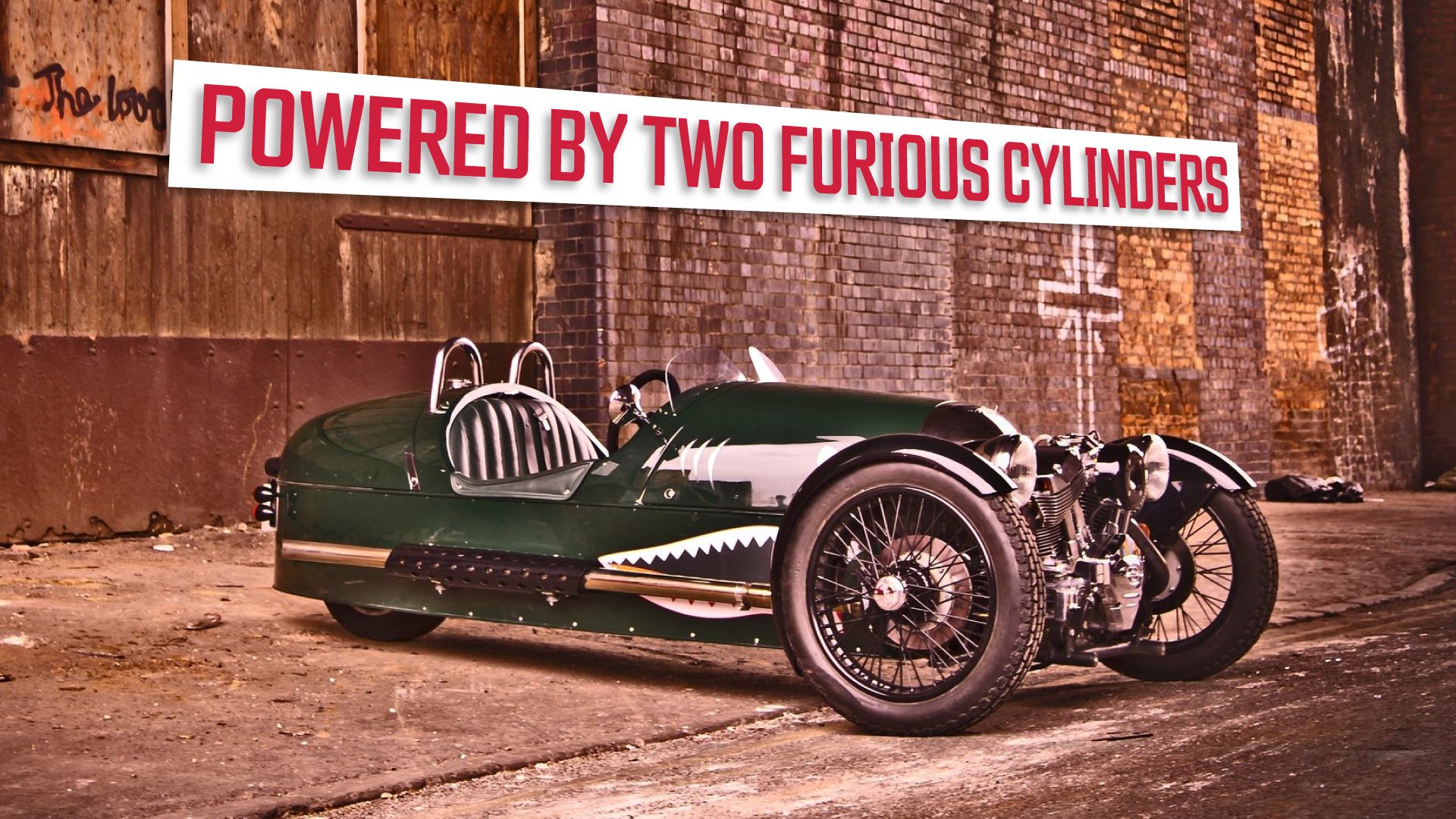
Morgan 3-Wheeler
|
Engine |
2.0-Liter V-Twin Two-Cylinder |
|---|---|
|
Horsepower |
118 hp |
|
Torque |
110 lb-ft |
|
0-60 MPH |
4.5 Seconds |
|
Years Produced |
2012–2021 |
Next up is the weird-looking Morgan 3-Wheeler. It looks as if it was plucked straight from the 1940s, but it’s a modern car through and through, albeit missing some of the usual creature comforts you’d expect. Propelling the Morgan 3-Wheeler is a 2.0-liter V-twin two-banger courtesy of the American motorcycle company, S&S. Its displacement is on the larger side for a two-cylinder, and produces plenty of power for the 1,200-pound Morgan.

Related
The Morgan Super 3 Has Officially Touched Down In America
Two bespoke commissions mark the brand’s official debut in the United States.
The 3-Wheeler is technically considered a motorcycle in the United States, and is subject to taxation as such. In reality, it’s sold as a sports car by Morgan, as it’s well-balanced nature and quickness bode well for track use. Morgan was developing an electric version of the 3-Wheeler, but canceled the project sometime in 2018. A new Morgan three-wheeler, dubbed the Super 3, has been released for the American market as of 2023. Instead of using the old two-cylinder, the new Super 3 uses Ford’s three-cylinder EcoBoost engine. It’s a pity because the old model sounded amazing, as you can hear below.
Tata Nano
|
Engine |
0.6-Liter Inline-Two |
|---|---|
|
Horsepower |
37 hp |
|
Torque |
38 lb-ft |
|
0-60 MPH |
32 Seconds |
|
Years Produced |
2008–2018 |
The Nano was once the cheapest new car in the world, produced by the Indian automotive conglomerate, Tata Motors. It enjoyed immense popularity, with a starting price of about 100,000 Rupees, or about $2,500. It was as bare bones as you could get, including in the power department. The Nano utilized a tiny, 624 cc inline-two motor which featured a single overhead camshaft and fuel injection, and that’s about it. 0-60 MPH took over 30 seconds to complete, and it boasted a top speed of 65 MPH.
The Nano suffered quite a few issues, chiefly due to its aggressive cost-cutting and lack of build quality. It was prone to catching fire and being generally terrible to drive. However, when you’re only paying the cost of a couple of new iPhones for an entire car, some drawbacks are to be expected. The Nano was eventually axed as India’s economy started growing. These days, customers are more likely to buy the next entry on our list.

Add CarBuzz to your Google News feed.
Suzuki Celerio
|
Engine |
0.8-Liter Turbo Diesel Inline-Two |
|---|---|
|
Horsepower |
47 hp |
|
Torque |
92 lb-ft |
|
0-60 MPH |
12.9 seconds |
|
Years Produced |
2015–2017 |
Our last list entry is the Suzuki Celerio, a hatchback belonging to the city car class. The Celerio has been in production since 2008, although the little two-cylinder diesel engine we’re focusing on entered production in 2015 for the Indian market and lasted only two years. It’s a turbocharged unit with an exact displacement of 793 cc, and features an all-aluminum construction and a balancing shaft to help keep engine vibrations at a minimum.
The reason for its short-lived nature was a lack of sales, along with mechanical issues plaguing the little engine. It saw limited use from 2016 to 2020 in the Suzuki Super Carry van, which saw sales in both India and the Philippines. These days, the Celerio only offers a single, 1.0-liter, three-cylinder gasoline-powered unit.