10 Hypercars Faster Than A Current F1 Car
Formula 1 cars are the fastest single-seaters on the planet over a single lap. Not just for their neck-snapping ability to pull G-forces during cornering and braking, but especially owing to their 1000-horsepower hybrid engines.
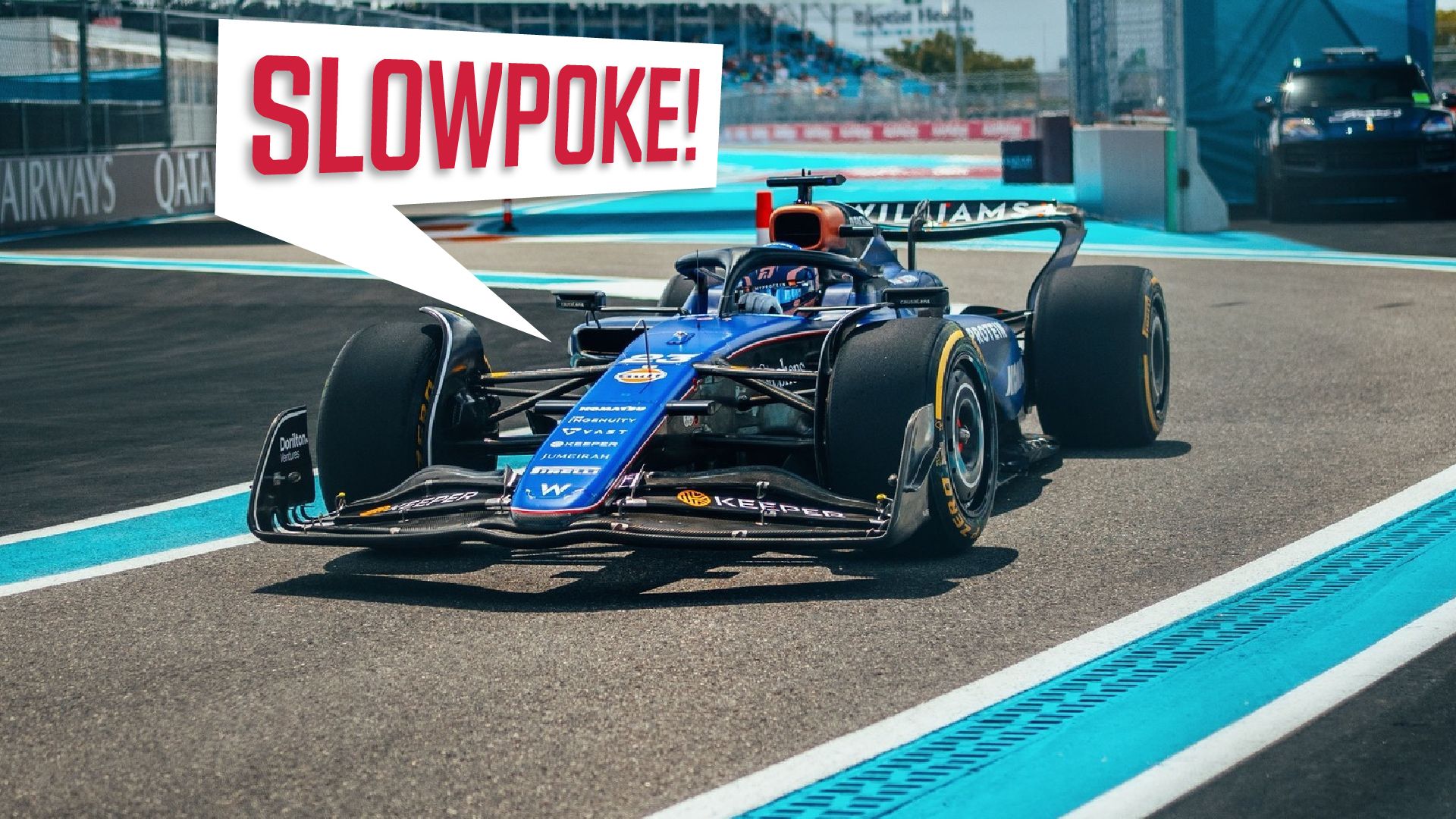
Recently, Williams F driver Alex Albon clocked a season-fastest top speed of 229 mph at the Las Vegas Grand Prix. As these are the luckiest and most gifted drivers in the world (unless you’re Logan Sergeant, that is), the opportunities for most mere mortals to travel at such velocities are pretty slim.
However, for the filthy rich, the concepts of “enough” or “impossible” simply don’t exist. So step aside, Porsche and Ferrari – this list is reserved for the ultimate hypercars.
To the end of ensuring sufficient brand diversity, we’ve had to remove multiple entries by the same company. Several of these top speeds are theoretical, estimated, as-yet untested (or sheer fantasy in some cases), particularly for models where production has not yet commenced. Also, it’s worth keeping in mind that an F1 car would absolutely destroy these cars over a single lap of whatever racing circuit you can think of.
1 Koenigsegg Jesco Absolut (330 mph, claimed)
In no particular order, Sweden’s most well-known exports extend to ABBA, vodka and uhm, adult “exercise” videos. Most likely, apart from the ABBA bit, their compatriot Koenigsegg mixes the thrill of those commodities into a terrifying threesome to form the (E85 fuel-assisted) 1,600 hp Jesco Absolut. That earth-spinning power is delivered by its 5.0-liter twin-turbo V8 engine that’s paired to a dual-clutch gearbox on steroids, dubbed as Light Speed by the company. Much of the Jesco’s speed is derived from light-weighting and wind-cheating aerodynamics, which is a two-fingered salute to Enzo Ferrari’s now-debunked mantra of “aerodynamics are for people who can’t build engines.”
Add CarBuzz to your Google News feed.
2 Bugatti Chiron Super Sport (304.7 mph)
What’s a fast list worth without mention of a brisk Bug? The company has been churning out 1000-ish-plus hp eight-liter, quad-turbo W16 engines since 2005’s game-changing Veyron. In the Chiron Super Sport, the output rocketed to 1,600 hp, which gave it enough oomph to do 304 mph. The production version of the car could not achieve that speed, however. Still, the production version topped out at 273 mph, which is still more than enough to beat an F1 car over a long enough straight.
3 Hennessey Venom F5 (300+ mph, claimed)
Nothing to do with the browser refresh button on your keyboard and everything to do with the worst-grade tornado class, the F5’s 6.6-liter twin-turbo V8 pumps out 1817 hp and 1193 lb-ft. Only 24 Venoms were planned for production and sold; of which one holds the world record for the fastest standing half-mile, which was covered in 14.44 seconds at 219 mph by John Hennessey in Florida, on July 30 this year.
4 SSC Tuatara (295 mph)
The successor to the Ultimate Aero, the 1350 hp (or 1750 hp on E85 fuel) Tuatara is named after a New Zealand reptile said to sport the fastest molecular evolution of all species on earth. Unfortunately, the SSC’s claimed 300 mph runs have been similarly rapid in attracting criticism and controversy – it comes with the territory of the world’s fastest car claims. Its humbler, more realistic two-way pass of 282.9 mph just trumps the Koenigsegg Agera RS’s 277.8 mph.

Related
Fastest Car: Who Really Builds The Fastest Street-Legal Production Car?
Everyone makes their own claims, and no one seems to agree. Is it Bugatti? Hennessey? Koenigsegg?
5 Rimac Nevera (258 mph)
The Croatian-built Rimac Nevera is the fastest EV in the world. With 1,914 hp and 1,741 lb-ft from a quartet of electric motors each powering a wheel, in May 2023 the car set 23 performance records on a single day; notably a 0-62 mph time of 1.74 seconds and an 8.25-second quarter mile. At 5,100 lbs, very probably only its curb weight kept it from lapping the Nurbürgring in under 7 minutes. Some deal-breaker… Rimac has since introduced a faster version.
6 6. Czinger 21C V Max (253 mph, claimed)

Californian startup Czinger’s V Max is the faster version of the 3D-printed 21C, which is already a lap record holder around Laguna Seca and Circuit of the Americas. The V Max eschews much of the 21C’s downforce (and therefore drag) generating aero componentry to instead focus on straight-line speed, enabling top whack of a claimed 253 mph. Its (comparatively small) 2.88-liter twin-turbo V8 hybrid engine also sports the world’s highest power density for a production engine, producing 1,250 hp; and which is sent to all four wheels. With the US conquered, where’s that Nürburgring lap time?

Related
The Most Power-Dense Production Engine In The World Comes From America
When it comes to production engines with the most horsepower per liter, it’s not Koenigsegg, Hennessey, or even Bugatti that takes top honors.
7 Aston Martin Valkyrie (250 mph, claimed)
When F1 racecar designers turn their focus on road cars, black magic ensues. The Valkyrie was conceived by the sport’s most gifted and air-bending designer, Adrian Newey, whose creations have won 14 driver’s crowns and 12 constructor’s titles. It is powered by a naturally aspirated, 11,100 rpm-redlined, 6.5-liter V12 built by Cosworth, complemented by a 160 hp electric motor, to deliver a combined 1,160 hp. While slightly lacking behind the peak outputs of some of the other cars mentioned on this list, the Valkyrie’s trump card is its ultra-low weight of 2271 lbs and resultant, faintly ridiculous – 913 hp/tonne power-to-weight ratio.
8 McLaren Speedtail (250 mph)
The Speedtail joins an elite lineage of special McLarens that the company somewhat unimaginatively dubs the Ultimate series, which comprises the F1, P1 and, most recently, the W1. Power from its 4-liter twin-turbo V8 and 308 hp electric setup totals 1,036 hp and 848 lb-ft. The Speedtail’s teardrop silhouette was purposely sculpted to defeat drag, which also explains the presence of covers over the front wheels. A pre-production test mule is said to have reached its 250 MPH top speed more than 30 times during testing, which is reassuring given the $2.2-million base cost at launch in 2018. Less positive is that, owing to the absence of side airbags and the use of cameras as rearview mirrors, the Speedtail isn’t technically street legal in the US, despite more than a third of all buyers hailing from there.
9 Tesla Roadster (250+ mph, claimed)
Given Tesla’s meteoric rise from obscurity to EV dominance over the past 15 years, it’s impossible to ignore them. However, it’s equally impossible to be skeptical about some of the claims made about the will-they-won’t-they-make-it second-gen Tesla Roadster, which was announced as far back as 2017 but was once again delayed by Elon Musk as recently as October. We were promised a 1.0-second 0-60 mph sprint time from the hotter SpaceX version, an 8.88-second quarter mile and, yes, a 250 mph top speed. And we’ll just keep quiet about its alleged ability to fly.
10 Saleen S7 Twin Turbo (248 mph)
Californian Mustang tuner Steve Saleen’s stunning S7 never stepped out of the shadows of its contemporary counterparts, the Dodge Viper and the Ford GT. Yet the S7 was in many ways the working-class American supercar: a simple spaceframe fitted with a Ford Windsor small-block V8 amidships and stretched to 7-liters (hence the S7’s name); that was a racecar first and a production car second. Fitted with a pair of Garrett turbos, in 2005 the S7TT produced 750 HP and 700 lb-ft. A 1,000 hp Competition package followed in 2006 to make it the only other four-digit horsepower car alongside the Bugatti Veyron, which saw a sub-10-second quarter mile and a 248 mph top speed, making it one of the fastest production cars of its time.