10 Concept Cars That Survived Almost Unchanged As Production Cars
Back in the day of the big auto shows, virtually all the manufacturers would have at least one show-stopping concept model. Something that would boggle the mind, with angles, wings and weird opening doors. And, of course, wheels bigger than a monster truck. These special models would indicate some sort of design intent, or new design language. Like Ford’s New Edge that debuted on the Focus, or Audi’s tall grille, which saw first light with the Nuvolari at the 2003 Geneva Show.
Related
Buick Built The World’s First Concept Car
Before the concept car became commonplace, someone had to invent the actual CONCEPT of the concept car. That someone was Buick’s Harley Earl.
Usually, these concept cars wouldn’t see the light of day in a normal production version. Or, if they did, all those extravagant lines and angles would be hugely watered down. But just sometimes, along comes a model that is eerily close to its spiritual original. From concept to production car, the designers pretty much knew what they wanted to create. And they didn’t mess around with a concept that wouldn’t bear any resemblance to the final model. They would dive right into their ideal design, and see it to light. Like these ten models we’ve assembled here for you.
These are not the ten most recognizable concept cars which survived faithfully into the production model. Rather, this is a random list of ten vehicles covering all types of cars, from hatchbacks to sports cars.
10 2009 BMW Vision EfficientDynamics
Production model: BMW i8

|
Engine |
1.5L turbo I3 + e-motor |
|---|---|
|
Horsepower |
369 hp |
|
Torque |
420 lb-ft |
|
0-60 |
4.2 seconds |
Remember all the hype around BMW’s new bundle of technologies called “Efficient Dynamics”? It all started with this similarly named concept car. But where Efficient Dynamics was mere everyday things like flaps in the front wheel arches and Stop-Start tech, this concept model actually previewed a racy new hybrid sports car for Munich. It took some eight years to get the idea to production, but what exactly BMW did in the meantime wasn’t wasted on changing the bodywork. It’s all still there in the BMW i8 – the butterfly-winged doors, the double body layers masquerading as aero wings, and the edgy styling.

We’re glad BMW didn’t fuss around much with the i8’s styling. It still looks spectacular, even though it has to get along with a miniscule three-cylinder engine when the batteries are flat, so it’s not as fast as it looks.
9 2011 Jaguar C-X16
Production model: Jaguar F-Type

|
Engine |
5.0L supercharged V8 |
|---|---|
|
Horsepower |
575 hp |
|
Torque |
516 lb-ft |
|
0-60 |
4 seconds |
Jaguar was for years content with its biggish, and fairly long, XK coupe. But just over a decade ago, Coventry decided the time was ripe for a new entrant just below the XK. In 2011, it showed us their stunning coupe concept model, the C-X16, and promptly followed that up with the production model in 2015, the new F-Type.

As a smaller coupe, and later cabriolet, the new F-Type was immediately a sought-after cat in the Jaguar household. Best of all, Jag never dithered too far away from the original design. The concept car had taut lines, and wheels pushed far into the corners of the aluminum body. The production model retained the oval grille and vents ahead of the front wheels. Stunning.

Add CarBuzz to your Google News feed.
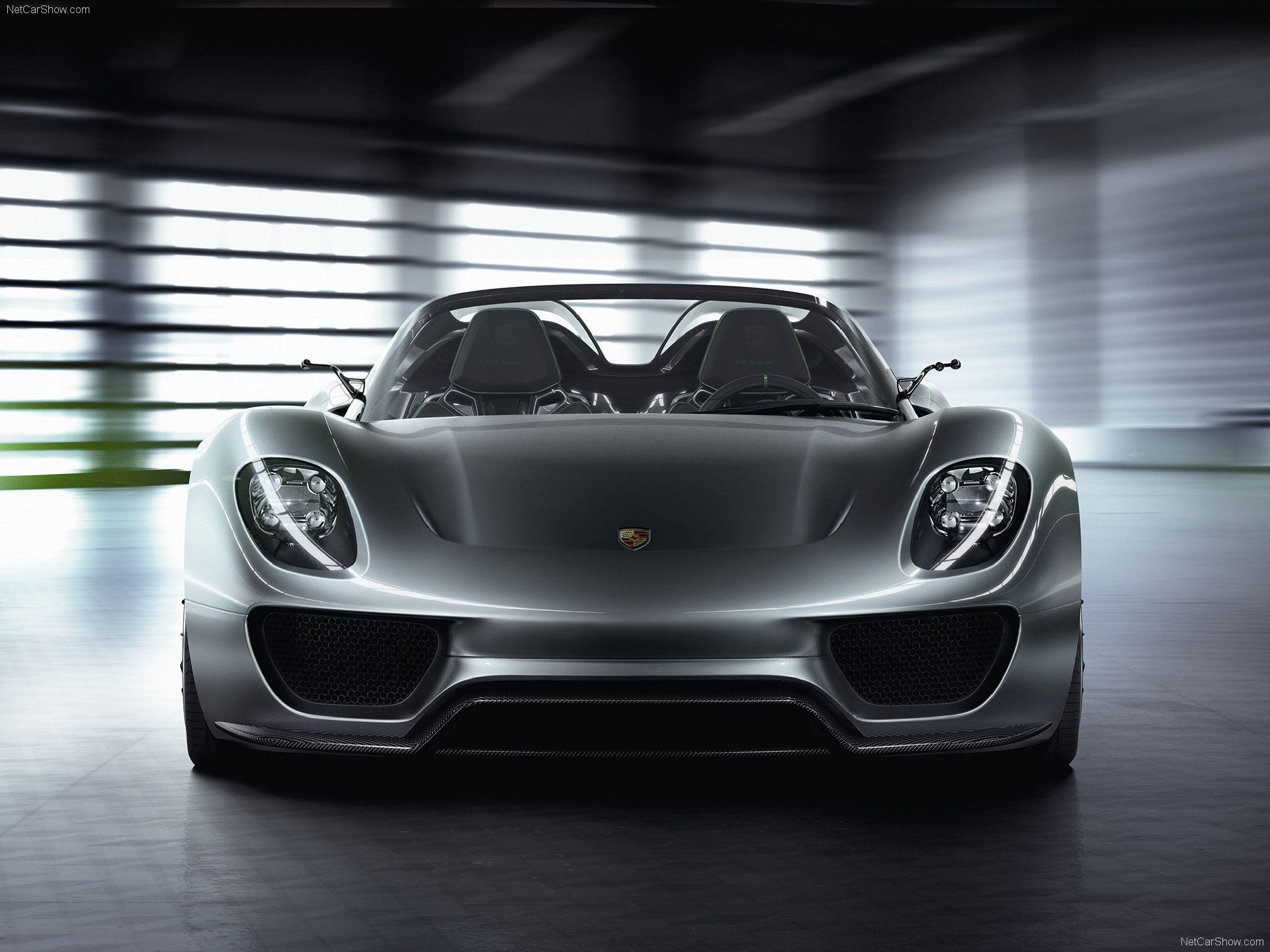
8 2010 Porsche Spyder Concept
Production model: Porsche 918 Spyder

|
Engine |
4.6L NA V8 + two e-motors |
|---|---|
|
Horsepower |
887 hp |
|
Torque |
944 lb-ft |
|
0-60 |
3.2 seconds |
The year 2010 was a big one for Porsche. At the annual Geneva Auto Show they showcased no less than three new hybrid models (the Cayenne Hybrid and 911 GT3 R Hybrid were the other two), one of which was this low-slung two-seater, the Spyder Concept. With its low weight and innovative combination of a 3.4-liter V8 and electric motors on the front and rear axle, this concept could accelerate in just 3.2 seconds, whilst returning a combined gas mileage of 78 mpg.

The production version, the 918 Spyder, featured a plug-in hybrid system (two e-motors and a 4.6-liter-V8) allowing it in “Hot Lap” mode to harness all of the petrol and electric power available, for a few laps only. Most importantly, Porsche kept to the concept model’s look and feel, mirroring the show car’s taut lines and Carrera GT-like air intakes in front of the rear wheels.
7 2008 Land Rover LRX
Production model: Land Rover Evoque

Sometimes a manufacturer just has to be bold. With the decade entering its second half, Land Rover debuted a compact SUV in 2008 with the familiar square looks of the bigger, established Discovery. But this time the smaller sibling had a sloping roof and only two doors. What were they thinking?
|
Engine |
2.0L turbo I4 |
|---|---|
|
Horsepower |
240 hp |
|
Torque |
250 lb-ft |
|
0-60 |
6.9 seconds |
Well, turns out Gerry McGovern’s design was classic enough to not rustle too many feathers in the SUV coop. The LXR was a design study, testing the waters for a new SUV aimed at younger and mostly female owners. Those looking for an SUV, but not wanting the brutish lines and look.

When the new Evoque made its debut in 2011, it echoed much of McGovern’s design of the LXR concept model. But maybe he even added a bit more drama to the look: the sloping roofline, the long doors, the pronounced wheel arches. It became a classic, and even though the two-door didn’t last all that long, due to poor sales, the Evoque is still around, now in its second generation.
6 2013 Citroën Cactus Concept
Production model: Citroën C4 Cactus

|
Engine |
1.2L turbo I3 |
|---|---|
|
Horsepower |
153 hp |
|
Torque |
184 lb-ft |
|
0-60 |
9.3 seconds |
As the subcompact SUV craze gathered pace, French carmaker Citroën came up with a novel idea to make its model stand out: Air bubbles. Yes, those bubbly bits on the C4 Cactus’ doors made their debut in 2013 when the automaker showed us its C4 Cactus Concept (which was based on a similarly named concept of 2007, at the Frankfurt Show).

Basically, the concept car was a normal four-door hatchback, lifted and with the obligatory black plastic moldings around the wheel arches and doors. But the concept’s pièce de résistance was a slab of thick plastic slapped onto the doors, featuring two panels of protruding centers called air bubbles. Gimmicky, yes, but it actually made its way into the production version, two years later in 2015, and served the practical purpose of giant protective moldings for errant doors being opened against your Cactus.
5 2003 Audi Le Mans Quattro
Production model: Audi R8

|
Engine |
4.2-liter V8 |
|---|---|
|
Horsepower |
420 hp |
|
Torque |
317 lb-ft |
|
0-60 |
4.4 seconds |
Sometimes a designer wakes up, heads over to his drawing board, and starts drawing lines under the inspiration of angels. That’s how we imagine it must’ve been when Audi’s design team came up with the Le Mans Quattro Concept. The two-door mid-engined sports car had a glass canopy and stunning proportions.

Best of all was the transparent engine lid behind the canopy, beneath which a beautiful V8 from the B7 RS4 lurked, with silver Side Blades skirting big, vertical air intakes in front of the rear wheels. The Le Mans Quattro looked stunning for a design in 2003. But then Audi got everyone on board in Engineering, and created some friction in the boardroom when it actually went ahead and made a production model, the stunningly beautiful R8 in 2007. It had the glass engine cover, the low, broad hood and, most important of all, the Side Blades in front of the rear wheels. The R8 became an instant classic.

Related
The Final Audi R8 Supercar Has Been Produced At Last
The V10-powered supercar has finally reached its end after two generations.
4 2003 Alfa Romeo Kamal Concept
Production model: Alfa Romeo Stelvio

|
Engine |
1.3L turbo I4 + e-motor |
|---|---|
|
Horsepower |
285 hp |
|
Torque |
347 lb-ft |
|
0-60 |
5.5 seconds |
The modern Alfa Romeo Stelvio must be one of the production cars with the longest span between its original concept model (the Kamal, in 2003) and the final production version (2016). Later on, in 2017, Alfa also showed us the Tonale Concept, which would borrow various styling cues from both the Kamal and Stelvio, and evolve into the Tonale. Interestingly, the Stelvio would end up looking most like the Kamal, but the Kamal’s 1.3L turbo-four hybrid powertrain would almost precisely resemble that of the eventual Tonale.

The main reason why the Kamal disappeared into oblivion, was that it was way too early for the time. Back in 2003, the SUV trend had just started gaining momentum. This, a subcompact-SUV, wasn’t even thought of by then. Meaning the Alfa 147-based little crossover had to wait for 13 years before it could emerge as the Stelvio, now in an era where everyone wants a compact SUV. Interesting times, indeed.

Related
The 10 Most Popular SUVs In America
Explore the best-selling SUVs of 2024 (so far), featuring top models from the likes of Toyota, Honda, and Tesla.
3 2017 Honda Urban EV Concept
Production model: Honda-e

|
Engine |
E-motor + 35-kWh battery |
|---|---|
|
Horsepower |
152 hp |
|
Torque |
232 lb-ft |
|
0-60 |
8.3 seconds |
After the market’s initial idea that EVs should be either flashy sports cars or big, plug-in hybrid SUVs, things started to change in the late 2010s when automakers toyed with the idea of a small, compact city EV. Honda was quick to grasp onto this idea when it showcased its cute little runabout with the boring name, the Urban EV Concept.

Luckily, Marketing stepped in and relabeled it the Honda-e, playing on the smallness of the car with the lowercase “e” in the new name. Smartly, the design team kept their heads level as well when they penned the production model. It had the same look and feel as the perky showstopper, making it an instant hit in Japan.
2 2019 Hyundai Concept 45
Production model: Hyundai Ioniq 5

|
Engine |
E-motor + 77-kWh battery |
|---|---|
|
Horsepower |
225 hp |
|
Torque |
258 lb-ft |
|
0-60 |
8.5 seconds |
Frankfurt 2019 will always be remembered for the little hatchback from Hyundai with striking accent lines, all at a 45-degree angle. Aptly named the Concept 45, this car had more diagonal lines hidden all over its body than a Grade 8 Math teacher’s blackboard.
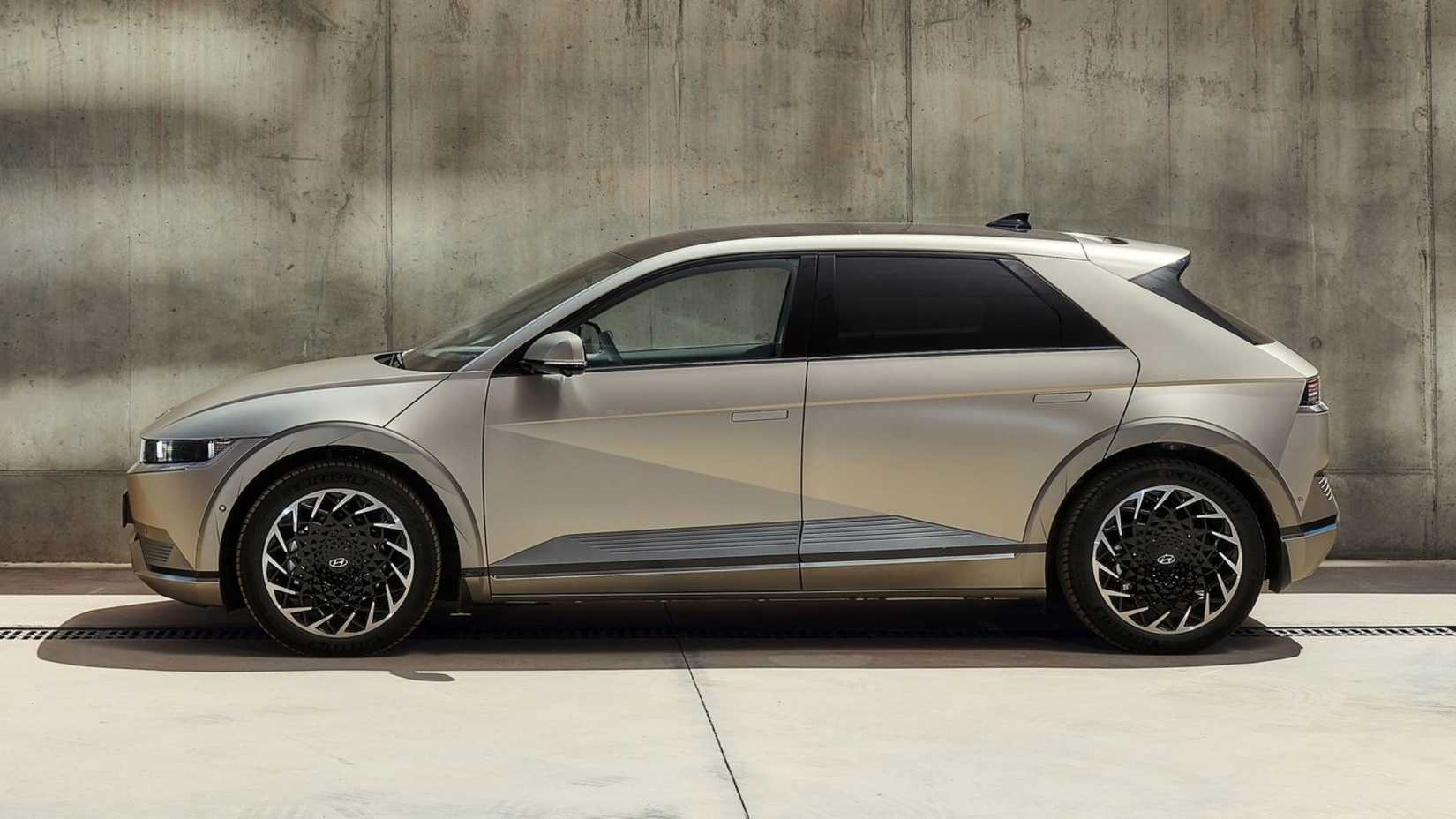
The production version had to wear the Korean brand’s new house name for all its EV’s, Ioniq. Thus the Ioniq 5 doesn’t sound as zooty as “45”. But luckily it still looks pretty much the same as the original, and for that we are grateful to Hyundai.

Related
2025 Hyundai Ioniq 5 Arrives With Myriad Improvements
One of the most competent electric vehicles on the market just got much better.
1 1995 Audi TT Concept
Production model: Audi TT

|
Engine |
1.8L turbo I4 |
|---|---|
|
Horsepower |
178 hp |
|
Torque |
173 lb-ft |
|
0-60 |
7.2 seconds |
Last but not least, is the iconic and by-now classic design for a coupe that ushered in a whole new trend of models which would dominate the sports car landscape for two decades to come. The TT Concept was a brave test of the waters back in 1995. The car looked quirky, with its bulbous Bauhaus styling turning heads.

In a stroke of genius, Audi utilized the Volkswagen Group’s Platform A used for the Golf and Škoda Octavia, and shaped the soft-edged coupe body around it. Initial models had to do with the Golf’s 1.8-liter-turbo, but later models received some aero bodywork and a glorious, if thirsty, 3.2-liter-V6 from the VW Groups VR engine family. The extra bodywork, especially the rear spoiler, received some flak for deflating the original, clean look of the concept. But Audi had to make these adjustments as some early models tended to snap into lift-off oversteer. In the end, the extra bodywork made the TT look just right, giving it the edginess it needed in the first place. Bravo, Audi.
Sources:
Audi
,
BMW
,
Citroën
,
Jaguar
,
Land Rover
,
Honda
,
Hyundai
,
Alfa Romeo
.