How do you terminate connections on rigid flex pcb design?
terminate connections on rigid flex pcb design
Rigid flex PCBs are becoming more popular due to their flexibility and rigidity, making it possible to place components in tight spaces. However, they also have their own unique set of design challenges that must be addressed. One of the most important of these is properly terminating connections on the flex circuit. Failure to do so can lead to signal loss and system failure, limiting the PCB’s functionality.
When routing traces on a flex circuit, it’s important to take into account the possibility of bend areas. These are regions where the flex material can move and cause stress on the copper circuits. To avoid this, traces should be routed away from these areas in order to protect them from damage. It’s also a good idea to stagger traces so they’re not running adjacent to each other in these locations. This will help reduce the potential for I-beaming, which can cause trace copper breakage.
Another issue when routing a rigid flex pcb design is that it’s important to avoid drilling holes too close to the edges of the flex material. This can cause the hole to crack as it bends. To prevent this, it’s a good idea to keep the drill-to-copper distance at least 8 mil. It’s also a good idea not to stack layers with traces that run adjacent to each other, as this can increase the thickness of the copper and make it difficult for them to bend. Instead, you should use curved traces and radial bends to minimize stress in these areas.
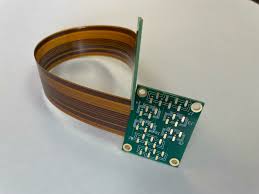
How do you terminate connections on rigid flex pcb design?
It’s also important to understand that flex materials have different requirements for plating. Unlike traditional PCBs, flex circuits are often made using panel or pad-only-plating (button plating), which requires the copper to be deposited on only the vias and pads. This process makes it easier to control impedance at higher speeds, as well as provide better etch yields in small etched patterns. However, it’s important to note that button plating can increase the cost of your flex circuits because of extra processing steps.
The termination of a flexible printed circuit board can be challenging, but it’s crucial for the integrity of the final product. Proper termination ensures that the flex circuit will work well in its installation system and won’t be prone to massive interruptions or signal loss.
To terminate a flex circuit, first, you’ll need to clean the surface of the flex and rigid PCB with isopropyl alcohol and a lint-free cloth. Then, you can apply non-conductive adhesives between the two. Once the adhesive has cured, you can solder the connector’s pads to the pads of the flex circuit. You can also choose to use a jig to hold the connector in place while you solder it to the flex circuit. In either case, you should test the resulting connection to ensure that it’s functional.