
How Do You Measure AI Voice Agent Self-Improvement Over Time?
Measure AI Voice Agent Self-Improvement Over Time
Measuring the self-improvement of AI voice agents over time is crucial for ensuring that these systems become more accurate, efficient, and user-friendly. AI voice agents rely on machine learning, natural language processing, and user feedback to refine their responses and enhance their capabilities. Tracking their progress involves evaluating key performance indicators (KPIs), analyzing user interactions, monitoring error rates, and assessing learning mechanisms that contribute to their continuous evolution.
One of the primary methods for measuring Automated Al voice agent evaluation and benchmarking self-improvement is tracking accuracy and response relevance. Over time, AI systems should demonstrate increased accuracy in understanding user inputs and providing appropriate responses. This is evaluated by comparing historical performance data with current performance metrics, analyzing whether the AI has reduced errors in interpreting speech, recognizing intent, and generating responses. Improvements in accuracy indicate that the AI is effectively learning from new data and adapting to user needs.
User satisfaction and feedback play a significant role in assessing self-improvement. AI voice agents often incorporate mechanisms for users to rate responses or provide feedback on whether an answer was helpful. By monitoring positive and negative feedback trends, developers can determine whether the AI is becoming more effective in assisting users. If user satisfaction scores increase over time, it suggests that the AI is learning from interactions and making improvements. Additionally, monitoring repeated user corrections can highlight areas where further training or fine-tuning is needed.
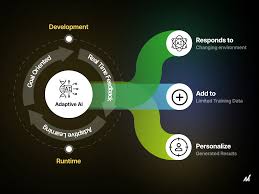
How Do You Measure AI Voice Agent Self-Improvement Over Time?
Error rate reduction is another key metric for measuring self-improvement. AI voice agents may initially struggle with misinterpretations, false positives, or incomplete responses. By tracking how frequently these errors occur and whether their frequency decreases over time, developers can gauge whether the AI is improving. This involves analyzing logs of incorrect responses, identifying patterns in recurring mistakes, and updating training datasets to address weak areas. A decline in error rates indicates that the AI is becoming more precise and reliable in handling conversations.
Adaptability to diverse user inputs is also a measure of AI voice agent self-improvement. As users interact with the AI in different ways, including various accents, speech patterns, and linguistic styles, the system should become more adept at understanding a broader range of inputs. Performance tests using diverse speech samples can determine whether the AI is improving in its ability to recognize and respond to different types of speech. A more adaptable AI system demonstrates better generalization and a reduced bias toward specific speech patterns.
Continuous learning mechanisms, such as reinforcement learning and model retraining, also contribute to measuring AI self-improvement. AI systems that integrate real-time learning capabilities should show progressive enhancements in handling complex queries, understanding contextual nuances, and making fewer repetitive mistakes. Developers monitor how well the AI incorporates new information from recent interactions and whether it can apply learned knowledge to future conversations.
Ultimately, measuring AI voice agent self-improvement involves analyzing accuracy trends, tracking user feedback, reducing error rates, enhancing adaptability, and evaluating learning mechanisms. By continuously monitoring these factors, businesses and developers can ensure that AI voice agents evolve to provide more efficient, accurate, and satisfying interactions, making them more valuable in various applications over time.
