Holy Popemobile, The Pope’s Last Ride Was An All-American Hero
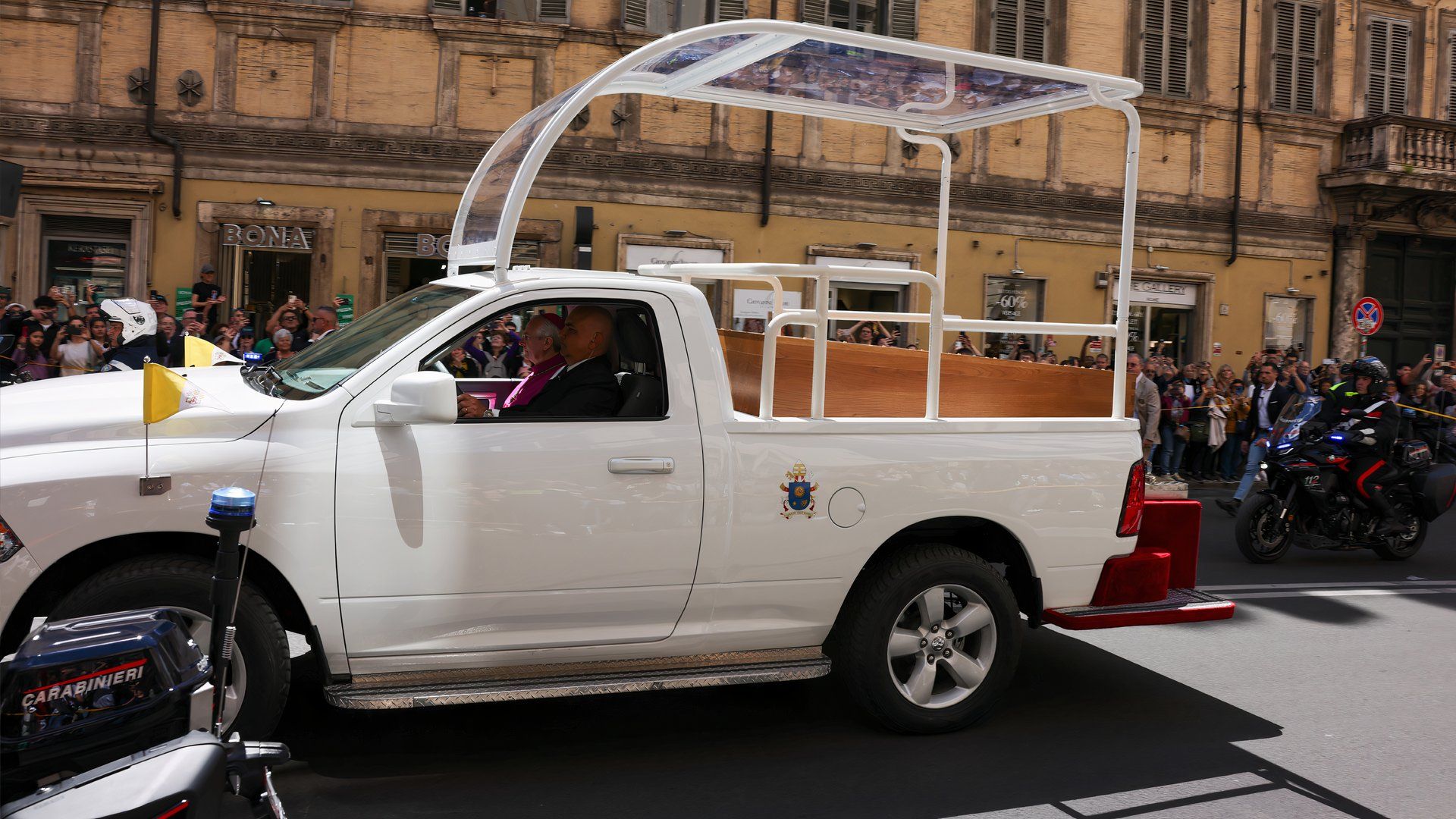
In a final gesture reflecting his reputation as the “people’s pope,” Pope Francis’s funeral procession on April 26, 2025, featured a strikingly unconventional vehicle carrying his simple wooden coffin. Instead of a traditional hearse or an elaborate Papal vehicle, his final public journey to his resting place at the Basilica di Santa Maria Maggiore was made in the bed of a modified Ram 1500 pickup.
The choice of an American work truck for such a solemn occasion garnered attention from observers worldwide, including those in the automotive sphere. The specific truck appeared to be a fourth-generation Ram 1500, adapted with familiar Popemobile modifications. These included a standing platform in the bed where the coffin rested and a protective overhead shield structure. However, consistent with Pope Francis’s preferences throughout his papacy, the vehicle was largely open-air, foregoing the enclosed, bulletproof compartments common on modern Popemobiles used for security reasons.
A Papacy of Humble Transport
This final vehicular choice aligns perfectly with Pope Francis’ well-documented approach to transportation during his 12-year papacy. He consistently eschewed the formality and isolation of traditional, heavily secured Popemobiles whenever possible. He often preferred to walk among crowds during public appearances or travel in far more unassuming vehicles to maintain a closer connection with people. His vehicle choices over the years reflected this desire for humility and accessibility. Compact cars like Fiats were a common sight. He utilized modified open-top vehicles based on platforms from Hyundai, Kia, and Jeep for appearances requiring elevation and visibility but without full enclosure.

Related
Holy Roller: Mercedes-Benz Builds The Pope An Electric G
Mercedes-Benz has just presented Pope Francis with his latest ride. A fully-customized G-Class, and for the first time it is electric.
During a visit to Mauritius, he even employed a first-generation Nissan Frontier pickup truck. This stood in stark contrast to the heavily armored, bulletproof Popemobiles adopted after the assassination attempt on Pope John Paul II in 1981. Pope Francis famously disliked these enclosed vehicles, reportedly likening them to “sardine cans” that created a barrier between him and the faithful.
Choosing open vehicles inherently increased security risks, a fact Pope Francis acknowledged. In an interview with a Spanish newspaper, he stated, “I know that something could happen to me, but it is in the hands of God.” Even a recently gifted, custom-built electric Mercedes-Benz G-Class Popemobile, presented in December, was seemingly passed over for this final, more humble conveyance.

A Fitting Final Ride
The selection of a Ram 1500 pickup – a vehicle synonymous with work, utility, and everyday life for millions – serves as powerful symbolism for the final journey of a pontiff widely seen as prioritizing the common man. It represents a stark departure from the ornate, custom-built hearses often associated with state funerals or the luxury vehicles sometimes linked to the Vatican.

Related
Holy Popemobile, The Vatican Is Going All-Electric
The Pope wants to push for a greener initiative when it comes to the fleet.
Using a readily identifiable work truck reinforces the image Pope Francis cultivated throughout his time as leader of the Catholic Church: one of humility, practicality, and a desire to remain grounded. While unexpected, the choice seems remarkably consistent with his character and papacy. For the estimated 250,000 people attending the funeral Mass and the additional 150,000 lining the procession route, the sight of the simple wooden coffin carried aboard an everyday pickup truck likely served as a final, poignant reminder of the “people’s pope.”

Sources: The Drive, The Catholic Virginian, Angelus News