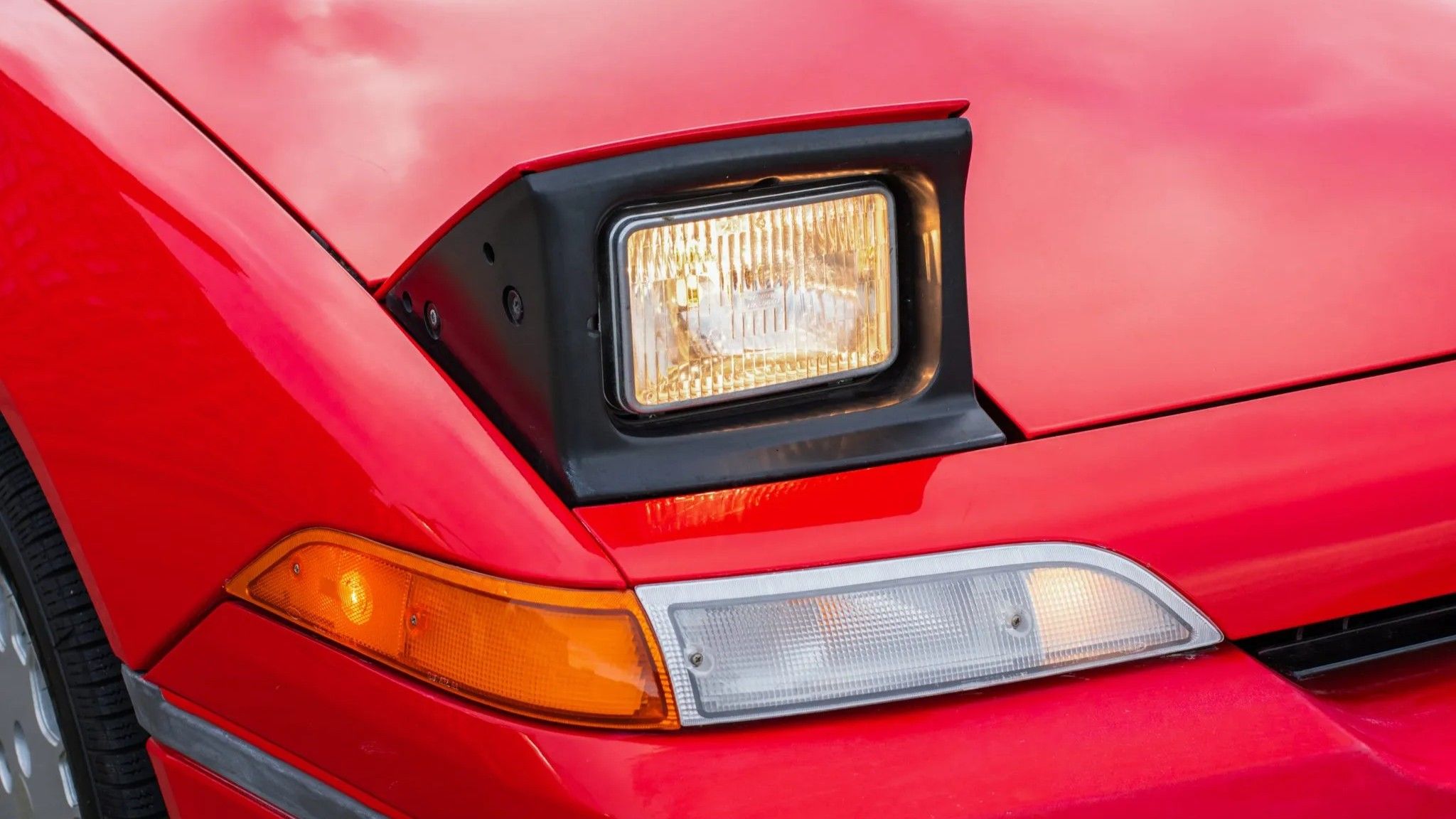
Ford’s Hastily Designed ’90s Sports Car Had Australian Roots And Pop-Up Headlights
In the late 1980s, the sports car arena was changed forever by one certain Mazda: the MX-5 Miata. It was released in 1989, and immediately began capturing the hearts and souls of countless gearheads, and even non-gearheads, alike. Noticing the giant surge in popularity of sporty two-door roadsters, other car companies were quick to rush in to capitalize on the classic roadster’s renewed popularity.
Mercury
- Production Status
-
Discontinued
Ford wasn’t about to miss out, either. In order to help break into the roadster market, Ford reached out to Ford of Australia to broker a captive import deal. The result of this agreement was marketed in the US under Ford’s Mercury brand and was called the Capri. It wasn’t a new name for Mercury, as the Capri had been around since 1970 and would now be entering its third generation. However, the new Capri was smaller, and featured a design that wasn’t even slightly reminiscent of its forefathers. Unfortunately for the little Mercury, it had a hard life ahead of it.

Related
The Holy Grail Of Capris Is The Star Of Amazing Ford Auction
It’s one of over ten diverse Fords going up for sale.
We’ve chosen to dedicate this article to the third-generation Mercury Capri due to its relative obscurity, and the fact that it was very much a flop in the North American market.
The New Capri: Hastily Built And Slow
Third-Gen Mercury Capri Quick Facts
- Introduced in 1991
- Related to the Australian Ford Capri
- Had a reputation for poor reliability
- Axed following the 1994 model year
Unfortunately for the third-generation Mercury Capri, it didn’t inherit its predecessor’s reputation for reliability and being fun to drive, and was doomed from the start. In the beginning, the Ford Capri was offered in Australia as a small roadster, and wasn’t really meant to do direct battle with the likes of the Mazda MX-5 Miata or the Toyota MR2, another popular two-door sports car at the time. Instead, the Capri was best used for cruising about, and not much more.

Related
The 10 Cheapest Cars That Will Give You That Weekend Roadster Experience
Looking for cheap thrills? Check out these 10 super-cheap drop-tops you can get on the used market.
In the States, Ford was keen to break into the market which the MX-5 set alight, and so Ford execs trained their sights on the Australian Ford Capri. The Capri’s interior was styled by ItalDesign, a popular Italian design studio responsible for cars such as the early Volkswagen Golf and Passat models. Its body was penned by Ghia, another famous Italian automobile designer whose portfolio is made up of dozens of iconic names, such as the 1955 Volkswagen Karmann Ghia.
However, while it had some well-known designers working on it, the Mercury Capri didn’t deliver on the mechanical side, or in build quality. The shoddy quality was largely due to Ford’s hasty mechanical design phase, into which we’ll get further below. After a very short time, the Australian Ford Capri was introduced in 1989 and the Mercury-badged Capri went on sale in the States at the end of 1990.
How The Mercury Capri Got Itself About
A pair of powerplants were offered for the US-market Capri. Interestingly, both motors were Mazda-bred B-series 1.6-liter engines, one of which featured a turbocharger and was known as the Capri XR2. Both a four-speed automatic and a five-speed manual transmission were on offer. Despite looking as though the Capri may have sported a mid-mounted engine, it actually featured a front-mounted motor and front-wheel drive, hampering its performance potential considerably, especially when compared to the MX-5 and Toyota MR2 – both of which were rear-wheel drive.
We’ll go over the Capri’s pair of engine offerings and their detailed specs in the table below:
|
1.6L NA I4 |
1.6L turbo I4 |
|
|---|---|---|
|
Horsepower |
100 hp |
132 hp |
|
Torque |
95 lb-ft |
132 lb-ft |
|
Bore x Stroke |
3.071 in x 3.291 mm |
|
|
Compression Ratio |
9.4:1 |
9.0:1 |
|
0-60 mph |
11.0 seconds |
7.9 seconds |
|
Top Speed |
98 mph |
126 mph |
Unlike its MX-5 Miata and the MR2 competitors, the Mercury Capri featured a 2+2 interior layout, meaning it had a (small) second row of seats. The Capri’s build quality was sub-par, as we touched on before. Owners complained of frequent water leaks from its detachable roof and rattly interior components. Parts were also hard to come by, even when it was in production.
Okay, So Why Was The Third-Gen Capri So Bad?
The short answer was a rushed design phase. The long answer involves Ford’s involvement with Mazda, and the fact that the MX-5 Miata was a much bigger hit than the automotive world was expecting. Back in the late 1980s, Ford owned a majority stake in Mazda. The Detroit giant wasn’t involved in the MX-5’s development, despite its large stake in the Japanese automaker at the time.
Because of this, Ford had a bone to pick, so to speak, with Mazda’s Miata. Because Ford wanted to get in on the ground floor of the MX-5’s budding popularity, the Capri was quickly cobbled together using various bits and bobs from the two automakers’ parts bin. Its design was farmed out, so Ford could focus on the mechanical development, which only took months to complete. There was even a rush to get the Capri off the assembly lines in Australia, hence the issues with build quality, fit, and finish.

Related
This Overlooked Mercury Is A Cheap Way To Get A V6 American Sports Sedan
Want something unusual with a V6? The Mercury Milan could be the next addition to your garage.
These issues with the Capri’s quality began to crop up immediately upon its release in the US. Not to mention, buyers who opted for the non-turbo version complained about the sheer lack of power. Because the FWD Capri didn’t handle as well as its RWD competitors, this lack of power in the base model was seen as inexcusable. The turbocharged version offered a decent amount of power but, again, the Capri’s handling, quality, and looks let it down.
Unsurprisingly, The Mercury Capri Failed
As if you needed a warning, the third-generation Mercury Capri was regarded as a failure for Ford. After three years, Mercury managed to shift fewer than 20,000 examples of the Capri. To put this into perspective, more than 131,000 units of the Mazda MX-5 Miata were sold, or nearly seven times the amount of Mercury Capris sold. Toyota managed to shift roughly 18,700 MR2s between 1991 and 1994.
After the Mercury Capri’s departure in 1994, the “Capri” namesake remained in hibernation for over 30 years. Recently, it’s been resurrected by Ford for use in a new electric crossover. The new EV is meant to complement the Mustang Mach-E, another EV using an iconic name to help sell a mass-market electric crossover. While the Mustang name may not deserve that sort of treatment, the Capri namesake wasn’t treated with respect even during its original run with its last generation.
It’s remembered today as a cheap and forgotten little roadster that was behind the competition from the day it was launched – and just fizzled out to die an undignified death after just four model years.
Sources: Supercars.net, SpyderChat.com, Mazda, Toyota, Motor1.