One Of The Rarest Corvettes You’ve Never Heard Of Had ZR-1 Bones And Viper Looks
With a history stretching back over half a century, the Chevrolet Corvette has too many special editions and unique variants to count; a firm favorite of the tuning community, it has also served as the basis for countless custom modification projects.
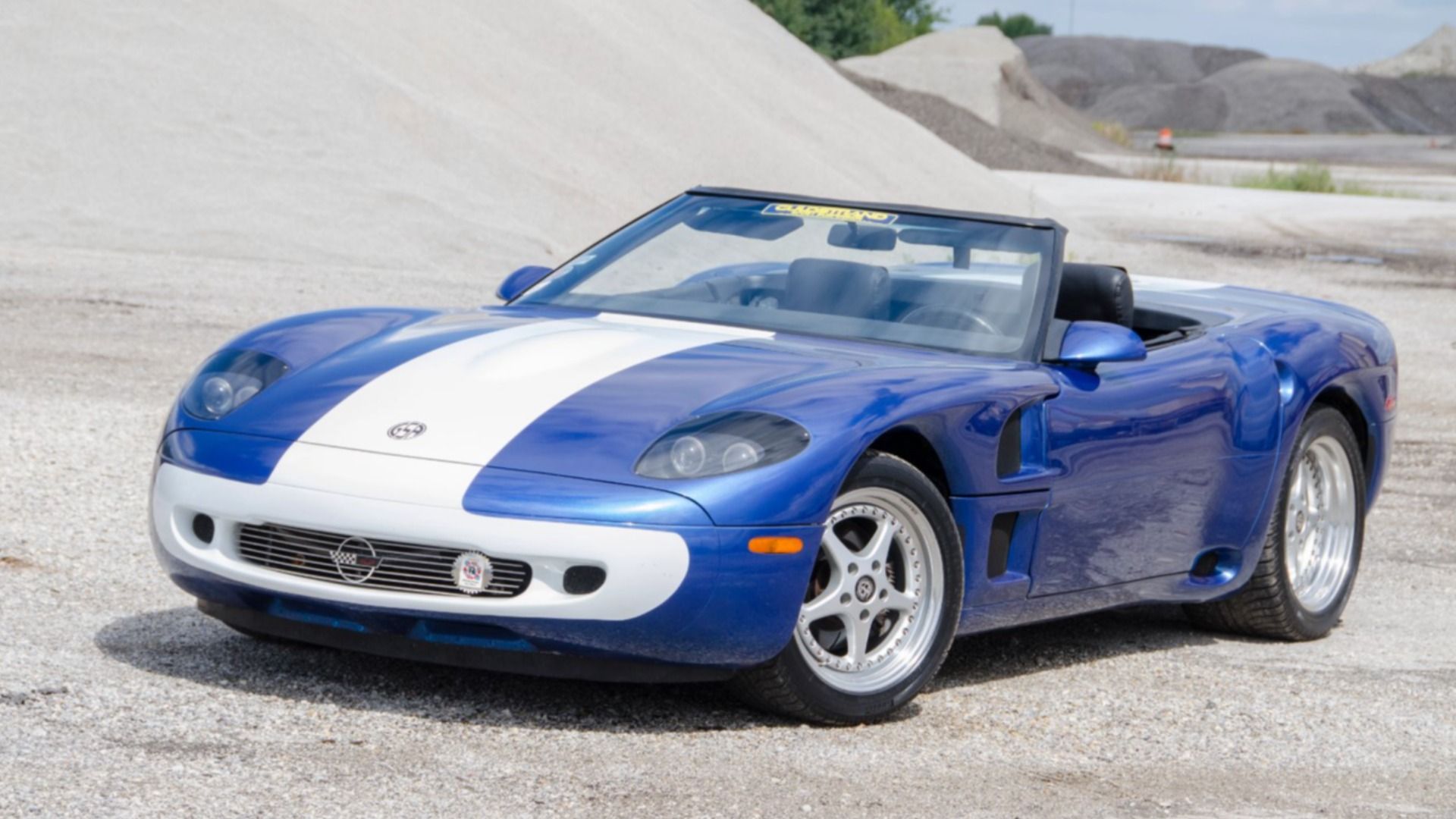
There is one particular Corvette which isn’t very well known, but was the brainchild of a designer who had close ties with the history of the Corvette as a whole: the Guldstrand GS90. One of three custom, low-volume Corvettes created by the small business led by former racer Dick Guldstrand, the GS90 is one of the rarest Corvettes in existence. Let’s explore the history of this unicorn, and the car it was based on: the C4 Corvette ZR-1.
This article focuses on the history and features of the Guldstrand GS90 Corvette. All information has been obtained from reputable sources.
Meet The Guldstrand GS90
The Guldstrand GS90 took the C4 Corvette ZR-1 and gave it a radical redesign, curated by stylist Steve Winter; the existing panels were replaced by a body kit made out of fiberglass and carbon fiber. While the C4 ZR-1 was characterized by sharper, more angular lines, the GS90 had a more gentle, rounded design that evoked European sports cars from the mid-century period.
|
The Guldstrand GS90 In Numbers |
|
|---|---|
|
Engine |
5.7L NA V8 |
|
Horsepower |
375 hp (later 405 hp) |
|
0-60 mph |
~4.0 seconds |
|
Top Speed |
~175 mph |
The Guldstrand GS90’s design also drew heavily upon the Corvette’s heritage, taking inspiration from models like the 1960s Grand Sport prototypes and adapting them to the modern era. Although the GS90’s blue and white paint job makes the car bear some resemblance to the Dodge Viper at first glance, the inspiration behind this color scheme actually came from the Grand Sport Corvettes.
Of course, it wasn’t all about looks: the GS90 also received several mechanical upgrades, including a reworked suspension system with adjustable Bilstein coilovers and polyurethane bushings, and a tuned version of the ZR-1’s LT5 engine with a boosted power output *- going from 405 to 475 hp, thanks to experienced tuner Doug Rippie.

Related
C7 Corvette ZR1’s 755-HP Supercharged LT5 V8 Is Dead
GM retires one of its greatest engines.
The GS90 was unveiled in 1995 at the Los Angeles Auto Show, with a small production run of 100 to 150 units planned. Dick Guldestrand even created a separate company, GSA, to take care of the sales and marketing aspect of the GS90; however, the production plans did not become a reality, and only six examples of the GS90 were eventually built, making it a veritable rarity.
The GS90’s Parent Model: The Corvette C4 ZR1
The Guldstrand GS90 was based on the ZR-1 variant of the fourth-generation (C4) Corvette. Produced between 1990 and 1995, the C4 ZR-1 Corvette was the result of an international collaborative effort between Chevrolet and Lotus, which GM had acquired in 1986. The Corvette’s design team had ambitions to build the world’s fastest production car, and decided to make the most of the Lotus acquisition by drawing on the British marque’s engineering expertise.
The C4 Corvette was selected as the base for the new project, and Lotus quickly went to work. The L98 V8 engine that had powered the standard car became the jumping-off point for the Lotus team to come up with a new design. The engine they built, dubbed the LT5, shared many of the original’s characteristics, including displacement and bore centers; however, it had four overhead camshafts and 32 valves. A new air-management system improved performance by partially shutting off the engine at lower speeds, while unleashing a full power output of 375 hp at full throttle.

Related
Amazing Cars Built With Help From Lotus
Lotus didn’t just add lightness.
The ZR-1 didn’t just have a (nearly) new engine, it also came with several other performance upgrades. It had larger ventilated disc brakes, and custom Eagle Gatorback tires built by Goodyear especially for the ZR-1. Aside from Lotus, several other external firms contributed to its creation: Bosch provided the ABS system, while Bilstein curated the suspension (with input from Lotus’ Formula 1 team). German firm ZF, meanwhile, created a custom six-speed manual transmission, which used a system called Computer Aided Gear Selection (CAGS) to send power to the rear wheels in the most efficient way possible.

Related
How The ZR1 That Started It All Compares To The All-New 233 MPH Model
The original is still an incredible vehicle.
In order to distinguish itself as a high-performance variant, the ZR-1 also came with a number of unique cosmetic touches: these included seven additional choices of paint color, leather sports seats offered as standard, and an acrylic roof panel. It also had wider rear wheels and a differently-shaped rear fascia, along with a ZR-1 badge.
An Overview Of The Fourth-Gen Corvette
In 1975 Zora Arkus-Duntov, the “Father of the Corvette” left his role as chief Corvette designer and was replaced by Dave McLellan. Under the direction of then-Chief Designer Irv Rybicki, McLellan created a brand-new Corvette, with a design that distanced itself from the previous C3 generation. The body used plastic compounds rather than being made entirely of fiberglass, and a glass hatchback and removable roof panel were introduced. In 1986, two years after the C4’s introduction, a convertible variant was once again made available, after a hiatus of several years.
Power came from a series of 5.7-liter V8 engines, with varying power outputs depending on model variant and year (ranging from 205 hp to 405 hp). Several transmission options were available throughout the model’s lifecycle, including a four-speed automatic, a six-speed manual, and a “4+3-speed” transmission (a four-speed manual paired with an automatic overdrive for the top three gears).
The C4 Corvette also brought about several improvements on the tech front: it was the first car in the model’s history to be equipped with an electronic dashboard, complete with digital instrument cluster that displayed graphics for speed, revs, and fuel level. These features were all offered as standard, rather than as an option: another element of innovation that was unusual for the time. Multiple special editions and one-off variants of the Corvette were based on the C4: these include the 35th and 40th Anniversary editions, the 1986 Indy 500 convertible pace car, and the Grand Sport and Collector Editions, which marked the end of this generation’s production cycle.
The Father Of The GS90: The Dick Guldstrand Story
As suggested by its name, the Guldstrand GS90 was the brainchild of Dick Guldstrand, the racing driver, engineer, and designer who played an instrumental role in the Corvette’s history. Taking part in the world of sports car racing in California during his youth, Guldstrand started his career in the aerospace industry before moving on to cars, working as an electrical engineer.
He fell in love with Corvettes after buying a 1956 model and racing it in his spare time; he worked hard on modifying and upgrading his own car, and achieved several victories in the SCCA Pacific Coast Championship throughout the early ’60s. As his racing success grew and grew, he was given an opportunity to race a 1967 Corvette at the 24 Hours of Le Mans, but his attempt was cut short by a mechanical failure.

Related
Ford Reignites The Most Famous Rivalry In Le Mans History
The Blue Oval wants to beat Ferrari’s 499P Le Mans-winning hypercar.
Eventually, Guldstrand opened his very own company: Guldstrand Engineering, in Culver City, California. The business prepared Corvettes for races, such as the legendary 24 Hours of Daytona, and for private customers, including names such as Bruce Springsteen and Arnold Schwarzenegger. Years later, the jewels in the crown of Guldstrand Engineering arrived: three specialty cars, modified and changed into something quite different from the original Corvette. These were the GS80, the GS90 and, last of all, the Guldstrand Signature Edition 50th Anniversary Corvette. Dick Guldstrand was inducted into the National Corvette Museum’s Hall of Fame in 1999; he passed away in 2015, at the age of 87.
Sources: Chevrolet, National Corvette Museum.