Can You Keep A Crushed Car In Your Yard?
So you’re past the point of denial, anger, bargaining, and depression, and you’ve reached the final stage of mourning: acceptance. That 2002 Honda Civic you put nearly a half-million miles on, it’s finally ready for that great car meet in the sky. You could part it out bit by bit until there’s nothing left but a chassis, but that could wind up being more trouble than it’s worth. And besides, do you really want to chop up your baby piece by piece?
2002 Honda Civic Coupe
- Base Trim Engine
-
1.7L I4
- Base Trim Drivetrain
-
Front-Wheel Drive
- Base Trim Transmission
-
5-speed manual
- Base Trim Horsepower
-
115 HP @6100 RPM
- Base Trim Torque
-
110 lb.-ft. @ 4500 RPM
All that’s left is to see the car off into the next life, and, hopefully, memorialize it in some way. You could grab the rearview mirror or simply keep the key on your chain to remember the good times, but what if you want something bigger, something that won’t get lost in a junk drawer? What if you could, say, have the car crushed, and then returned to you to keep on the front lawn as a monument to the car that saw you through the last couple decades? Well, we did a little digging and found that it’s possible, but maybe not feasible. Here’s what you need to know.
The following is based on research into the legality of storing crushed cars on one’s property. Any conclusions drawn thereupon are those of the author and should not be considered actionable without further legal counsel.
What’s The Point Of Crushing A Car, Anyway?
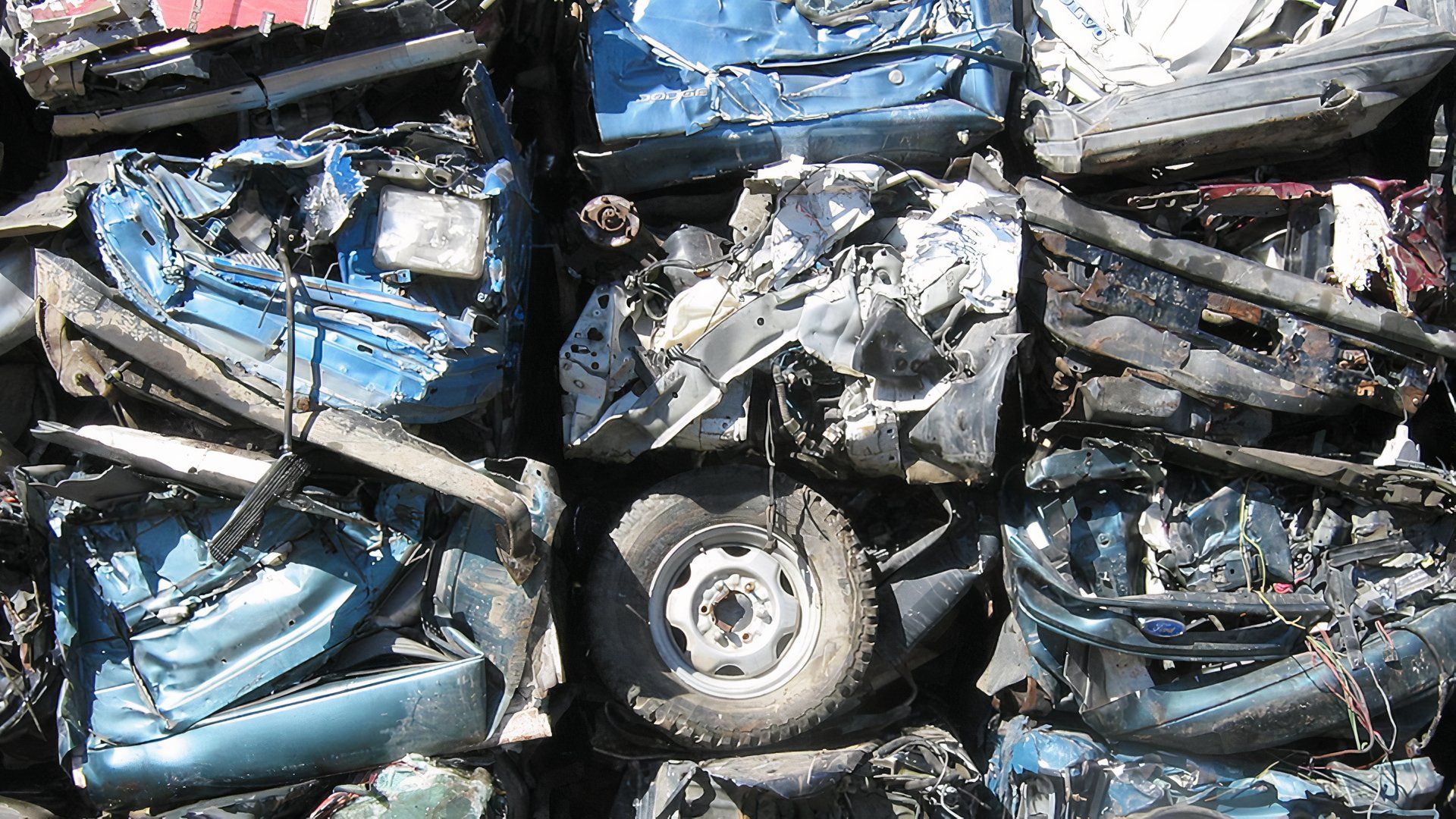
Crushing a car is the last step on the way to recycling the vehicle for its metal value. The process involves stripping the car of anything that might still hold some value, engines, tires, seats, mirrors, anything that could be sold off piece-by-piece at the U-Pull-It.
Related
This Junkyard Collection Of Classic Exotica Is Dying To Be Saved
They may be rough around the edges, but history in this form is still worth preserving.
The reasoning behind crushing a car instead of simply throwing it on a trailer and hauling it to the smelter is two-fold: first, you’re saving space. Two or three whole trucks can take up the same amount of space as around a dozen crushed pickups. Second, a crushed car is very unlikely to be stolen or reclaimed.
As far as our research shows, there’s no law on the books anywhere in the country specifically forbidding you from keeping a crushed car on your property. But, state and federal laws aren’t the only rulings you have to worry about. Before you consider doing this, you’ll also want to consider:
- City and county ordinances. A crushed car is essentially a piece of art, right? Now, this may sound crazy, but every now and then you may read of city governments trying to legislate the display of sculptures and other artworks on private property. These proposals are usually shot down before they result in anyone putting those peeing cherub fountains in the garage, but you’ll want to check your local laws first, all the same. In some cities you may be required to get a pass from your neighbors before displaying anything that would be visible from the sidewalk.
- Home Owners Association rulings. Your HOA, three letters that are code for “The No Fun Allowed Committee,” might have a problem with you turning your front lawn into a junkyard. In fact, we’d be willing to bet good money that they do, seeing as they’ll gripe about everything from classic cars to EVs in perfect working condition.
In both of these instances, you might not have a problem as long as you keep the crushed car in your backyard. That brings us to our next challenge.
You Need To Find A Junkyard Willing To Return Your Crushed Car To You
When a car is crushed, the car has typically already been sold to the junkyard for a percentage of its scrap metal value. The owner has already signed the car over, collected their check, and that should be the end of the deal. If you want the crushed car back, things are going to get complicated.

Related
Who buys junk cars when it’s just too much for the owner to repair?
If you have a junk car that you just can’t or don’t feel like replacing, there are plenty of ways to get rid of the thing. Your best bet is doing something local to you, so try an online marketplace, especially if it’s something that someone might be able to repair with the time and money to do the job. You can also find national companies, just check to see if they cover your area. And if it doesn’t sell, consider donating it. Have you done something similar?
Basically, you need to find a junkyard that’s willing to play ball. They need to be willing to crush the car and return it to you in the first place, and you need to make sure everyone’s bases are covered, legally speaking, which means talking to an attorney about drafting up a binding release of liability form, so that the junkyard doesn’t have to worry about being sued if this all turns out to be an elaborate prank.
Transportation may be a whole other concern, entirely. The junkyard might be willing to crush your car and return it to you, but getting them to deliver it to your doorstep could be a whole ‘nother story. This means arranging for someone with a flatbed to get your crushed car safely back to you so they can dump it on your lawn.
The Chemical Waste Problem Makes All Of This Moot
Before a car is crushed, it’s drained of all its fluids. But it’s never quite perfect. There’s always going to be a bit of coolant or motor oil or steering fluid dripping from the crushed car. You can try and flush it and power wash it and get it as clean as possible, but it’s still going to be hazardous enough that the driver delivering it to you will need to be HAZMAT-trained, and you’ll need to be legally allowed to store chemical waste on your property, which you’re almost certainly not, assuming you live in a residential district.
Even When It’s Legal, It Smells Like It Shouldn’t Be
Even if you can legally keep a wrecked car on your property, you don’t really want all those chemicals creating a toxic hazard in your backyard. You’ve walked through scrapyards before, right? That noxious mix of diesel, grease, rust, and mildew, it smells like a chemical fire, and you probably don’t want to be woken up by the odor of a rotting hunk of rust in the morning when it starts to get hot out, cooking the wreck like a Hot Pocket in a microwave.

Related
1967 Ford F-100 Scrapyard Rescue Build Is A Magical Mashup
This nice truck is made up of a mish-mash of parts from Ford, but it also has a Chevy part or two.
Bottom line: it’s possible to keep your wreck, but it’s not practical, and it might not be doable in a residential area at all. The red tape that you have to clear and the favors you have to call in, it’s a lot of hassle. Besides, they don’t squish it up all tight in a little cube like in the cartoons, most junkyards just crush it flat, meaning that you’re not actually saving any space on your yard by smooshing it, and you might as well keep it in one piece as a memorial.
How Do You Memorialize Your Car If You’re Not Able To Keep It?
This leaves us with one more point to consider: not all cities, states, or counties will let you simply keep a car on your property without keeping it tagged and insured. So, how do you memorialize a car that you don’t want to say goodbye to, but that you can’t keep?
You can grab a piece for sentimental value, maybe mount the old steering wheel to a wall in the garage, or just keep the owner’s manual on your bookshelf. Awhile back, we highlighted a coffee table built out of an old BMW engine block, so really, the only limit is your imagination.
Sources: City Council Atlanta, Department of Transportation