What industries use flexible printed circuits?
flexible printed circuits
Flexible printed circuits (FPCs) are increasingly integral to a wide range of industries due to their unique characteristics, such as flexibility, lightweight design, and the ability to accommodate complex circuit layouts. One of the most prominent industries that utilize flexible printed circuits is consumer electronics. Devices like smartphones, tablets, laptops, and wearable gadgets rely heavily on FPCs to facilitate high-density interconnections while maintaining a slim profile.
As consumer demand for more compact and feature-rich devices continues to grow, manufacturers are turning to flexible printed circuits to enable innovative designs without compromising performance. FPCs provide the necessary flexibility to route circuits around obstacles and fit into confined spaces, making them an essential component in modern consumer electronics.
The automotive industry also leverages flexible printed circuits to enhance the functionality and efficiency of vehicles. Modern automobiles are equipped with a myriad of electronic systems, including infotainment, navigation, safety features, and engine management systems. FPCs are ideal for automotive applications due to their ability to endure harsh environmental conditions, such as temperature fluctuations, moisture, and vibrations.
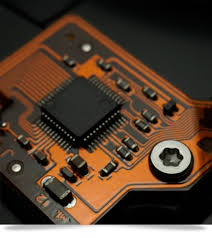
What industries use flexible printed circuits?
They can be found in various automotive components, including sensors, display screens, and control units, where their flexibility allows them to conform to the complex geometries of a vehicle’s interior and exterior. As the automotive industry moves toward more electric and autonomous vehicles, the demand for reliable and adaptable electronic systems will continue to drive the use of flexible printed circuits.
The medical device sector is another significant user of flexible printed circuits. In healthcare, precision and reliability are paramount, and FPCs provide the ideal solution for various applications, from diagnostic equipment like ultrasound machines and electrocardiograms (ECGs) to wearable health monitoring devices. The flexibility of FPCs allows medical devices to conform to the human body, enhancing comfort for patients and facilitating more accurate readings. Moreover, the lightweight nature of flexible circuits is crucial for portable medical devices, enabling healthcare providers to deliver essential services in a variety of settings, including hospitals, clinics, and home care.
Aerospace and defense industries also extensively utilize flexible printed circuits due to their ability to perform reliably under extreme conditions. In these applications, FPCs are employed in communication devices, navigation systems, and various critical electronic systems where failure is not an option. The lightweight nature of FPCs contributes to weight reduction in aircraft and spacecraft, improving fuel efficiency and overall performance. Additionally, their ability to withstand vibrations, temperature variations, and exposure to radiation makes them well-suited for the rigorous demands of aerospace and military applications.
In the realm of industrial automation and robotics, flexible printed circuits are increasingly adopted as factories modernize and adopt more sophisticated technologies. FPCs are utilized in sensors, control systems, and interconnects within robotic systems, allowing for efficient communication between components. Their flexibility enables integration into complex machinery, enhancing the functionality and efficiency of manufacturing processes.
Emerging technologies, such as the Internet of Things (IoT) and smart textiles, are also seeing an uptick in the use of flexible printed circuits. As the demand for connected devices and wearables grows, FPCs offer an excellent solution for embedding electronics into everyday objects, allowing for greater functionality while maintaining a lightweight and compact form factor.